Apple dropped the AirPods Max 2 in March 2026, and I've been wearing them almost daily for about three weeks now. The short version? They sound genuinely better than the originals. The H2 chip brings real improvements — 1.5x stronger active noise cancellation, Adaptive Audio that actually works, and a new high dynamic range amplifier that gives music more separation between highs, mids, and lows. But here's the thing that kept nagging me: $549 is a lot of money for headphones that still weigh 386 grams, still don't fold, and still ship with that bizarre bra-shaped Smart Case. The AirPods Max 2 review conversation online has been split right down the middle, and honestly, I get both sides.
I've tested pretty much every flagship over-ear headphone released in the last two years — Sony's WH-1000XM6, Bose QuietComfort Ultra (2nd gen), Bowers & Wilkins Px7 S3, Sennheiser Momentum 4. So when I say the AirPods Max 2 does certain things better and other things worse than the competition, that's not speculation. I've A/B tested these on the same playlists, same commute, same red-eye flights. This review breaks down exactly where Apple's premium cans earn their price tag and where they fall flat, so you can decide if they belong on your head or if your money stretches further elsewhere.
What the H2 Chip Actually Changes in the AirPods Max 2 Review
The original AirPods Max ran on the H1 chip — solid for 2020 but showing its age. The H2 brings a laundry list of features that weren't possible before: Adaptive Audio, Conversation Awareness, Voice Isolation, and Live Translation. Adaptive Audio is the headline act. Instead of manually flipping between noise cancellation and transparency, the headphones read your environment and blend both modes automatically. Walk into a quiet library and ANC relaxes. Step onto a busy sidewalk and it tightens up. It sounds gimmicky on paper, but after three weeks I genuinely stopped thinking about switching modes. Conversation Awareness is similarly useful — start talking to someone and the music ducks automatically, ANC pulls back, and you can hear the other person without lifting a cup. The transition takes about half a second, which is fast enough that it doesn't feel jarring. Live Translation works with 15 languages and processes on-device, though I'd call it functional rather than polished. Good enough for ordering coffee in Barcelona. Not great for a business negotiation.
Sound Quality: Better Bass, Cleaner Mids, Same Apple Signature
This is where the $549 price starts making a case for itself. The new high dynamic range amplifier paired with retuned Adaptive EQ delivers noticeably better audio than the USB-C AirPods Max. Bass hits harder without muddying the mids — something the Bose QC Ultra still struggles with, honestly. Those Bose cans are so bass-heavy they border on muffled at times. The AirPods Max 2 keep things tight. Mids are warm and vocals sit forward in the mix. Highs are crisp, maybe a touch exaggerated in the upper range, but not fatiguing over long sessions. Spatial Audio also got an upgrade — instrument localization is sharper, and Apple says the retuned Adaptive EQ now extends to higher frequencies for more consistent sound across different ear shapes. I tested with Dolby Atmos tracks on Apple Music and yeah, the spatial effect feels more convincing than before. Not a revolution. An evolution. The wired USB-C connection supports 24-bit/48kHz lossless playback, which is welcome but also a reminder that Apple still won't give us wireless lossless. These $549 headphones stream over Bluetooth AAC at roughly 256 kbps. No aptX Lossless, no Snapdragon Sound. In 2026, that stings.
Noise Cancellation: 1.5x Better, But Not Best-in-Class
Apple claims 1.5x more effective ANC than the original AirPods Max, and I believe it. The improvement is audible — low-frequency rumble from airplane engines and train noise gets crushed more effectively. Mid-frequency sounds like office chatter are also reduced further. But is it the best ANC you can buy? No. The Bose QuietComfort Ultra still wins that crown, particularly for sustained low-frequency noise like flights or HVAC hum. It's close, though. The AirPods Max 2 actually handle sudden, variable noise — think a loud conversation erupting next to you — slightly better than the Bose. The Sony WH-1000XM6 slots in right between them. So you're getting excellent noise cancellation. Just not the absolute best, which matters when you're paying $150-$200 more than the competition.
Design and Comfort: The 386-Gram Elephant in the Room
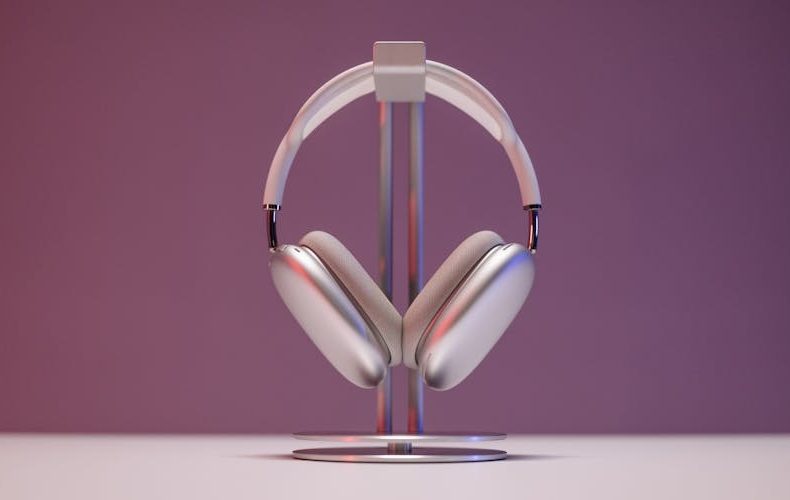
Here's where my AirPods Max 2 review gets critical. Apple didn't change the design. At all. Same aluminum ear cups, same stainless steel headband, same knit mesh canopy. They look gorgeous — no argument there. But they weigh 386 grams. The Sony WH-1000XM6 weighs around 250 grams. That's a 136-gram difference you absolutely feel after 90 minutes. The suspension headband distributes weight well and minimizes top-of-head pressure, but your neck knows. Long-haul flight? You'll want breaks. The lack of a folding mechanism is genuinely baffling at this price point. Every competitor folds flat or at least hinges inward. The AirPods Max 2 are bulky in a bag, bulky in a backpack, bulky on a desk. And the Smart Case — still that weird mesh bra that only covers the ear cups — still doesn't protect the headband. iFixit's teardown confirmed what we feared: same internal design, same repairability issues, same condensation-prone ear cups in humid climates. Apple could have fixed these. They didn't.
Battery Life: 20 Hours Is Fine, Not Great
Twenty hours with ANC enabled. Same as the original AirPods Max from 2020. That number was competitive six years ago. Today? The Sony WH-1000XM6 gets 30 hours. Bose QC Ultra hits around 24. The Bowers & Wilkins Px7 S3 manages 30. Apple went from middle of the pack to near the bottom without changing anything — the competition just moved ahead. The silver lining is fast charging: a 5-minute USB-C charge adds 90 minutes of listening time. Helpful in a pinch. But if you're someone who charges weekly rather than daily, the Sony or B&W options let you go noticeably longer between charges. For most people, 20 hours covers a full day and then some. It's not a dealbreaker. It's just disappointing that Apple didn't push this number higher when they had the chance.
Apple Ecosystem Integration: The Hidden Value Proposition
If you own an iPhone, iPad, Mac, and Apple TV, the AirPods Max 2 connect to all of them without friction through iCloud. Automatic switching between devices actually works — pick up your iPhone to take a call while watching a movie on Apple TV, and the audio moves without you touching anything. Find My integration means you can locate them if they slip between couch cushions or get left at a coffee shop. Personalized Spatial Audio uses the TrueDepth camera on your iPhone to map your ear shape and optimize the sound profile. These features don't exist on Sony or Bose headphones. Period. For deep Apple users, this seamless integration has real, daily value. For Android users? Skip these entirely. There's no Android app, no equivalent feature set, and you lose Adaptive Audio, Conversation Awareness, and most of the H2 chip's smart features.
Who Should Actually Buy These (And Who Shouldn't)
The AirPods Max 2 make sense for a specific buyer: someone deep in the Apple ecosystem who values build quality and sound over portability and value. If you listen primarily through Apple Music, use Spatial Audio regularly, and want headphones that feel premium in your hands, these deliver. They're also the best option if you use Live Translation frequently — no competitor matches Apple's on-device processing here. But if you fly often and comfort over long sessions matters, the Sony WH-1000XM6 at $399 is the smarter buy. Lighter, longer battery, folds flat, and sounds nearly as good. If noise cancellation is your top priority, the Bose QC Ultra at $429 edges ahead. And if you're on Android, there's genuinely no reason to consider these — you'd be paying a $150 premium for features you can't use.
Do's and Don'ts
FAQs
Is the AirPods Max 2 worth the upgrade from the original AirPods Max?
Honestly, it depends on which version you have. If you're still on the Lightning model, yes — the H2 chip brings meaningful improvements with Adaptive Audio, better ANC, and improved sound quality, plus you finally get USB-C. If you already own the USB-C refresh from late 2024, the upgrade is harder to justify. You're paying $549 for better noise cancellation and smart audio features, but the hardware design is identical. I'd say wait for a price drop or a trade-in deal if you're on the USB-C model. The sound improvement is real but not dramatic enough to warrant full price.
How does the AirPods Max 2 compare to the Sony WH-1000XM6?
The Sony WH-1000XM6 costs $399, weighs about 250 grams, delivers 30 hours of battery, and folds flat for travel. The AirPods Max 2 costs $549, weighs 386 grams, delivers 20 hours, and doesn't fold. Sound quality is close — the AirPods Max 2 has a slight edge in spatial separation and bass control, while the Sony offers fantastic clarity and a more neutral profile. ANC is comparable, with Bose actually beating both. The Sony wins on value. The AirPods Max 2 win on Apple integration and premium build materials. Pick based on your ecosystem and priorities.
Can the AirPods Max 2 play lossless audio?
Yes, but only through a wired USB-C connection at 24-bit/48kHz. Wirelessly, they stream via Bluetooth AAC at approximately 256 kbps, which is lossy compression. Apple still hasn't implemented a wireless lossless codec. This means you need to physically cable them to your iPhone or Mac to hear Apple Music's lossless tracks at full resolution. For a $549 pair of headphones in 2026, the lack of wireless lossless is a legitimate criticism that keeps coming up in every AirPods Max 2 review.
Does the AirPods Max 2 work with Android phones?
Technically yes — they connect via standard Bluetooth. Practically, you lose almost everything that makes them special. No Adaptive Audio, no Conversation Awareness, no automatic device switching, no Personalized Spatial Audio, no Find My tracking. You're left with basic Bluetooth headphones that cost $549 and weigh 386 grams. The Sony WH-1000XM6 or Bose QC Ultra are dramatically better choices for Android users, offering full feature sets at lower prices through their respective companion apps.
How comfortable are the AirPods Max 2 for long listening sessions?
The mesh canopy headband does a good job distributing weight across the top of your head rather than creating a pressure point. For the first 60-90 minutes, they're comfortable. Beyond that, the 386-gram weight starts catching up with you — particularly around the neck and jaw. The ear cushions are spacious and plush, fitting most ear sizes without clamping. But compared to the 250-gram Sony or the similarly light Bose, fatigue sets in earlier. If you're planning four-hour work sessions or long flights, factor in comfort breaks.
What's new about the AirPods Max 2 Smart Case?
Nothing meaningful. It's still the same semi-open design that covers the ear cups but leaves the headband exposed. Putting the headphones in the case triggers a low-power mode that preserves battery. Without the case, the headphones stay in a standby mode that drains charge faster. Apple updated the case colors to match the new headphone finishes — Midnight, Starlight, Orange, Purple, and Blue — but the fundamental design and its limitations remain unchanged. Most third-party cases offer better full-body protection if you travel with these regularly.
Is the AirPods Max 2 noise cancellation the best available?
Close, but not quite. Apple's 1.5x improvement over the original is significant — it handles both low-frequency drone and mid-frequency chatter effectively. But the Bose QuietComfort Ultra remains the ANC champion, especially for sustained low-frequency noise like airplane engines and HVAC systems. The difference is small enough that most people wouldn't notice in a blind test. Where the AirPods Max 2 pull ahead is with Adaptive Audio, which blends ANC and transparency dynamically — something neither Bose nor Sony matches as smoothly.






 Get it on
  Download on the