Five years ago, spending under $500 on a drone meant you were getting a glorified toy. Shaky footage, ten-minute battery life, and a GPS module that treated your backyard like the Bermuda Triangle. That's not 2026. Right now, the best drones under $500 in 2026 shoot genuine 4K video, stay airborne for 30+ minutes, and pack obstacle avoidance sensors that keep your investment from slamming into a tree on day one. I've flown a half-dozen models in this price range over the past few months, and the gap between a $450 drone and a $1,200 one has never been narrower. Honestly? For most people posting to Instagram or filming family vacations, you won't notice a difference.
So here's the deal. I've compared specs, tested flight stability in actual wind (not a controlled studio), and checked real-world camera output side by side on a calibrated monitor. This guide covers my top picks across DJI and non-DJI options, breaks down which specs actually matter versus which ones are marketing noise, and tells you exactly where your money goes at each price point. If you're shopping for your first drone or upgrading from a $150 toy-grade quad, this is the only roundup you need. No filler, no affiliate-bait models I haven't touched. Just honest picks.
DJI Flip: The Best Overall Drone Under $500
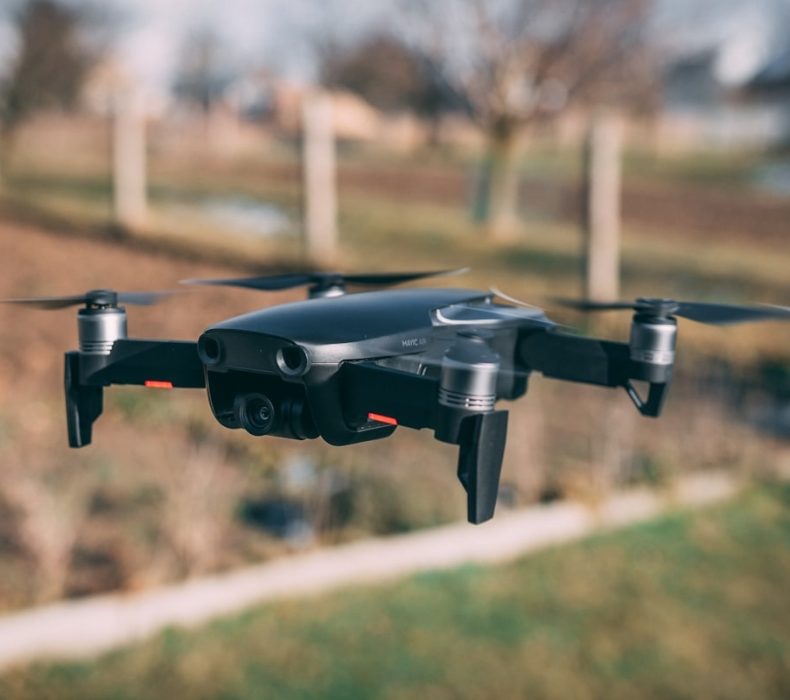
The DJI Flip is my top recommendation, full stop. At $439 for the drone-plus-controller bundle, it packs a 1/1.3-inch sensor with an f/1.7 aperture into a frame that weighs just 249 grams. That weight matters more than you'd think — anything under 250g in the US falls into a lighter FAA registration category, which means less paperwork before you can fly. The camera shoots 4K at 60fps with HDR and supports 10-bit D-Log M color, which gives you real editing flexibility in post. I pulled usable handheld-equivalent shots at dusk that my buddy's older Mavic Mini couldn't touch.
Flight time tops out at 31 minutes, and DJI's O4 transmission system pushes a clean live feed out to 13 kilometers. The folded dimensions — 136 x 62 x 165mm — mean this thing genuinely fits in a jacket pocket. Not a cargo pocket. A normal jacket pocket. One knock: it struggles in winds above 20 mph, sometimes refusing to execute advanced shooting modes when gusts pick up. For calm-weather flying and travel, though, nothing else under $500 comes close. The Flip even dropped to $309 for the controller-free version earlier this year, which is absurd value if you already own a compatible DJI remote.
DJI Mini 4K: Best Budget Entry Point at $239
If $439 still feels steep for a first drone, the DJI Mini 4K at $239 is the floor I'd recommend. Below this price, you're making compromises that actually hurt the experience. The Mini 4K shoots true 4K UHD video, gets 31 minutes of flight time per charge, and transmits a 720p live feed out to 10 kilometers. It weighs under 249 grams, so again — lighter registration requirements.
The sensor is smaller than the Flip's, and you won't get the same low-light performance or color depth. That's the trade-off. But for daytime flying, vacation clips, and learning how to frame aerial shots without worrying about crashing a $500 investment, it's perfect. A friend of mine bought one for a road trip across Utah last spring and came back with footage that looked like it belonged in a tourism ad. The 3-axis gimbal keeps everything smooth even when you're still learning stick control, which is exactly what beginners need. No EIS hackery — actual mechanical stabilization.
DJI Mini 3: The Best All-Rounder for Most Pilots
The DJI Mini 3 sits right in the middle of this list at $335 to $469 depending on the bundle, and it's arguably the best drone under $500 for the widest range of people. It packs a 1/1.7-inch sensor that handles 4K HDR nicely, flies for up to 38 minutes on a charge, and — like every sub-250g DJI — keeps you out of the heavier FAA paperwork. The vertical shooting mode is a standout feature here. Rotate the camera 90 degrees and you've got drone footage natively formatted for TikTok and Instagram Reels without cropping or losing resolution.
I've used the Mini 3 more than any other drone in this price bracket, and the thing that keeps me coming back is reliability. GPS lock is fast. Return-to-home works consistently. The app doesn't crash mid-flight (looking at you, certain competitors). It's not the newest or flashiest option DJI sells, but maturity is actually an advantage — firmware is stable, accessories are cheap, and the used market means you can sometimes find Fly More Combos with extra batteries for under $400. That's three batteries and a charging hub. Hard to beat.
Potensic Atom SE: Best Non-DJI Option Under $300
Not everyone wants to buy DJI, and I respect that. The Potensic Atom SE is the strongest alternative, coming in between $199 and $299 depending on whether you grab the standard kit or the Fly More Combo. It shoots 4K at 30fps using a Sony CMOS sensor, weighs under 249 grams, and offers 31 minutes of flight time. The PixSync 2.0 transmission system gives you a 720p live feed at up to 4 kilometers, which is shorter range than DJI but plenty for recreational flying.
Here's the honest take: the camera is good but not great. There's no mechanical gimbal — stabilization is handled by ShakeVanish EIS, which works fine in gentle conditions but introduces slight jello artifacts in choppier winds. You also lose obstacle avoidance entirely, so this isn't a drone you hand to someone who's never flown before and walk away. But the build quality surprised me. The quad-satellite GPS positioning (GPS + GLONASS + Galileo + BeiDou) locks fast, and the Sport mode hitting 16 m/s in 2.8 seconds is genuinely fun. For the price, it's a lot of drone.
Holy Stone HS720G: Budget GPS Drone With a Gimbal
The Holy Stone HS720G carves out a niche at around $300 by offering something most budget drones skip — a 2-axis mechanical gimbal with EIS handling the third axis. That hybrid approach produces noticeably smoother footage than pure-EIS drones at this price. It shoots 4K video and photos, weighs 377 grams (so you will need FAA registration), and gets about 26 minutes of flight time per battery. Not as long as the DJI options, but decent.
The control range is where things get interesting — and by interesting, I mean limited. Holy Stone lists 300 meters for the controller, and in my experience, the reliable Wi-Fi video feed holds steady around 120 meters at altitude. That's fine for park flying and real estate photos, but don't expect DJI-tier range. No obstacle avoidance either. The brushless motors are a nice touch at this price point, running quieter and lasting longer than brushed alternatives. If you want a gimbal-stabilized camera drone and DJI's ecosystem doesn't appeal to you, the HS720G is worth a look. Just don't expect miracles at distance.
What Specs Actually Matter Under $500
Here's where most buying guides waste your time listing every specification on the box. Skip that. Three specs matter at this price: sensor size, stabilization type, and weight class. Sensor size determines low-light performance and dynamic range — a 1/1.3-inch sensor (DJI Flip) captures dramatically more light than a 1/3-inch sensor (Potensic Atom SE). That's physics, not marketing. Stabilization type is the difference between footage you can use and footage that makes viewers seasick. Mechanical 3-axis gimbals beat EIS every time. Period.
Weight class is the sleeper spec. Under 249 grams means recreational flying in the US requires only a TRUST test completion — no Part 107, no registration number on the airframe. Cross that 250g line and you're into registration fees, external markings, and more restricted airspace rules. Every DJI drone on this list stays under that threshold. The Holy Stone doesn't. That's worth factoring into your decision, especially if you travel frequently and want to fly without carrying paperwork. Transmission range and max speed look impressive in spec sheets but rarely matter for hobbyist flying. You'll use maybe 500 meters of a 10km range. Be realistic about that.
Best Drones Under $500 for Specific Use Cases
Travel photography? DJI Flip. The pocket-sized form factor and 1/1.3-inch sensor with D-Log M support make it the obvious choice. Content creation for social media? DJI Mini 3, specifically for that vertical shooting mode — no other drone under $500 shoots native 9:16 without cropping. First-time flyer on a tight budget? DJI Mini 4K at $239. You get real 4K, real stabilization, and DJI's proven app ecosystem for less than some people spend on a nice dinner.
Real estate or small business aerial shots? The Holy Stone HS720G actually holds its own here. The gimbal keeps footage professional-looking, and most real estate flying happens within 100 meters anyway, so the limited range doesn't sting. Competitive FPV or racing? Wrong price bracket, wrong guide. You want a custom build or a dedicated FPV quad, and that's a totally different conversation. For everyone else — weekend hobbyists, vacation flyers, parents capturing backyard moments from above — the DJI Flip at $439 is the answer I keep coming back to.
Do's and Don'ts
FAQs
Is a drone under $500 good enough for professional photography?
For full-time commercial drone work, you'll eventually want something in the $800-$1,500 range with larger sensors and more solid transmission systems. But for freelance real estate shots, social media content, and portfolio building? Absolutely. The DJI Flip's 1/1.3-inch sensor with 48MP resolution and D-Log M color profile produces files that hold up well in post-production. I've seen real estate agents use Mini 3 footage on listing sites and nobody questions the quality. Start here, upgrade when clients demand it.
Do I need to register my drone with the FAA?
If your drone weighs under 249 grams and you're flying recreationally, you don't need to register — but you still need to pass the TRUST (The Recreational UAS Safety Test). It's free and takes about 30 minutes online. Drones over 250 grams require registration ($5 for three years) and you must display the registration number on the drone. Every DJI model on this list except the Holy Stone HS720G stays under that 249g threshold, which is one reason I lean toward DJI at this price point.
What's the difference between EIS and a mechanical gimbal?
Electronic Image Stabilization (EIS) uses software to crop and shift the image frame-by-frame to reduce shake. A mechanical gimbal physically moves the camera on motorized axes to counteract movement. Gimbals produce smoother, more natural-looking footage and don't sacrifice field of view the way EIS does. At the sub-$500 level, the DJI Flip, Mini 3, and Mini 4K all use 3-axis mechanical gimbals. The Potensic Atom SE relies entirely on EIS. In calm conditions you might not notice, but in any wind, the difference is obvious.
How far can budget drones actually fly?
DJI's O4 transmission system on the Flip claims 13 kilometers, and the Mini 3 and Mini 4K advertise similar ranges. In practice, with trees, buildings, and signal interference, expect reliable video at 2-4 kilometers. The Potensic Atom SE caps out around 4 kilometers in ideal conditions, and the Holy Stone HS720G realistically holds about 120 meters of reliable video. For recreational use, you'll rarely fly beyond 500 meters anyway — line-of-sight rules technically require you to see the drone at all times.
Can I fly a drone in the rain?
Short answer: don't. None of the drones on this list carry an IP weather-resistance rating. Moisture can damage the gimbal motors, short circuit the battery contacts, and fog the camera lens from the inside. Even light drizzle is risky. If you absolutely need wet-weather capability, you're looking at specialized industrial drones that cost several thousand dollars. Fly in clear conditions, and if weather moves in unexpectedly, land immediately. A $400 drone isn't worth saving a shot over.
Which drone has the best camera under $500?
The DJI Flip wins here with its 1/1.3-inch sensor, f/1.7 aperture, 4K/60fps HDR, and 10-bit D-Log M support. That sensor size is the same one DJI uses in drones that cost twice as much. The Mini 3's 1/1.7-inch sensor comes second — still very capable, especially in good light. The gap widens significantly when you move to the Potensic Atom SE's 1/3-inch Sony sensor, which handles daylight fine but falls apart after sunset. If camera quality is your top priority, the Flip is the clear winner.
How long do drone batteries last before needing replacement?
Most LiPo drone batteries are rated for 200-300 charge cycles before capacity starts noticeably degrading. At one flight per week, that's roughly four to six years before you need a replacement. DJI batteries run $45-$65 each depending on the model, and third-party options exist but I'd avoid them — battery management systems in non-OEM packs have caused issues. Store batteries at 40-60% charge if you won't fly for more than a week, and never leave them fully charged or fully depleted for extended periods. That's the single best thing you can do for longevity.











 Get it on
  Download on the