Your phone hits 12% at 2 PM and you're nowhere near an outlet. We've all been there. The portable charger market in 2026 looks wildly different from even two years ago — Qi2 wireless speeds have jumped to 25W, USB-C PD 3.1 pushes 250W through a single cable, and capacities that once required a brick now fit in something barely thicker than your phone. The problem isn't finding a power bank anymore. It's finding the right one among hundreds of options that all claim to be "the best." I've spent weeks testing over a dozen models, measuring actual output wattage, real-world charge times, and heat buildup. If you want the best power banks in 2026 without wading through marketing fluff, keep reading.
This roundup covers every category — compact daily carriers under $35, mid-range workhorses, premium 250W laptop chargers, and magnetic Qi2 options for iPhone users. Every recommendation comes from hands-on testing with an iPhone 17 Pro, a Pixel 10, a MacBook Air M4, and a Galaxy S26. I'll tell you which ones earned a permanent spot in my bag, which surprised me, and which overhyped models you should skip. Fair warning — some popular picks didn't make the cut.
Best Overall: Anker Nano 10,000mAh (30W) — $29.99
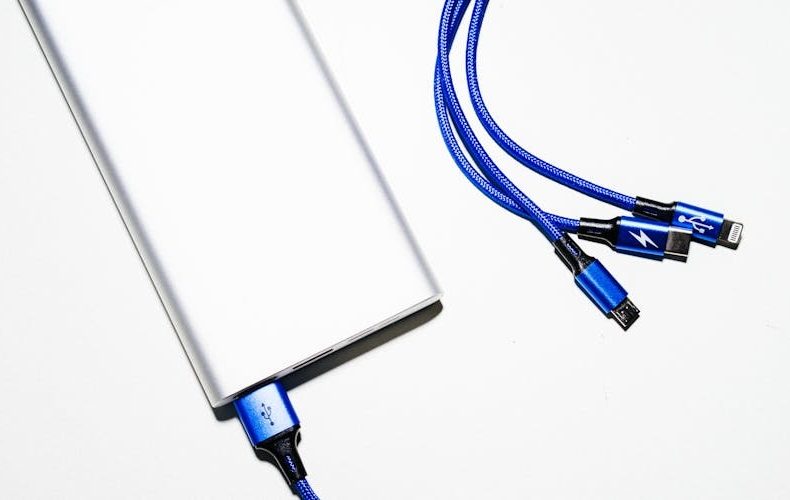
The Anker Nano is the power bank I grab most often. Not because it's the most powerful, but because its built-in USB-C cable removes every excuse not to carry it. At 4.09 x 2.06 x 1.02 inches, it fits in jeans pockets without thinking twice. It pushed an iPhone 17 Pro from dead to 52% in 30 minutes using 30W PD output. One USB-C plus one USB-A port means you can top off earbuds while your phone charges. The bank itself recharges in about 90 minutes with a 30W charger — fast enough for a lunch break. Easiest recommendation I can make.
Best for Laptops: Anker Prime 27,650mAh (250W) — $179.99
If you carry a MacBook, this is the one. Period. The Anker Prime's 250W multi-device output through PD 3.1 is genuinely absurd — two USB-C ports maxing at 140W each plus a 65W USB-A port. I charged a MacBook Air M2 from zero to full 1.28 times on a single charge. The 99.54Wh capacity squeezes just under TSA's 100Wh carry-on limit. Dual-input charging fills the entire bank in 37 minutes flat. That's faster than most phones charge themselves. Not cheap, but nothing else comes close for laptop-grade portable power.
Best Budget: INIU B41 10,000mAh — $20
Twenty bucks. At 0.5 inches thick and 198 grams, the B41 is the thinnest 10K power bank I've tested. One USB-C and two USB-A ports give you three devices at once. It charged a Pixel 7a from 50% to full in about 90 minutes. The catch? Only 15W output — no fast charging for modern flagships, forget about laptops. But for keeping your phone alive during a long day, the B41 nails it. Built-in flashlight is oddly useful during power outages too.
Best Wireless: Baseus PicoGo AM52 (Qi2, 25W) — $79.99
The AM52 delivers 25W Qi2 magnetic wireless charging alongside 45W wired USB-C, and it's the slimmest 25W 10,000mAh power bank available. Snap it onto an iPhone 17 Pro and it charges immediately — no cable fumbling. It hit 33% on an iPhone 16 Pro Max in roughly 20 minutes, about 50% faster than older MagSafe banks. Both AppleInsider and Macworld gave it editor's choice awards. At $80, you're paying a premium over wired-only options. But magnetic snap-on charging while walking around genuinely changes how you top off your phone.
Best High-Capacity: Baseus EnerGeek GR11 25,000mAh (200W) — ~$62
Baseus quietly released a monster. The GR11 has a retractable 140W USB-C cable built into the body, plus a detachable cable that doubles as a carrying strap. No extra cables to lose. Self-charging at 140W refills 25,000mAh in about 1 hour 45 minutes, which is remarkably fast for this capacity. At roughly $62, it undercuts the Anker Prime significantly. Build quality doesn't quite match Anker's premium feel, and no companion app. But pure value per milliamp-hour? Nothing touches it.
Best Power Banks in 2026: What Actually Matters When Buying
Capacity numbers lie. A "20,000mAh" bank loses 15-25% through voltage conversion and heat, so you're really getting 15,000-17,000mAh of usable power. Generic no-brand units are worse — capacity fraud where actual capacity is 30-50% of stated remains rampant. Stick with Anker, Baseus, INIU, or UGREEN. For speed, you want at least 30W PD for modern smartphones and 65W+ for laptops. Qi2 certification matters for wireless — look for the official logo, not just "MagSafe compatible" marketing. Always check the Wh rating against TSA limits before flying.
Do's and Don'ts
FAQs
How many times can a 10,000mAh power bank charge my phone?
A 10,000mAh bank loses roughly 20% to voltage conversion, leaving about 8,000mAh usable. An iPhone 17 Pro with its ~3,600mAh battery gets about 2.2 full charges. A Galaxy S26 Ultra with its 5,000mAh cell gets closer to 1.5. Always subtract 15-25% from rated capacity for realistic estimates.
Is Qi2 wireless charging on power banks worth it?
If you own an iPhone 16 or newer, yes. Qi2 pushes 15-25W with proper magnetic alignment — roughly 50% faster than older MagSafe pucks. The Baseus AM52 hit 33% on an iPhone 16 Pro Max in 20 minutes. Android users should check if their phone supports Qi2 specifically, since many flagships still max at 15W Qi wireless.
Can I take a power bank on an airplane?
Yes, with limits. TSA allows under 100Wh in carry-on without restriction. Between 100-160Wh, you need airline approval. Above 160Wh, it's banned. To calculate: multiply mAh by 3.7V, divide by 1,000. The Anker Prime at 27,650mAh equals 99.54Wh — just under the limit by design. Power banks must go in carry-on, never checked bags.
How long do power banks last before needing replacement?
Quality lithium-ion banks maintain 80% capacity through 500-800 charge cycles. Daily users get 2-3 years; weekend users stretch to 4-5. Signs to replace: longer charge times, unusual heat, or your phone only hitting 60% from a previously full bank. Store at 40-60% charge in a cool place.
What's the difference between PD, QC, and regular USB charging?
Power Delivery (PD) scales from 5W to 240W and is the universal standard in 2026. Quick Charge (QC) is Qualcomm's older protocol, mostly for legacy Android phones. Regular USB tops at 12W. Prioritize PD support — it works with iPhones, Android flagships, iPads, and USB-C laptops alike.
Does pass-through charging damage the power bank?
Not on quality units from Anker, Baseus, or UGREEN — they build thermal management into pass-through circuits. It generates more heat than sequential charging, though. Use it when convenient, like overnight at a hotel, but don't make it your daily default. If the bank gets noticeably hot during pass-through, let it cool down.











 Get it on
  Download on the