






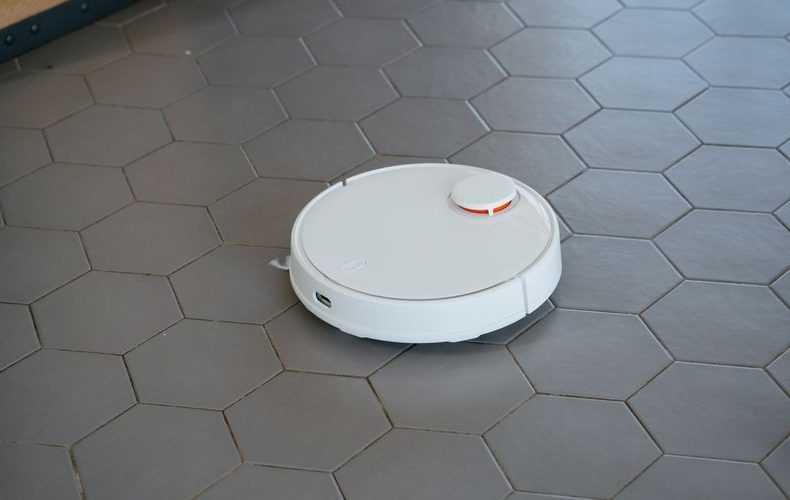
I've been running robot vacuums in my home since the Roomba 600 days, and most of them ended up collecting dust themselves — ironic, I know. So when Roborock dropped the S9 MaxV Ultra (marketed as the Saros 10 in the US), I was skeptical. Another $1,300 robot promising to "revolutionize" floor cleaning. Sure. But after running it daily across 1,800 square feet of mixed hardwood and carpet for several weeks, I'll admit something uncomfortable: this thing actually delivers on most of its promises. The 22,000Pa suction isn't just a spec-sheet flex. You can hear the difference when it hits a high-pile rug, and the dust bin tells the story every single time. That retractable LiDAR sensor — letting it squeeze under furniture just 7.98 cm tall — is the kind of engineering detail that separates genuine innovation from marketing noise.
Here's what this Roborock S9 MaxV Ultra review covers: real-world cleaning performance on different floor types, how the Reactive AI 3.0 obstacle avoidance actually handles a lived-in home (spoiler: cables are still a problem), whether the RockDock Ultra 2.0 station justifies the premium, and honest comparisons to the older S8 MaxV Ultra. I've also tested the hot-water mop system in a kitchen that sees daily cooking messes, and I'll break down exactly where this vacuum earns its price tag — and where it doesn't. No sponsored talking points. Just what I'd tell a friend who texted me asking if they should pull the trigger on this thing.
Roborock S9 MaxV Ultra Review: Design and Build That Actually Matters
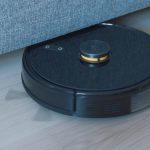
Roborock shaved the S9 MaxV Ultra down to 7.98 cm tall. That's 1.67 cm thinner than the S8 MaxV Ultra, and the difference isn't trivial — my couch sits at roughly 9 cm clearance, and the S8 couldn't fit. The S9 slides right under. How? A retractable LDS sensor that drops the robot's profile when it detects low furniture. Clever. The body measures 350 x 353 mm, and at around 3.7 kg, it's manageable if you need to carry it between floors. The top panel is clean — no visible camera bump this time — and the bumper feels more rigid than previous generations. One small gripe: the white model picks up scuff marks from chair legs within the first week. Go black if you care about aesthetics. The dual anti-tangle roller brush system genuinely works better than the single-brush setup on the S8 series — I pulled out maybe three strands of hair after a full week of cleaning in a two-person, one-dog household. That used to be a tangled mess every two days.


22,000Pa Suction: Overkill or Justified?
The headline spec. Twenty-two thousand Pascals of suction, more than double the S8 MaxV Ultra's 10,000Pa. On bare hardwood, honestly, you won't notice a difference — 10,000Pa was already plenty for surface debris. Where the extra power shows up is embedded dirt in medium and high-pile carpets. I ran a side-by-side test: one pass with my old S8 MaxV, one pass with the S9, same carpet strip. The S9 pulled out noticeably more fine dust and pet hair from the carpet base. The dustbin was roughly 40% fuller after a single room. That said, 22,000Pa on max mode is loud — around 67 dB, which is louder than a normal conversation. Quiet mode drops to 59 dB but also cuts suction significantly. I run it on balanced mode while I'm out, and it handles everything fine. The intelligent dirt detection bumps suction automatically over problem areas, which means you're not stuck choosing between noise and performance all the time.

Reactive AI 3.0: Smarter Obstacle Avoidance, With Caveats
Roborock claims the S9 MaxV Ultra recognizes 108 object types using a combination of structured light sensors, RGB camera, and VertiBeam side detection. Shoes, socks, pet bowls, chair legs — it navigates around all of these reliably. I threw the usual gauntlet at it: a dog toy, a pair of sneakers, a small backpack on the floor. Dodged everything. Impressive. But cables? Still a weak point. A thin white charging cable on a light-colored floor got rolled over twice in my testing. Roborock has improved cable detection significantly from the S8, but it's not bulletproof. If you have charging cables snaking across your floor, pick them up first. The 3D mapping is legitimately fast — it mapped my entire ground floor (about 90 square meters) on the first run and created an accurate multi-room layout. You can set no-go zones, room-specific cleaning schedules, and even furniture-specific cleaning intensity through the Roborock app. The LiDAR navigation is precise enough that it rarely bumps walls or furniture — maybe a light touch on corners once every few runs.

The RockDock Ultra 2.0 Is Where the Money Goes
Let's be honest: half of this vacuum's $1,300 price tag is the dock. The RockDock Ultra 2.0 is a 9-in-1 station that handles self-emptying, mop washing with 80°C hot water, hot-air drying, automatic detergent dispensing, and water refilling. It's big — about the size of a small kitchen appliance — so plan your placement. The hot water mop wash is genuinely effective. After cleaning a kitchen floor with dried sauce splatters, the mop pads came back looking nearly new after the dock's wash cycle. The dock also dries the pads using hot air, which takes about 2.5 hours. That drying time is the one downside — if you run the robot twice a day, the pads might still be damp for the second run. The 2.7-liter dust bag in the dock lasts roughly 7 weeks in my testing before it needed replacing, and the auto-refill water tank means I only top it up every 10 days or so. There's also an optional refill and drainage kit ($200 extra) that connects directly to your home's water supply — worth it if you have a utility closet nearby.

Roborock S9 MaxV Ultra Review: Mopping Performance
The VibraRise 4.0 mop system vibrates at 4,000 times per minute, and the 18 mm auto-lift ensures carpet stays dry. That lift height matters — the S8 only managed 5 mm, which meant low-pile rugs still got slightly damp. Problem solved. On hardwood and tile, the mopping leaves a consistent, streak-free finish for everyday maintenance. Dried coffee rings, sticky juice spots from the kids, muddy paw prints — all handled in a single pass on the intensive mopping mode. Where it struggles: heavy, dried-on grime and corners. The mop pad can't press into right-angle corners or reach under kitchen cabinet toe-kicks, so you'll still need a manual mop for those spots every couple of weeks. The 70 ml onboard water tank is small, but the dock refills it between rooms on larger cleaning jobs, so it's rarely an issue in practice. One thing I appreciate — the mop self-cleans mid-cycle on longer runs, returning to the dock to wash and then resuming exactly where it left off.

Battery Life and Coverage: Built for Big Homes
The 6,400 mAh battery is a beast. Roborock claims 220 minutes of runtime, and I measured around 195 minutes on balanced mode across mixed floors — close enough. That translates to roughly 240 square meters of coverage on a single charge. My 160-square-meter ground floor finishes with about 35% battery remaining. For larger homes, the S9 uses smart charging: it calculates remaining cleaning area, charges just enough to finish, and gets back to work. Full recharge takes 150 minutes at the dock. Compared to the S8 MaxV Ultra's 180-minute runtime and 5,800 mAh battery, that's a meaningful bump. If your home is under 150 square meters, you'll never think about battery life. Period. For multi-story homes, you'll want a dock on each floor — the robot maps each floor independently, which is handled well in the app.

S9 MaxV Ultra vs. S8 MaxV Ultra: Worth the Upgrade?
If you already own the S8 MaxV Ultra, here's the honest math. The S9 gives you 2.2x the suction (22,000Pa vs. 10,000Pa), a 1.67 cm lower profile for under-furniture cleaning, 35 additional object types in AI recognition, 20°C hotter mop water (80°C vs. 60°C), and three extra dock features. That's a real generational leap on paper. In daily use? The lower profile is the single biggest practical upgrade — suddenly half the furniture in your home gets cleaned underneath without you moving anything. The suction improvement matters most on thick carpets. If you have mostly hardwood, the S8 was already sufficient. The AI upgrades are incremental but noticeable — fewer accidental bumps, better furniture edge cleaning. My take: if your S8 is less than a year old, hold off. If you're coming from anything older — the S7, an iRobot, or any mid-range competitor — the S9 MaxV Ultra is a massive step up. Not even close.

Smart Home Integration and App Experience
Matter 2.0 support means the S9 MaxV Ultra works with Apple Home, Google Home, Alexa, and Samsung SmartThings without separate hubs or workarounds. Voice commands through Siri or Alexa are responsive — "clean the kitchen" triggers the right room zone within seconds. The Roborock app itself remains one of the best in the robot vacuum space. Real-time 3D mapping, room-by-room cleaning schedules, suction and water flow adjustments per room, and cleaning history with coverage maps. The app also lets you view the robot's camera feed remotely for pet monitoring, though the camera quality is strictly functional — don't expect Ring doorbell clarity. Firmware updates arrive every 4-6 weeks and have actually improved performance since launch. The January 2026 update notably improved edge detection and reduced the number of missed spots along walls. One annoyance: the app requires a Roborock account, and the initial setup process involves about 8 steps. Not the end of the world, but not exactly plug-and-play either.

Do's and Don'ts

FAQs
Is the Roborock S9 MaxV Ultra worth $1,300?
It depends on your home and expectations. If you have a mix of carpet and hard floors, pets, and a home over 100 square meters, the S9 MaxV Ultra replaces daily vacuuming and most routine mopping entirely. I haven't touched my upright vacuum in weeks. The dock automation alone — self-emptying, hot-water mop washing, auto-drying — saves roughly 30 minutes of maintenance per week compared to cheaper robots. For a studio apartment with only hardwood, you'd get 80% of the value from a Roborock Q Revo MaxV at half the price. The S9 earns its premium in larger, more complex homes.
How does the Roborock S9 MaxV Ultra handle pet hair?
Exceptionally well. The dual anti-tangle brush system is the biggest improvement here. My golden retriever sheds enough to knit a sweater weekly, and the S9 handles it without wrapping hair around the brush roller. The 22,000Pa suction pulls embedded pet hair from carpet fibers that the S8 left behind. The dock's 2.7-liter dust bag also means you're not emptying a tiny dustbin every day. After a week of daily runs in a shedding-heavy household, the brush assembly had almost zero tangling.
Is the Roborock S9 MaxV Ultra the same as the Saros 10?
Essentially, yes. The Saros 10 is the US-market branding for what's sold internationally as the S9 MaxV Ultra. Specs are identical — 22,000Pa suction, Reactive AI 3.0, VibraRise 4.0, RockDock Ultra 2.0. The Saros 10 retails at $1,299.99 in the US through Roborock's official store, Amazon, and Best Buy. Some international markets list it under the S9 MaxV Ultra name at equivalent pricing. Same robot, different label.
How loud is the Roborock S9 MaxV Ultra?
On quiet mode, it registers around 59 dB — comparable to a normal conversation or a quiet dishwasher. Balanced mode sits around 63 dB, which is noticeable but not disruptive if you're in another room. Max suction mode hits 67 dB, and you'll definitely hear it through a closed door. For context, most upright vacuums run between 75-85 dB. I schedule max mode runs while I'm at work and use balanced mode when I'm home. The intelligent dirt detection feature also bumps suction temporarily over dirty spots, so you might hear brief surges even in quiet mode.
Can the Roborock S9 MaxV Ultra clean under furniture?
This is its party trick. The retractable LiDAR sensor drops the robot's height to 7.98 cm (3.14 inches), which fits under most couches, bed frames, and low coffee tables. My IKEA Kivik sofa has about 9 cm of clearance, and the S9 navigates under it effortlessly — the S8 MaxV Ultra at 9.65 cm couldn't. It maps the under-furniture space accurately and includes it in its cleaning routes automatically. The only furniture it still can't reach under is anything below about 8.5 cm with tight corners, since it needs a bit of clearance beyond its own height to maneuver.
How often do you need to maintain the Roborock S9 MaxV Ultra?
Day-to-day, almost nothing. The dock handles mop washing, dust emptying, and pad drying automatically. Weekly, I'd recommend checking the anti-tangle brush for any stubborn debris — takes 30 seconds. The dock dust bag lasts about 7 weeks. The HEPA filter should be rinsed every 2-3 weeks and replaced every 6 months (replacements run about $20 for a two-pack). Mop pads last roughly 3-4 months before they lose absorbency. The dock's water tank needs refilling every 10 days or so, unless you've installed the refill and drainage system. Overall, it's the lowest-maintenance robot vacuum I've used.
Does the Roborock S9 MaxV Ultra work with Apple HomeKit?
Yes, through Matter 2.0 support. The S9 MaxV Ultra connects natively to Apple Home, Google Home, Amazon Alexa, and Samsung SmartThings. You can trigger cleaning routines through Siri, set automations based on time or location, and integrate it into broader smart home scenes. The Matter integration means it works locally without cloud dependency for basic commands, which is a nice privacy bonus. Setup takes about 5 minutes through the Roborock app — scan a Matter QR code, and it appears in your Home app.
What's included in the box with the Roborock S9 MaxV Ultra?
You get the robot itself, the RockDock Ultra 2.0 station, two mop pads, one dust bag (pre-installed), one HEPA filter (pre-installed), a power cable for the dock, a quick-start guide, and a small bottle of Roborock's floor cleaning solution. The refill and drainage system is sold separately for around $200. Extra dust bags come in packs of three for approximately $25, and replacement mop pads are about $20 for a two-pack. No remote control included — everything is managed through the app or voice assistants.
Related Posts:



Twenty years from now you will be more disappointed by the things that you didn’t do than by the ones you did do. Sail away from the safe harbor.
 Get it on
  Download on the