






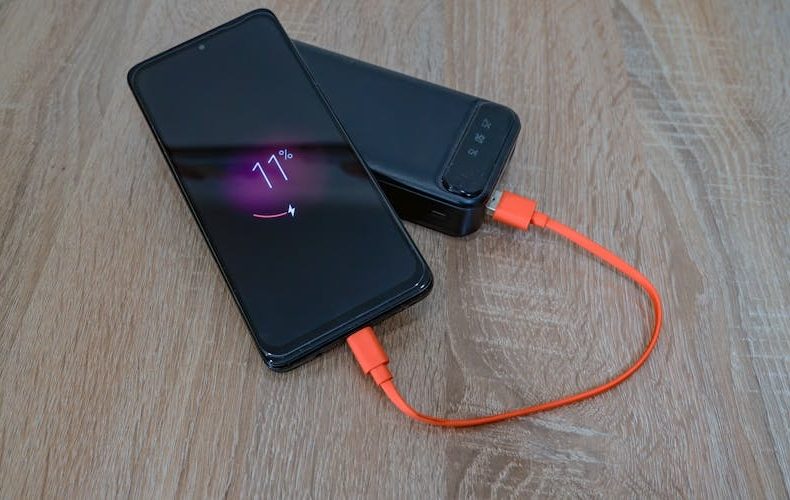
You know that feeling when your phone hits 15% at 2 PM and you're nowhere near a charger? Awful. I've been there more times than I'd like to admit, usually right when I need GPS navigation or have to jump on a video call. The good news is that 2026 has genuinely changed things for phone batteries. Silicon carbon tech has gone mainstream, manufacturers are cramming 7,000+ mAh cells into phones that don't feel like bricks, and software optimization finally punches above its weight. If you're shopping for the best battery life phones 2026 has to offer, you've got real options now, not just incremental bumps over last year.
I've spent months rotating through about a dozen phones, tracking screen on time, charging speeds, and how each holds up during heavy days of streaming, camera use, and navigation. Some genuinely lasted two full days. Others disappointed despite impressive spec sheets. This isn't a regurgitation of press releases, it's what held up when I was running Google Maps for three hours, shooting 4K video, and doom scrolling Reddit at midnight. This guide breaks down exactly which phones deliver and which are all talk.
Best Battery Life Phones 2026: The Top Contenders
The market splits into three tiers. At the top sits the Realme P4 Power with its absurd 10,001 mAh silicon carbon battery, 34 hours of Wi Fi browsing in testing. The OnePlus 15 packs a 7,300 mAh cell that delivered over 25 hours in Tom's Guide's rundown test. Then you've got flagships from Apple and Samsung, where the iPhone 17 Pro Max (5,088 mAh) and Galaxy S26 Ultra (5,000 mAh) win on efficiency rather than raw capacity. The iPhone actually topped a 35 phone battery comparison despite having a smaller cell than most Android competitors. Efficiency matters. A lot. Mid range has surprises too, the Moto G Play 2026 with 5,200 mAh managed nearly 25 hours of browsing at a fraction of the flagship price.


Silicon Carbon Batteries: Why Best Battery Life Phones 2026 Are Different
Traditional lithium ion batteries have been stuck at roughly the same energy density for years. Silicon carbon anodes flip that by packing more energy into the same space, OnePlus says their SiC cells use an anode with 15% silicon content. The OnePlus 15 fits 7,300 mAh into a body thinner than the Galaxy S26 Ultra and its 5,000 mAh cell. That's material science delivering, not marketing. Realme pushed further with 10,001 mAh in a chassis just 9.1mm thick. Samsung still hasn't adopted SiC for the S26 lineup, which feels like a miss at $1,299. They're relying on efficiency gains instead, the S26 Ultra gained nearly two hours over the S25 Ultra with identical capacity, but they're leaving room on the table.


OnePlus 15: The Endurance Champion
The phone I'd hand to anyone who says "I just want my phone to last." Period. That 7,300 mAh silicon carbon battery delivered 25 hours and 13 minutes in standardized testing, legitimately two days of moderate use. I took it on a weekend trip without a charger. Came home Sunday evening with 22% left. The Snapdragon 8 Elite Gen 5 paired with a 165Hz AMOLED handles heavy gaming and 4K recording without the battery flinching. Charging is bonkers: 80W wired in the US, 50W wireless, zero to full in about 35 minutes. At $899 for 12GB/256GB, it undercuts the Galaxy S26 Ultra by $400. The camera isn't quite Samsung or Apple tier, but for pure endurance? Nothing mainstream touches it.


iPhone 17 Pro Max vs. Galaxy S26 Ultra: The Flagship Battery Fight
Apple doesn't win the spec war, 5,088 mAh looks modest next to 7,300 mAh. But the 17 Pro Max topped a 35 phone battery test through sheer optimization. Custom silicon, custom OS, custom power management. In daily use, it consistently lasted 7 AM to midnight with about 7 hours of screen on time. At $1,199, you're paying for that Apple ecosystem polish. Samsung's Galaxy S26 Ultra took the conservative route: same 5,000 mAh as last year, but the new chip runs cooler and the display adapts refresh rates more aggressively. Result? 16 hours and 10 minutes in GSMArena's test, nearly two hours better than the S25 Ultra. Charging jumped to 60W, past 50% in 15 minutes. At $1,299, the S26 Ultra is the more complete phone (S Pen, titanium frame, 200MP camera), but battery life is good, not best in class.


Budget Picks That Outlast Flagships
Not everyone wants to spend $900 plus. Good news. The Moto G Play 2026 packs 5,200 mAh and managed nearly 25 hours of web browsing. It's a $200 phone. Flagship level endurance at a fifth of the price. Trade offs are real, slower processor, mediocre camera, 90Hz LCD. But the battery? Phenomenal. Then there's the Realme P4 Power with 10,001 mAh and 80W charging. It lasted 34 hours of continuous Wi Fi browsing. Forty one hours of video playback. Staggering. Priced around $300 with a Dimensity 7400 Ultra, 6.8 inch 144Hz AMOLED, and 9.1mm thickness. Available primarily in Asian markets for now. If absolute battery endurance is all you care about, nothing else comes close.

Google Pixel 10 Pro: Software Smarts Over Raw Capacity
Google's approach is pure software intelligence. The Pixel 10 Pro has a 4,870 mAh battery, smaller than most here, yet delivers 30 hours of mixed use. The Tensor G5 uses on device AI to learn your usage patterns and manage power preemptively. A friend switched from the S25 Ultra and noticed he was ending days at 40% instead of 15%. Extreme Battery Saver stretches to a claimed 100 hours, though you're basically using a feature phone at that point. At $899, you're choosing camera excellence and software smarts over raw capacity. Fair trade off for most people.

Charging Speeds: The Other Half of the Equation
When you do need to charge, speed matters. OnePlus 15 leads at 80W wired, full in 35 minutes. Samsung's S26 Ultra jumped to 60W, hitting 50% in 15 minutes flat. Apple still trails at roughly 30W. The Pixel 10 Pro charges at 27W, honestly a bit slow for 2026. All support wireless charging now, from 15W (Pixel, iPhone via Qi2) to 50W (OnePlus). If you constantly top up rather than doing overnight charges, OnePlus and Samsung give you the most juice fastest.

Do’s and Don’ts
Battery life is one of the few phone specs where your habits matter as much as the hardware. A OnePlus 15 owner who runs the screen at full brightness with every app refreshing in the background will finish the day worse off than someone getting sensible settings out of a Moto G Play 2026. The table below collects what actually moves the needle, both while you are shopping and once the phone is in your pocket.

Most of the buying advice comes down to one idea: trust measured screen on time over marketing numbers. Manufacturer claims are recorded under ideal conditions, on a fresh cell, usually at moderate brightness with nothing syncing in the background. Independent rundown tests that publish their methodology give you a figure you can compare across phones, which is the only way to spot when a smaller cell like the one in the iPhone 17 Pro Max beats a bigger one on optimization alone.
The ownership advice matters even more across two or three years. Heat and constant charging to 100% are what wear a cell down, so stopping at 80% and keeping the phone out of direct sun while it fast charges will do more for long term capacity than anything buried in the battery menu. Audit background refresh and location permissions every month or so, keep the OS updated for power management patches, and remember that 5G, full brightness and always on displays are the three biggest drains on nearly every phone here.
| Do’s | Don’ts |
|---|---|
| Check real-world battery tests from Tom's Guide or GSMArena, not just mAh specs | Don't assume bigger mAh always means longer battery life . efficiency matters equally |
| Consider silicon-carbon phones like the OnePlus 15 for maximum endurance | Don't ignore charging speed . a fast top-up compensates for moderate battery life |
| Turn on adaptive battery features (Pixel, Samsung) | Don't keep screen brightness at 100% all day . single biggest battery killer |
| Use dark mode on OLED screens for meaningful battery savings | Don't leave unused apps running background refresh . audit settings monthly |
| Buy at least 5,000 mAh if battery life is a priority | Don't charge to 100% nightly for long-term health . stop at 80% |
| Look at mid-range options like Moto G Play if battery trumps camera | Don't buy based on manufacturer claims alone . they test under ideal conditions |
| Check for fast wireless charging support | Don't use uncertified third-party fast chargers |
| Compare screen-on time across reviews, not standby hours | Don't forget 5G drains faster than Wi-Fi in most scenarios |
| Update your OS regularly for battery optimization patches | Don't dismiss software optimization . it's why iPhone beats larger Android batteries |
| Factor in battery degradation over 2-3 years when choosing capacity | Don't keep location services on for every app . limit to what you actually need |
FAQs
These are the questions that come up most often once people start comparing endurance numbers. The answers below draw on the same testing referenced throughout this guide.
Which phone has the best battery life in 2026?
For raw endurance, the Realme P4 Power with its 10,001 mAh silicon carbon battery takes the crown at 34 hours of continuous browsing. For a flagship experience, the OnePlus 15 (7,300 mAh, 25+ hours) and iPhone 17 Pro Max (5,088 mAh, topped a 35 phone test) are the strongest picks. It depends on whether you prioritize absolute screen on time or overall phone quality paired with great endurance.
Are silicon carbon batteries safe?
Yes. They've been commercially available since late 2024 and use the same fundamental lithium ion chemistry with a partially silicon anode. Energy density increases 15-20% without changing charge speeds, temperature handling, or degradation rates. OnePlus backs the 15's battery with a 1,600 cycle guarantee, 80% capacity after four years of daily charging.
How long does the OnePlus 15 actually last?
Tom's Guide measured 25 hours and 13 minutes. In my real world use with social media, streaming, GPS, and some gaming, I consistently had 40-50% remaining by bedtime. Lighter days with messaging and browsing? Genuinely two full days. The 7,300 mAh silicon carbon cell makes this routine.
Is the iPhone 17 Pro Max worth it for battery life alone?
If you're in Apple's ecosystem, absolutely. It delivered the best battery life of any iPhone ever, with 4 more hours per charge than the 15 Pro Max. But at $1,199, the OnePlus 15 at $899 offers significantly more endurance for less money if you're platform agnostic.
Does 5G drain battery faster?
Noticeably. 5G radios consume more power than LTE, especially on mmWave. Switching to LTE only typically adds 1-2 hours of screen on time. If you're in an area with spotty 5G, your phone burns extra battery searching for a signal. Toggling to LTE there makes a real difference.
How does fast charging affect battery health?
Modern fast charging is much smarter than three years ago. Phones like the OnePlus 15 and S26 Ultra use multi stage charging that slows as the battery fills. OnePlus claims 80% health after 1,600 cycles. The real enemy isn't speed, it's heat. Skip charging in direct sunlight and remove thick cases during charging.
What's the best budget phone for battery life?
The Moto G Play 2026 at $200 delivered nearly 25 hours of browsing, rivaling phones five times the price. The Realme P4 Power at $300 is the absolute endurance champion, though availability outside Asia remains limited. Both trade camera and processing power for unmatched battery per dollar.
Should I just buy the biggest battery?
Not necessarily. The iPhone 17 Pro Max proved a 5,088 mAh battery with great optimization outlasts poorly optimized 6,500 mAh phones. Processor efficiency, display tech, and software all matter. Check independent test results, not raw mAh numbers.
Related Posts:




- Tags:
- best battery life phones 2026
- best phone battery life
- budget phones battery life
- fast charging phones 2026
- iPhone 17 Pro Max battery
- longest lasting smartphones
- OnePlus 15 battery life
- Pixel 10 Pro battery
- Realme P4 Power 10000mAh
- Samsung Galaxy S26 Ultra battery
- silicon carbon battery phones
- smartphone battery comparison

Twenty years from now you will be more disappointed by the things that you didn’t do than by the ones you did do. Sail away from the safe harbor.
 Get it on
  Download on the