There is a number that no product listing will ever show you, and it is the only number that matters by the end. Price divided by actual uses. A $1,000 device used daily for four years costs about 68 cents per use, while a $200 gadget used six times costs $33 per use, which makes the cheap one fifty times more expensive in the only accounting that survives contact with real life. So I spent an evening with receipts, memory, and honesty, calculating cost per use for every piece of technology I own, and the resulting league table is the most clarifying document my buying habits have ever produced.
The top of the table is a parade of boring objects. The bottom is a museum of enthusiasm. And the pattern between them has changed what I buy more than any review ever has.
The League Table
Gadget
Price
Honest lifetime uses
Cost per use
WiFi router
$120
Every hour of five years
Effectively zero
GaN charger
$45
Twice daily, three years
About 2 cents
Earbuds
$90
Daily, two and a half years
About 10 cents
Monitor
$180
Every workday, four years
About 18 cents
Robot vacuum
$450
Daily, two years
About 62 cents
Kindle style reader
$130
A few times weekly, three years
About 28 cents
Smartwatch
$250
Daily, three years
About 23 cents
Games console
$400
Twice weekly, three years
About $1.28
Tablet
$500
Weekly at best, three years
About $3.20
Instant camera
$110
Eleven uses
$10 per use
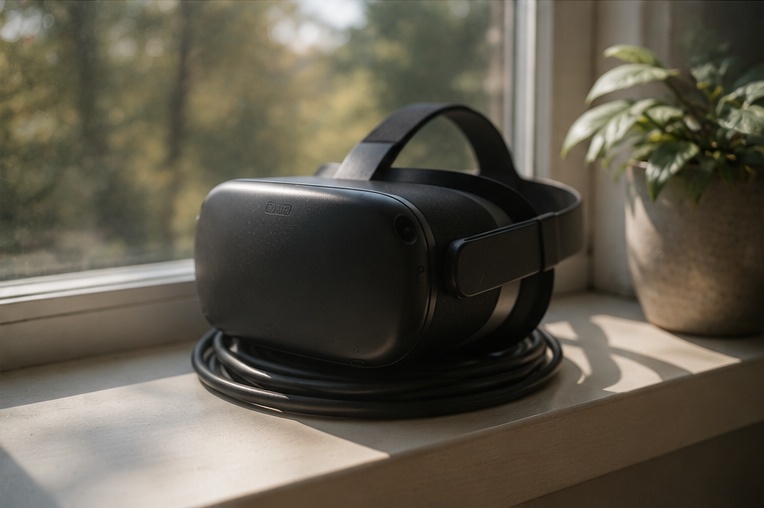
VR headset
$430
Fourteen sessions
About $31 per use
Drone
$380
Six flights
About $63 per flight
The figures are my honest estimates rather than laboratory records, and yours would differ, which is rather the point, since the exercise only works on your own shelf with your own honesty.
What the Top of the Table Teaches
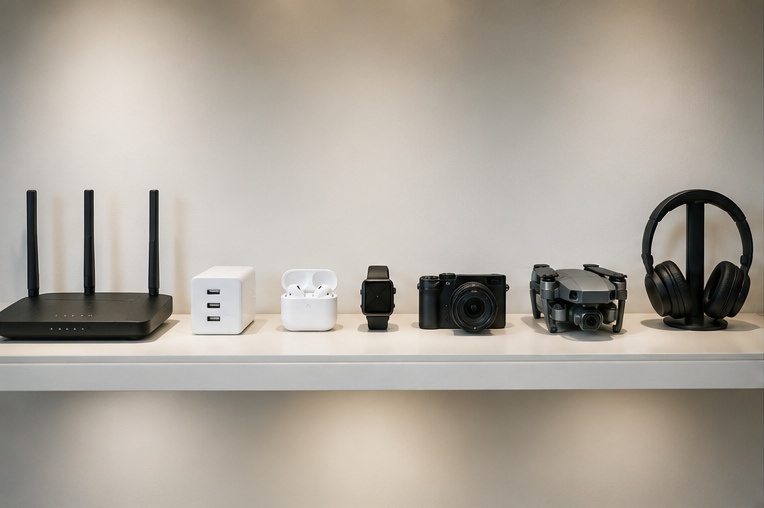
The champions share one trait so completely that it amounts to a law. They are woven into routines rather than summoned for occasions. The router wins by being invisible infrastructure, the charger and earbuds win by owning slots in every single day, and the monitor wins by owning the workday itself, which is why our upgrades guide keeps steering money toward exactly these categories. Even the expensive entries near the top earn their places the same way, with the robot vacuum converting a $450 price into pennies per clean by simply running every morning, a daily habit our vacuum testing found depends entirely on buying one good enough to trust unsupervised.
Notice also what the top rewards financially. Nothing up there was exciting to buy. The thrill at the till and the value in the table turn out to be close to inversely correlated across my entire shelf, which is the single most useful heartbreak of the exercise.
What the Bottom of the Table Confesses
The bottom three cost me $920 for thirty one total uses, and each tells the same story in a different costume. The drone was a purchase of an imagined self who flies drones, a person who it turns out exists for six afternoons. The VR headset was genuinely magical fourteen times, which at $31 per magic show compares poorly with any cinema. The instant camera was charming at two parties and then lost the argument with the phone forever. None of them are bad products. They are good products bought for occasions, and occasions, honestly counted, are rare, which is the entire trap. Aspirational purchases bill like subscriptions to a fantasy, a mechanism our subscription cancelling experiment found running through software and which runs through hardware just as expensively.
The tablet deserves its own uncomfortable sentence as the respectable middle class version of the same mistake, a superb device that lost nearly every daily job to the phone above it and the laptop beside it, surviving on sofa browsing at $3.20 a session.
The buying rules that fall out of the table are almost embarrassingly simple. Before any purchase over $100, name the routine it will live in, not the occasion it will decorate, and if no honest routine exists, rent the experience instead, since drones, VR, and cameras can all be hired for the handful of days the fantasy actually schedules. Spend upward without guilt on anything that passed the routine test, because daily use forgives almost any price, and spend reluctantly on anything bought for the person you might become, because as the bottom of my table testifies, that person rarely takes delivery.
Frequently Asked Questions
Is cost per use fair to products meant for occasional use? It is honest rather than fair, which is its job. Occasional products can still justify themselves, but they must do it against the rental alternative and the honest forecast of occasions, a test that saves money precisely because it is uncomfortable.
How should I estimate uses before buying something? Look backward, not forward. The best predictor of next year's routine is last year's, so count how often the relevant occasion actually occurred in the previous twelve months rather than how often the new device makes you imagine it occurring. The gap between those numbers is the marketing.
Does this logic mean never buying anything fun? It means pricing the fun honestly. Fourteen VR sessions were genuinely worth something to me, just not $31 each, and the same fun was available secondhand at a third of the price, as our refurbished year demonstrated across categories. Fun bought used, or rented, passes tests that fun bought new at launch fails.
Which common gadget performs best on cost per use for most people? Whatever sits in the daily grid, which for most households means the router, chargers, earbuds, the primary screen, and increasingly the robot vacuum. The universal winner is spending on the quality of things already used daily, which is exactly where our list of upgrades worth paying for concentrates.
Should expensive daily items worry me less than cheap rare ones? As a rule of thumb, yes, and the table is the proof. Daily use amortises almost anything into pennies, while rarity inflates almost anything into extravagance, so the anxiety most buyers feel scales with price when it should scale with idleness.
What is the best way to recover money from the bottom of my own table? Sell while the category is still current, since idle gadgets depreciate whether or not they are used. Our guide to what your old tech is worth walks through the fastest routes, and the bottom of a cost per use table is precisely the inventory it exists for.
We use cookies to see which reviews and buying guides readers find useful, so we can keep improving them. Accept analytics cookies, or carry on with essential ones only. See our Cookie Policy.












 Get it on
  Download on the