






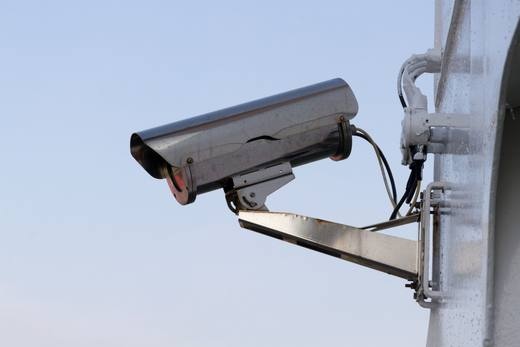
Home security cameras have the widest gap between advertised price and true cost of ownership in the smart-home category. A £39 Blink Mini looks like a bargain until you realise the cloud subscription is £30 per year per camera, at which point the five year total is £189 rather than the sticker £39. The four brands that dominate UK shelves at Currys, Amazon UK, John Lewis and Argos this autumn (Ring, Arlo, Eufy and Blink) each represent a different answer to the hidden subscription question.
This guide covers what actually costs you money over 5 years: subscription tiers and what they lock behind them, whether local storage is a genuine alternative or a compromise, real UK night vision performance in the shorter daylight months, and IP weatherproof ratings that hold up through a Yorkshire winter. We have priced up complete 4-camera household setups for each brand and included the true 5 year cost including subscriptions and consumables.
Subscription costs: the hidden ownership tax
Ring Protect Basic sits at £3.49 per month for a single camera or £9.99 per month for unlimited cameras at one address, giving 180 days of cloud recording. Without a subscription, Ring cameras will livestream and send motion alerts but will not store any recording at all, which for most users defeats the purpose. Over 5 years, Ring Protect Plus on a 4 camera setup costs £599.40. Arlo Secure Plus is £11.99 per month for unlimited cameras with 30 days of cloud storage and 4K recording enabled (yes, 4K recording is behind the subscription paywall even if the hardware supports it), totalling £719.40 over 5 years.
Eufy is the outlier: local storage on the HomeBase 3 or on-camera microSD is included with the hardware, and there is no mandatory subscription. Optional Eufy Cloud Storage is £2.99 per month per camera or £9.99 per month for unlimited, but genuinely optional. Blink Basic is £2.50 per month per camera or £8 per month unlimited, cheaper than Ring but similarly locking recording behind the subscription. The 5 year cost of a 4 camera Blink setup with subscription is £480. Eufy without cloud is £0 in ongoing costs beyond replacement batteries.
Local storage: real alternative or marketing spin
Eufy is the only one of the four with genuine, useful local storage built in. The HomeBase 3 accepts a 16 TB internal drive and stores encrypted footage locally with AI processing on the base itself. Face recognition, package detection and person detection all run locally without a cloud connection. This is genuinely transformative for privacy-conscious households and for people with unreliable broadband. Battery-powered Eufy cameras can also store to a microSD card of up to 128 GB per camera as a fallback.
Ring, Arlo and Blink all offer some form of local storage on their newer base stations (Ring Alarm Pro with 64 GB, Arlo SmartHub with 512 GB microSD, Blink Sync Module 2 with a 256 GB USB stick) but in every case this is a fallback rather than a primary storage solution. Cloud recording is still recommended for reliable retrieval, event AI processing runs cloud-side, and the app-only local storage is a hidden data-loss risk when the base station firmware updates and briefly loses index of the local files. Users have reported footage becoming inaccessible after Ring or Blink firmware updates, requiring cloud subscription retrieval to recover.
Night vision performance in UK winter conditions
Night vision matters more in the UK than in warmer markets because we get 15 to 16 hours of darkness in December and January. All four brands use infrared LEDs (invisible to the eye, monochrome image) with some models adding colour night vision via ambient light amplification or a low-lux CMOS sensor. Ring's newer Stick Up Cam Pro and Spotlight Cam Pro have colour night vision that works down to around 5 lux, meaning it needs a nearby street lamp or porch light to produce usable colour. Below 5 lux, it falls back to IR monochrome at up to 8 metres range.
The Arlo Ultra 2 offers the best colour night vision in the shortlist, working down to 1 lux with a wider aperture (f/1.6) and 4K sensor. IR range is 8 metres. The Eufy eufyCam S3 Pro uses a dual-sensor system (colour plus IR) that switches automatically at 3 lux, with IR range of 7 metres. The Blink Outdoor 4 uses IR only, no colour night vision, with a range of 6 metres. In practice, for identifying faces or number plates at night, Arlo Ultra 2 and Eufy S3 Pro are meaningfully better than Ring or Blink, but you're paying £299 versus £89 per camera for that capability.

Weatherproof ratings and real UK outdoor reliability
IP ratings are worth paying attention to. IP65 (dust-tight, protected against water jets) is the minimum for a UK outdoor camera facing west or exposed to horizontal rain. Ring Stick Up Cam is IP65. Arlo Ultra 2 is IP65. Eufy eufyCam S3 Pro is IP67 (temporary immersion resistant, effectively bomb-proof against UK weather). Blink Outdoor 4 is IP65. All four will survive UK conditions on a covered porch. Only the Eufy IP67 rating is genuinely well-suited for an exposed wall position on the north or west side of a house that catches driven rain.
Battery-powered models add a temperature consideration. Lithium-ion cells drop capacity by 30 to 40 percent at 0 degrees Celsius. On a battery Ring Stick Up in Manchester in January, expect real battery life of 2 to 3 months versus the summer rating of 6 to 8 months. Eufy cameras have larger battery packs (13,400 mAh on the S3 Pro versus 6,040 mAh on the Ring Stick Up) which handles UK winters better, roughly 4 to 5 months per charge in cold weather. Blink's AA lithium cells (yes, replaceable AAs) do surprisingly well in the cold but the 2 year rated life drops to about 14 months in a UK-facing outdoor position.
Video quality, field of view and audio pickup
Resolution numbers are misleading. Ring Stick Up Cam Pro records at 1080p with a 140 degree field of view. Ring Spotlight Cam Plus is 1080p at 140 degrees. Arlo Ultra 2 records at 4K with a 180 degree field of view but the 4K recording is behind the £11.99 per month Secure Plus subscription; without it you get 1080p. Eufy S3 Pro records at 4K (native, no subscription) with 130 degrees. Blink Outdoor 4 is 1080p at 143 degrees.
Field of view above 150 degrees introduces noticeable fisheye distortion at the edges of frame, which makes identifying faces at the periphery harder despite the wider coverage. For a typical UK front garden or driveway, a 130 to 140 degree field is the sweet spot. Two-way audio works on all four, but audio pickup quality varies: Arlo has the clearest microphone, Ring is second, Eufy is functional but tinny, Blink is the weakest and struggles to pick up voices more than 3 metres from the camera.
Smart home integration and app ecosystem
Ring integrates natively with Alexa (owned by Amazon) with rich display support on Echo Show devices. Google Home integration is limited to basic livestreaming, no motion event routing. HomeKit is not supported. Arlo has the widest platform support: Alexa, Google Home, Apple HomeKit and Samsung SmartThings all work as first-party integrations. Eufy supports Alexa and Google Home, and HomeKit works on select older camera models but not the newest S3 Pro at launch (planned firmware update in Q4 2026). Blink is Alexa-native with limited Google support and no HomeKit.
The mobile apps each have quirks. Ring's app is polished but full of upsell prompts for extra services (Ring Alarm, Ring Neighbours). Arlo's app is functional but slower to load event history and drains phone battery noticeably. Eufy Security is clean and offline-capable when connected to a local HomeBase. Blink's app is the simplest and the least feature-rich; power users find it limiting for multi-camera households. None of the four apps support proper multi-user permissioning without paid tiers.
UK pricing and Black Friday 2026 deal expectations
Retail pricing this autumn: Ring Stick Up Cam Plus at £99 (Currys, Amazon UK), Ring Spotlight Cam Pro at £199, Arlo Essential 2K at £129, Arlo Ultra 2 at £299, Eufy eufyCam S3 Pro (single with HomeBase 3) at £249, Eufy 4 camera kit at £799, Blink Outdoor 4 (single) at £89, Blink 4 camera kit at £249. Black Friday discounts historically run 20 to 40 percent on Ring and Blink (owned by Amazon, aggressive on their own platform), 15 to 25 percent on Arlo, and 20 to 30 percent on Eufy. Deep discount window is 22 November to 4 December 2026.
For a 4 camera setup, 5 year total cost of ownership including subscription lands roughly as follows: Ring at £996 (£396 hardware plus £600 subscription), Arlo at £1,116 (£396 hardware plus £720 subscription), Eufy at £799 (hardware only, no subscription), Blink at £728 (£248 hardware plus £480 subscription). Eufy is the cheapest long-term. Blink is cheapest upfront but the subscription closes most of that gap.
Comparison table
| Brand | Local storage | Night vision range | 4 cam kit price (£) | Best for |
|---|---|---|---|---|
| Ring | Fallback only | 8 m IR, 5 lux colour | 396 | Alexa homes, subscription OK |
| Arlo | Fallback (SmartHub) | 8 m IR, 1 lux colour | 396 | HomeKit users, best night vision |
| Eufy | Full (HomeBase 3, 16 TB) | 7 m IR, 3 lux colour | 799 | Privacy, no subscription |
| Blink | Fallback (Sync Module) | 6 m IR, no colour | 248 | Cheapest upfront, AA batteries |
Do's and Don'ts
| Do's | Don'ts |
|---|---|
| Do calculate the 5 year subscription cost before comparing hardware prices. | Don't buy Ring or Blink expecting useful recording without a subscription. |
| Do choose IP67 rated cameras for exposed north or west facing walls. | Don't mount an IP65 camera in unprotected horizontal rain positions. |
| Do position battery cameras where you can reach them safely for recharging. | Don't put a battery camera at second-floor eaves without a ladder plan. |
| Do use a wired power supply where possible for reliability. | Don't rely on solar panels alone in UK winters, they undercharge from November to February. |
| Do test motion sensitivity for 48 hours before finalising placement. | Don't leave sensitivity on maximum, you'll drown in alerts from foliage and cats. |
| Do enable two-factor authentication on every camera account. | Don't reuse passwords, security cameras have been mass-hacked via credential stuffing. |
| Do check your broadband upload speed if using cloud storage. | Don't assume Cloud storage works reliably on ADSL under 5 Mbps upload. |
| Do warn your neighbours if a camera captures shared spaces (ICO guidance). | Don't point a camera into a neighbour's garden without informing them, it's a legal issue. |
| Do keep firmware up to date, security bulletins matter. | Don't ignore firmware update prompts, unpatched cameras are a real risk. |
| Do consider a local NAS with RTSP feed for pro-level privacy. | Don't expect Ring or Blink to support RTSP, only Eufy allows it via HomeBase 3. |
Frequently Asked Questions
Is Eufy really subscription-free forever?
Eufy's local storage is genuinely subscription-free and always has been. The HomeBase 3 with a 16 TB drive stores months of 4K footage without any cloud dependency. Face recognition, package detection and AI processing run on the HomeBase locally. Eufy do sell an optional cloud tier for off-site backup, but it's genuinely optional and most users skip it. This is the strongest reason to choose Eufy over Ring or Blink long-term.
Are Ring cameras still worth it in 2026 given the subscription cost?
Ring makes sense if you're already deep in the Amazon ecosystem, use Echo Show devices for livestream, and value the polished setup experience. The £120 per year Protect Plus subscription is a real ongoing cost, and after 5 years you'll have paid more in subscription than the hardware cost. If subscription resistance is high, look at Eufy instead.
What happens to my footage if the manufacturer goes bust?
Ring, Arlo and Blink cloud footage would be inaccessible if the company shut down cloud services. Eufy's HomeBase 3 continues to work as a local NVR even without cloud, which is a strong argument for local-first systems. Historically, Insteon and Wink both shut down cloud services with less than 3 months notice, stranding thousands of users.
Can I connect these cameras to a home NAS or NVR?
Only Eufy supports RTSP streaming from HomeBase 3, letting you record to a Synology, QNAP or Blue Iris NVR. Ring, Arlo and Blink are closed ecosystems with no third-party integration. For enthusiasts with existing NAS setups, this is a significant Eufy advantage.
How much bandwidth do these use?
A 1080p live-view stream uses 1 to 3 Mbps upload. A 4K stream uses 6 to 15 Mbps. Motion-triggered uploads to cloud consume 20 to 50 MB per event. Over a month, a busy 4 camera setup can consume 30 to 60 GB of upload bandwidth. This matters if you're on an ADSL connection with an upload cap, and it matters even more if your provider has a fair-use policy.
Do any of these work well with Apple HomeKit?
Arlo has the best HomeKit support across the current range. Eufy supports HomeKit on select older cameras (2K Pan and Tilt, eufyCam 2 series) but not the newest S3 Pro at launch. Ring has no HomeKit support and Amazon has publicly said it will not add it. Blink also has no HomeKit support. For an Apple-first household, Arlo is the pragmatic choice.
How reliable is motion detection in UK weather?
False motion triggers from wind-blown foliage, rain, cats and street traffic are the number one complaint on all four brands. Ring and Blink use passive infrared (PIR) which is less prone to false triggers but slower to activate. Arlo and Eufy use pixel-based motion analysis which is more sensitive but produces more false alerts. Configure motion zones carefully and set sensitivity to medium, then adjust down from there.
What about the recent Eufy privacy concerns?
In late 2022 and early 2023, security researchers found that Eufy was uploading some event thumbnails to AWS servers despite marketing local-only storage, and that some live streams were accessible without proper authentication. Eufy has since patched the issues, engaged third-party security auditors and published a public security policy. It's a worthwhile caveat but the underlying local-storage architecture remains the strongest privacy option in this shortlist.
- Tags:
 Get it on
  Download on the