The experiment needed no equipment beyond honesty. Both major phone platforms now report exactly how many notifications each app sends, so for one ordinary week I let everything run as it always had, logged the totals, and sorted every interruption by who sent it and what it wanted. I thought I was a reasonably disciplined phone user. The week disagreed.
The final count was just over 600 notifications in seven days, roughly 85 per day, or one every eleven waking minutes, and the breakdown of who was doing the interrupting is the part that changed my settings permanently. Because the number itself is not the scandal. The scandal is how few of the 600 were for me.
Where 600 Interruptions Came From
Sender category
Share of the week
What they actually wanted
Apps promoting themselves
About 45 percent
My attention back, for their metrics
Shopping, deals, and marketing
About 15 percent
My money
Social platforms
About 20 percent
My attention, wearing a friend's face
News alerts
About 10 percent
My alarm, hourly
Actual humans contacting me
Under 10 percent
Me, genuinely
Fewer than one interruption in ten came from a person. The rest was machinery, and the social slice deserves its own sentence, because most of it was not friends posting but platforms manufacturing reasons to visit, suggestions, milestones, and someone you may know, notifications engineered to feel personal while being promotional. Add the openly commercial categories and roughly four of every five buzzes in my week were, functionally, advertising that I had somehow agreed to carry in my pocket and answer to.
The week also confirmed what our smartwatch experiment found from the other direction, which is that each interruption costs more than its seconds. Research on task interruption has repeatedly found that regaining focus after a disruption takes not seconds but minutes, which means the arithmetic of 85 daily notifications is not 85 glances but a working day fragmented into confetti.
The Twenty Minute Surgery
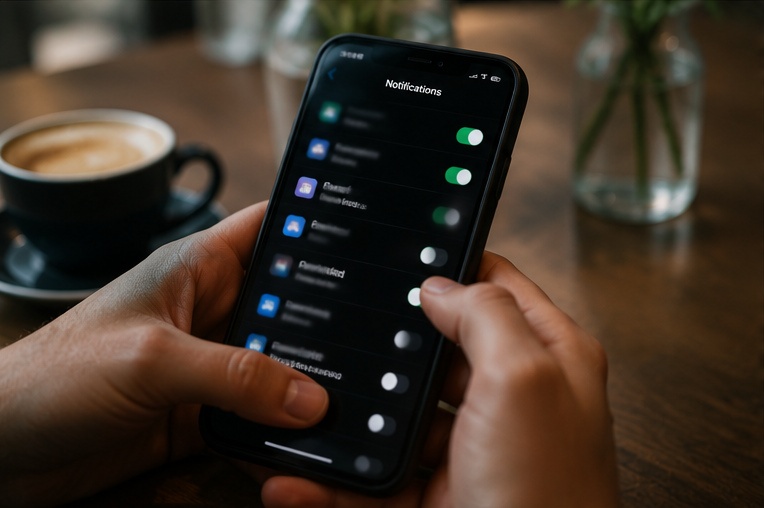
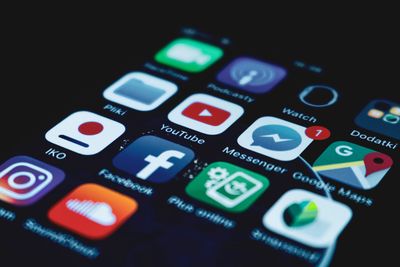
The fix took one sitting and has survived ever since, and it works identically in spirit on both platforms. Humans keep the buzz, so calls and messages from actual people remain fully loud and always will, because phones exist for them. Everything useful but not urgent, meaning deliveries, banking, calendars, and email, moves to silent delivery, arriving without sound or banners into the tray where I find it on my schedule, several times a day, which turns out to be entirely often enough. Everything promotional dies at the source, and this is the step people skip, since the platform settings can silence an app but only the app's own settings stop it manufacturing the marketing in the first place. Ten apps, two minutes each. News alerts died entirely on the grounds that anything genuinely historic reaches a human by other means within the hour. And badges, the little red counts that turn a home screen into a to do list written by strangers, went last and mattered more than expected.
The after picture, measured a month later with the same counter, is around 15 audible interruptions a day, almost all of them people, against 85. The phone did not get worse at anything. Deliveries still arrive, banks still flag oddities, and the tray still holds everything when I visit it. What changed is the direction of the relationship, which is the entire point. A notification system tuned by its defaults works for the apps. Tuned once, deliberately, it goes back to working for its owner, and our list of free settings changes that make devices feel new again ranks this twenty minutes as the single highest return on effort a phone owner can spend.
Frequently Asked Questions
How do I see my own notification counts? Both platforms publish them in their wellbeing and notification summary settings, showing daily and weekly totals per app. Run one ordinary week untouched before changing anything, because the personalised number is what makes the surgery stick.
Is 85 notifications a day unusual? Unfortunately not. Published analyses of phone usage regularly place typical daily notification counts between 60 and 100, with heavy social app users far above that. My week was ordinary, which is rather the point.
What is the difference between silencing an app and silent delivery? Silent delivery still brings everything to the tray, just without sound, vibration, or banners, which suits the useful but not urgent category perfectly. Fully silencing or disabling suits apps whose messages you never need, and app level marketing toggles stop the worst content existing at all.
Will I miss something important with notifications mostly off? The design guards against exactly this, since humans stay fully loud and genuinely urgent systems like calls, security alerts, and two factor prompts are never touched. What arrives silently is the category whose entire content, honestly reviewed, was never urgent a single time in my logged week.
Should news alerts really be off entirely? For most people, yes, and it was the change my mood noticed most. Hourly alarm is the business model of alert driven news, not a service to the reader, and checking chosen sources at chosen times delivers the same information without the ambush.
Does this work on a smartwatch too? It works best there, since the wrist is the most interruptive surface a notification can land on. Mirror the same three tiers, and as our month without a smartwatch found, a watch that only buzzes for humans becomes a genuinely better product than the one that came out of the box.
We use cookies to see which reviews and buying guides readers find useful, so we can keep improving them. Accept analytics cookies, or carry on with essential ones only. See our Cookie Policy.









 Get it on
  Download on the