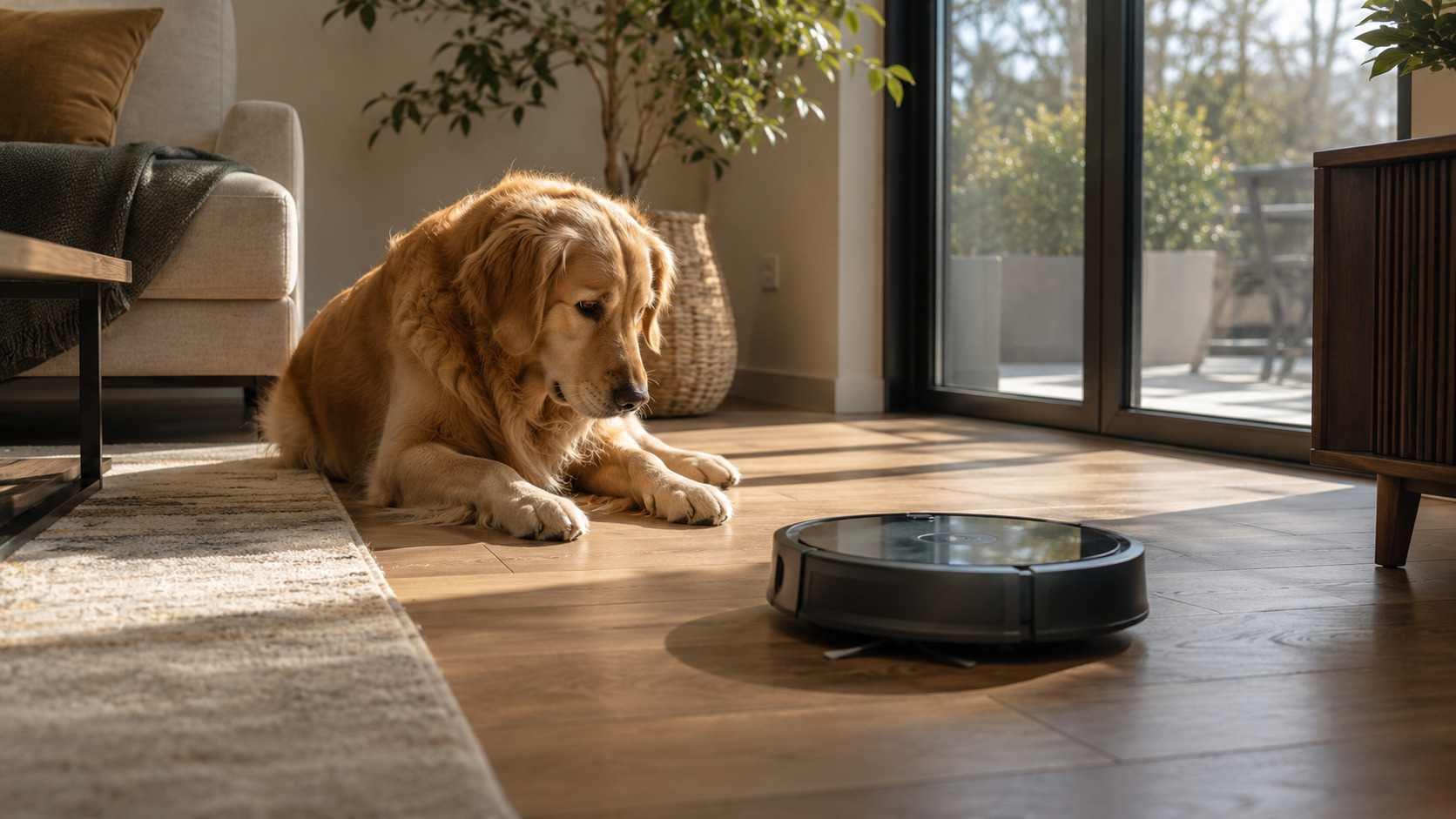
Robot vacuum reviews are usually written in tidy homes with laboratory piles of rice and sand. My home contains a golden retriever, and anyone who lives with a double coated dog knows that shed fur is not debris, it is a weather system. It drifts, it clumps, it weaves itself into carpet, and it destroys cleaning machinery in ways that controlled tests never capture. So for six weeks I ran five robot vacuums, spanning $130 to $800, through the genuinely hostile environment of a shedding season, across hardwood floors and medium pile carpet, on a daily schedule.
Three of the five effectively failed. Two earned a permanent place in the house. More usefully, the failures all failed for the same small set of reasons, which means you can read a spec sheet and predict survival before spending a penny. Here is what happened and what it teaches.
The Five Machines
I chose the field to represent the whole market rather than a single price bracket. The budget seat went to a random navigation model in the style of the classic Eufy bump and run design at around $130. The entry level branded seat went to an iRobot Roomba essential model at around $250. The midrange seats went to a Shark with self empty dock at around $400 and a Roborock with lidar navigation at around $450. The premium seat went to a flagship Roborock with a full self empty and mop dock at close to $800.
Machine class
Navigation
Brush type
Self empty dock
Verdict with pet hair
Budget bump and run
Random bounce
Bristle roller
No
Failed by week two
Entry branded robot
Basic smart paths
Bristle and rubber combo
No
Failed by week four
Midrange with dock
Home mapping
Bristle and rubber combo
Yes
Survived with caveats
Midrange lidar robot
Lidar mapping
Rubber roller
No
Survived, best cleaner
Premium flagship
Lidar mapping
Dual rubber rollers
Yes
Survived, best experience
The table gives away the ending, and the pattern within it is the entire lesson of this article. Every survivor had rubber brushes or a dock or both. Every casualty had bristles and a tiny onboard bin.
How the Failures Happened
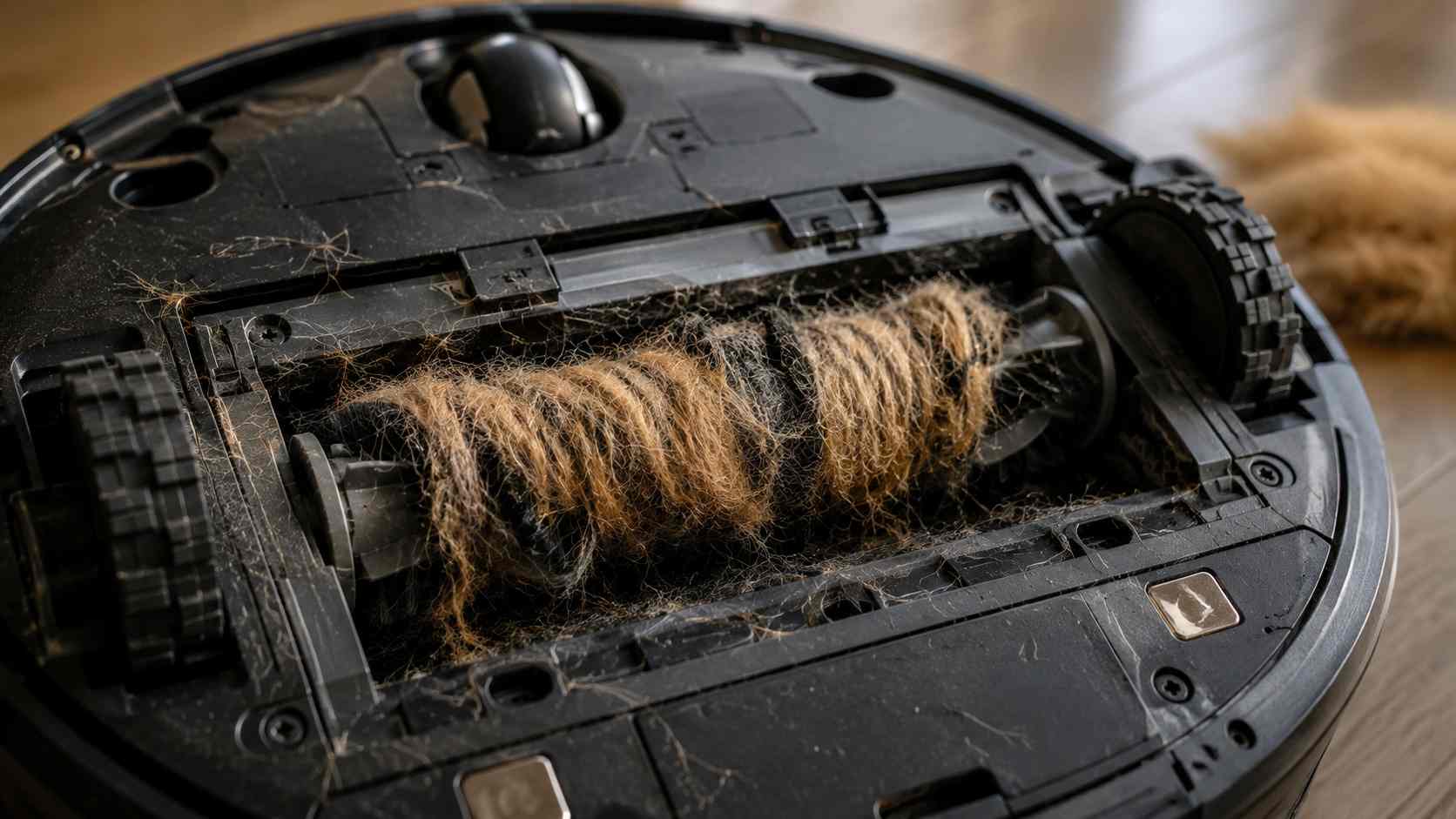
The budget machine failed first and most completely. Random navigation meant it cleaned the same patch of hallway five times while ignoring the living room entirely, and its bristle brush became a solid cylinder of golden fur within four runs. Cutting hair out of a brush with scissors twice a week is not automation, it is a new chore that replaced an old one. By day ten its suction had visibly dropped because fur had worked into the bearings, and by week two I retired it. This machine is why people who spend $130 tell their friends robot vacuums do not work.
The entry level branded model was more painful because it half worked. Its navigation was reasonable and its cleaning on hardwood was genuinely fine. Its undoing was capacity and maintenance. The onboard bin filled with fur before finishing a single full run of the ground floor, meaning every clean required my intervention halfway through, and its combination brush still wound hair at the bristle ends, demanding scissors twice a week. It survived a month before I admitted it had become a pet of its own, something I maintained rather than something that worked for me.
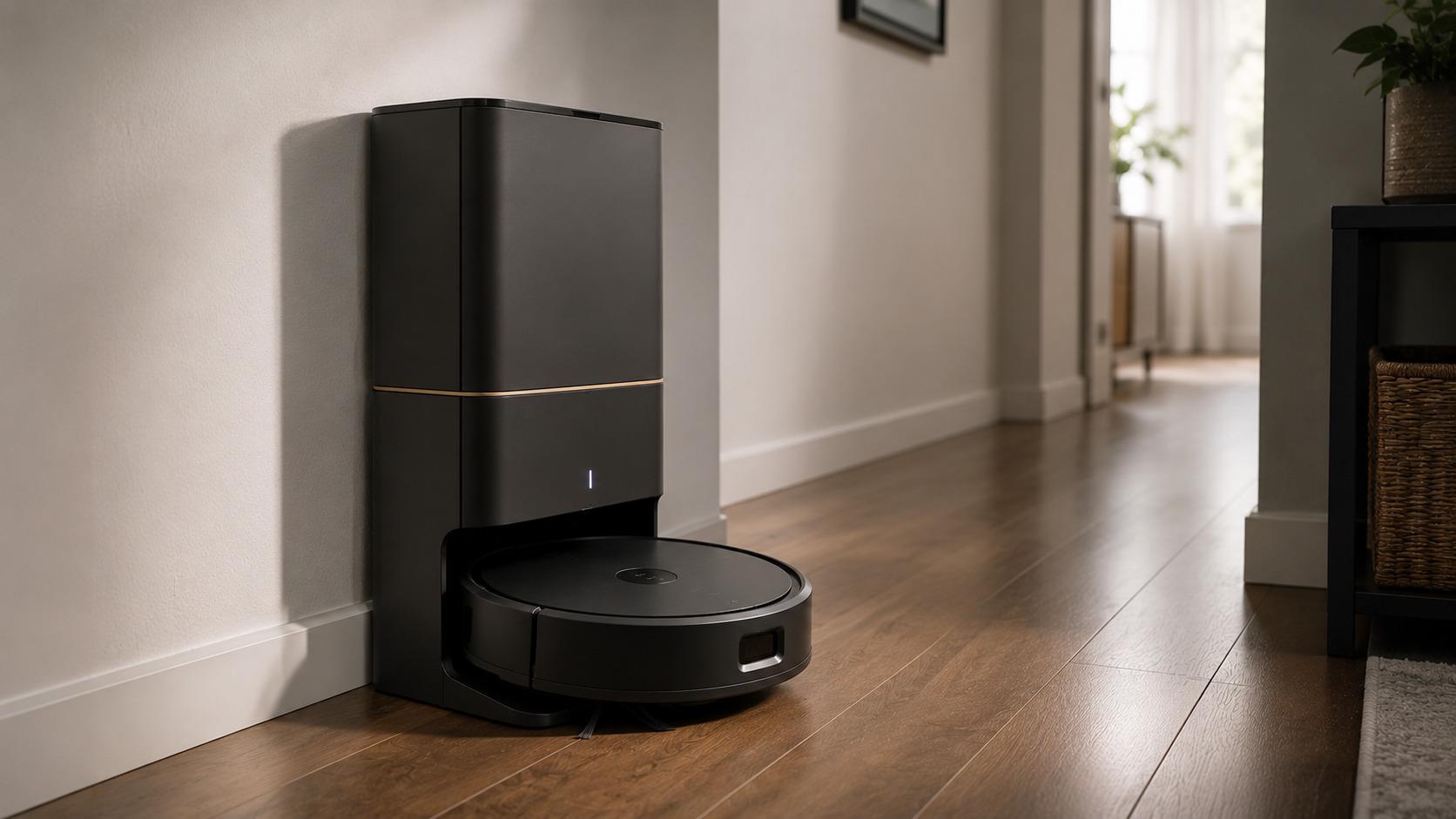
The midrange Shark survived, with an asterisk. Its self empty dock transformed the capacity problem, and emptying a base canister once a month instead of a bin every day is the single biggest quality of life feature in the category. But its brush still needed a weekly haircut, and its carpet performance on ground in fur was middling, so it survives as a fine machine for lighter shedding homes rather than a recommendation for heavy ones.
Why the Two Winners Won
The two survivors shared an anatomy. Full rubber rollers instead of bristles, which shed hair into the bin instead of hoarding it, and lidar navigation, which mapped the house in one run and then cleaned it in systematic overlapping lanes with none of the drunken wandering of cheaper machines. The midrange lidar Roborock was, surprisingly, the strongest raw cleaner of the entire test, pulling visible quantities of embedded fur out of carpet that the others had supposedly already cleaned. Its only compromise was the missing dock, which meant daily bin emptying, tolerable only because the bin was actually large enough to finish the job.
The premium flagship earned its price not through dramatically better cleaning, since it cleaned only slightly better than the machine costing half as much, but through the near total removal of my involvement. It emptied itself for six weeks, untangled its own roller with a comb built into the dock, kept its map through furniture changes, and mopped the hardwood on the same runs. Whether that is worth $350 over the midrange lidar model depends entirely on how much you value not thinking about your floors at all.
What Pet Owners Should Actually Look For
Strip away the marketing and four specifications predict survival with a shedding animal. Rubber rollers are the first and least negotiable, and dual rubber rollers are better still. Lidar or equivalent mapped navigation is the second, because systematic coverage is what actually removes a house's worth of fur. A self empty dock is the third, less for luxury than because pet hair fills onboard bins several times faster than ordinary dust. Suction of at least 4,000Pa is the fourth for anyone with carpet, since embedded undercoat needs real pull to extract. Notice that none of these four is app features, voice assistant support, or camera based obstacle recognition, which are the features the boxes shout about. In our related buying guide we rank the current models that meet all four criteria in the US and UK.
Frequently Asked Questions
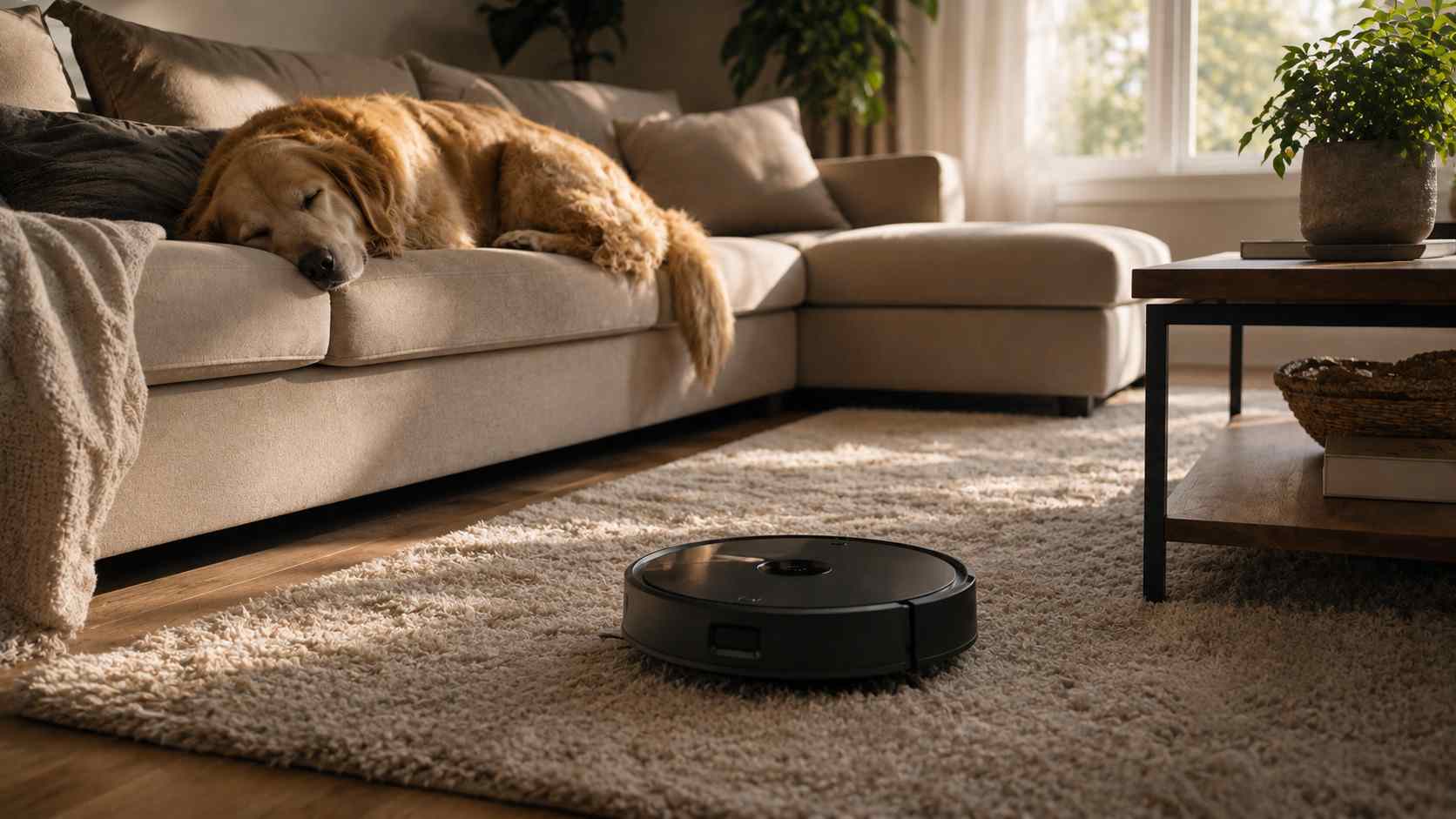
Can a robot vacuum really replace normal vacuuming in a home with a shedding dog? It replaces the daily maintenance cleaning that shedding homes otherwise demand, which is the exhausting part, and it does that job superbly if it has the right anatomy. You will still want a normal vacuum for stairs, sofas, and a proper deep clean every few weeks.
Why do bristle brushes fail with pet hair? Long hair and fur wind around bristles and anchor into them, forming a growing cylinder that blocks suction and strains the motor. Rubber rollers flex as they spin, giving hair nothing to grip, so the fur travels into the bin where it belongs.
Is a self empty dock worth the extra money for pet owners? For a genuinely shedding animal, yes, and I would rank it above almost any other premium feature. Fur fills a robot's onboard bin within a single run of a medium home, and a dock turns a daily chore into a monthly one.
How often does a robot vacuum need maintenance in a pet home? With rubber rollers and a dock, expect a quick check weekly and a proper session monthly, cleaning sensors, cutting any hair from wheel axles, and washing filters. With bristle brushes, budget scissors time twice a week, which is precisely why I no longer recommend them to pet owners at any price.
Do the camera based obstacle avoidance systems matter for pet owners? They matter for one scenario that owners of young or unwell animals will immediately understand, which is recognising and avoiding pet accidents before driving through them. If that risk exists in your home, the camera equipped premium models justify themselves in a single averted disaster.
What should I spend for a home with a heavy shedding dog? The honest floor is around $400 to $450 for a lidar navigated machine with rubber rollers, and around $550 to $650 for the same anatomy with a self empty dock, with UK pricing typically £350 to £550 for the equivalent tiers. Below that floor you are buying the machines from the first half of this article.
We use cookies to see which reviews and buying guides readers find useful, so we can keep improving them. Accept analytics cookies, or carry on with essential ones only. See our Cookie Policy.












 Get it on
  Download on the