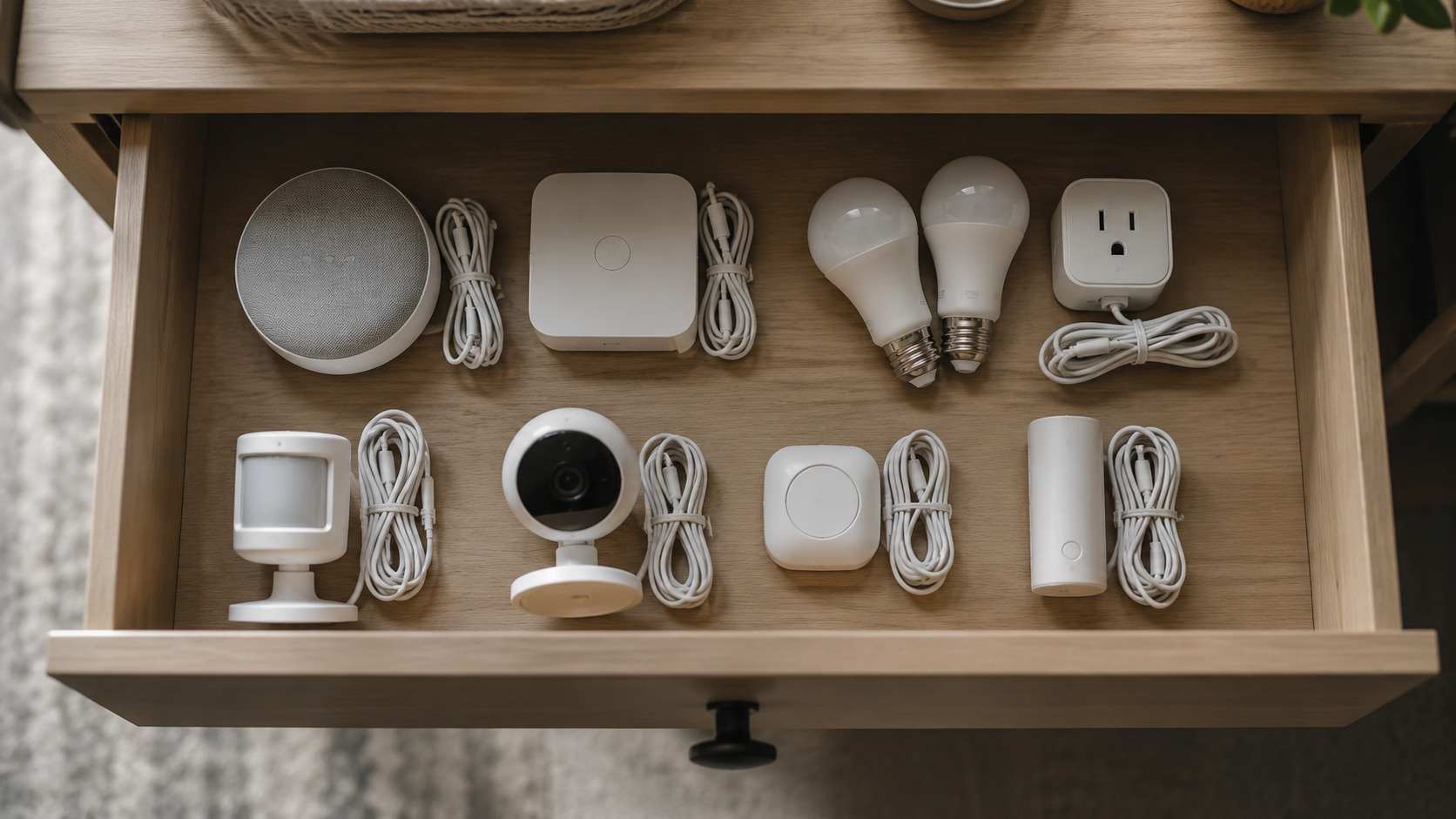
A year ago I did what every smart home article tells you to do and connected everything. Bulbs, plugs, speakers, cameras, a kettle, blinds, a doorbell, a thermostat, and a robot vacuum all joined the network within a few months. Today six of those purchases sit in a drawer, and the interesting part is not that some smart home products disappoint, because everyone suspects that. The interesting part is that the survivors and the casualties split along one clean line that nobody mentions in the marketing. Devices that removed a chore stayed. Devices that moved a chore onto my phone left.
Here is the full accounting, starting with the drawer of shame.
What Went and What Stayed
Device
Verdict after one year
The short reason
Smart bulbs in shared rooms
Removed
The wall switch problem never went away
Most of my smart plugs
Removed
App control is not automation
Smart kettle
Removed
It still needed filling by a human
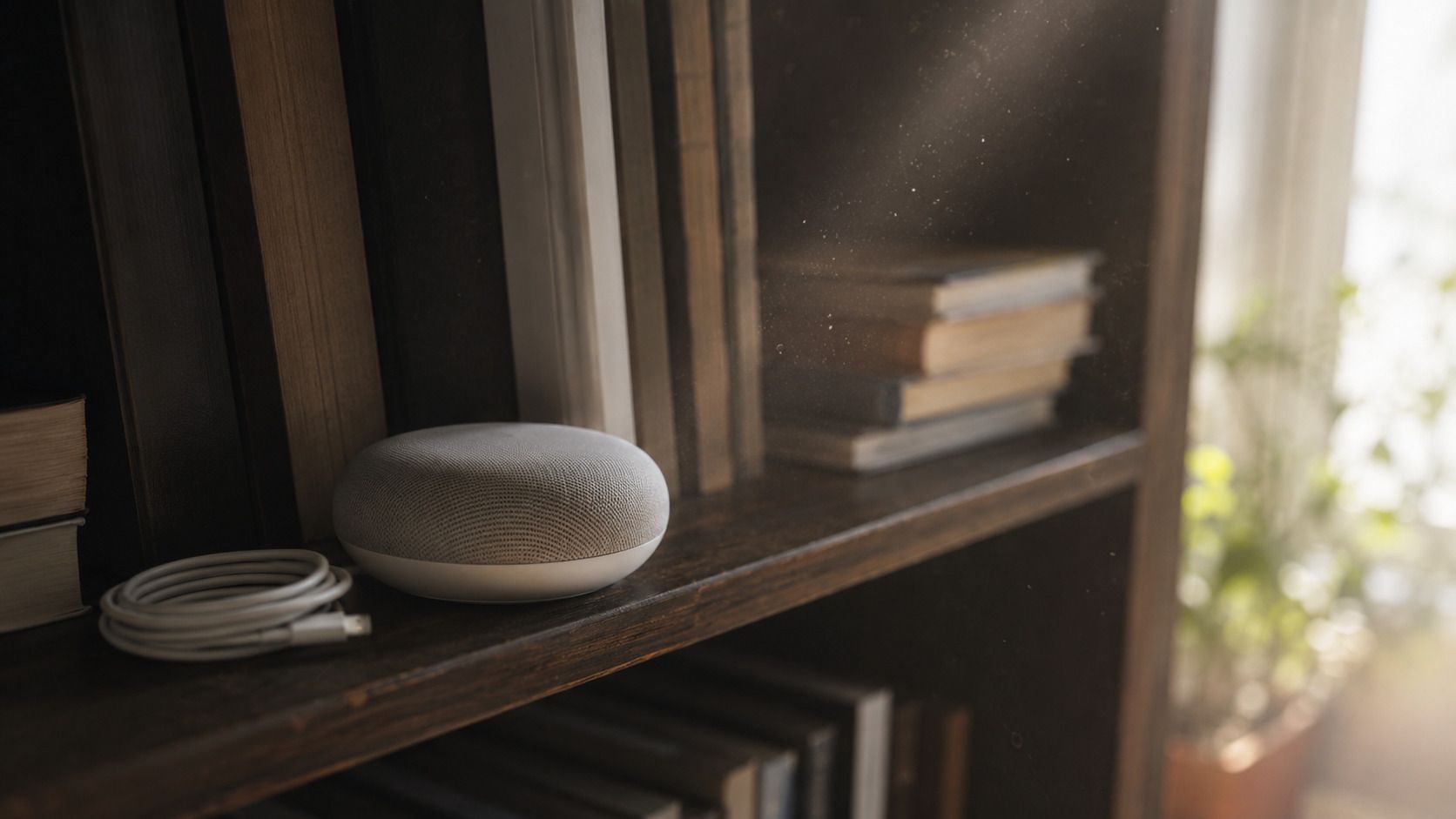
Bedroom smart speaker
Removed
Wrong room for a microphone
Indoor security camera
Removed
Watched nothing and unsettled everyone
Retrofit smart blind motor
Removed
Noisy, unreliable, and slower than hands
Video doorbell
Stayed
Genuinely useful several times a week
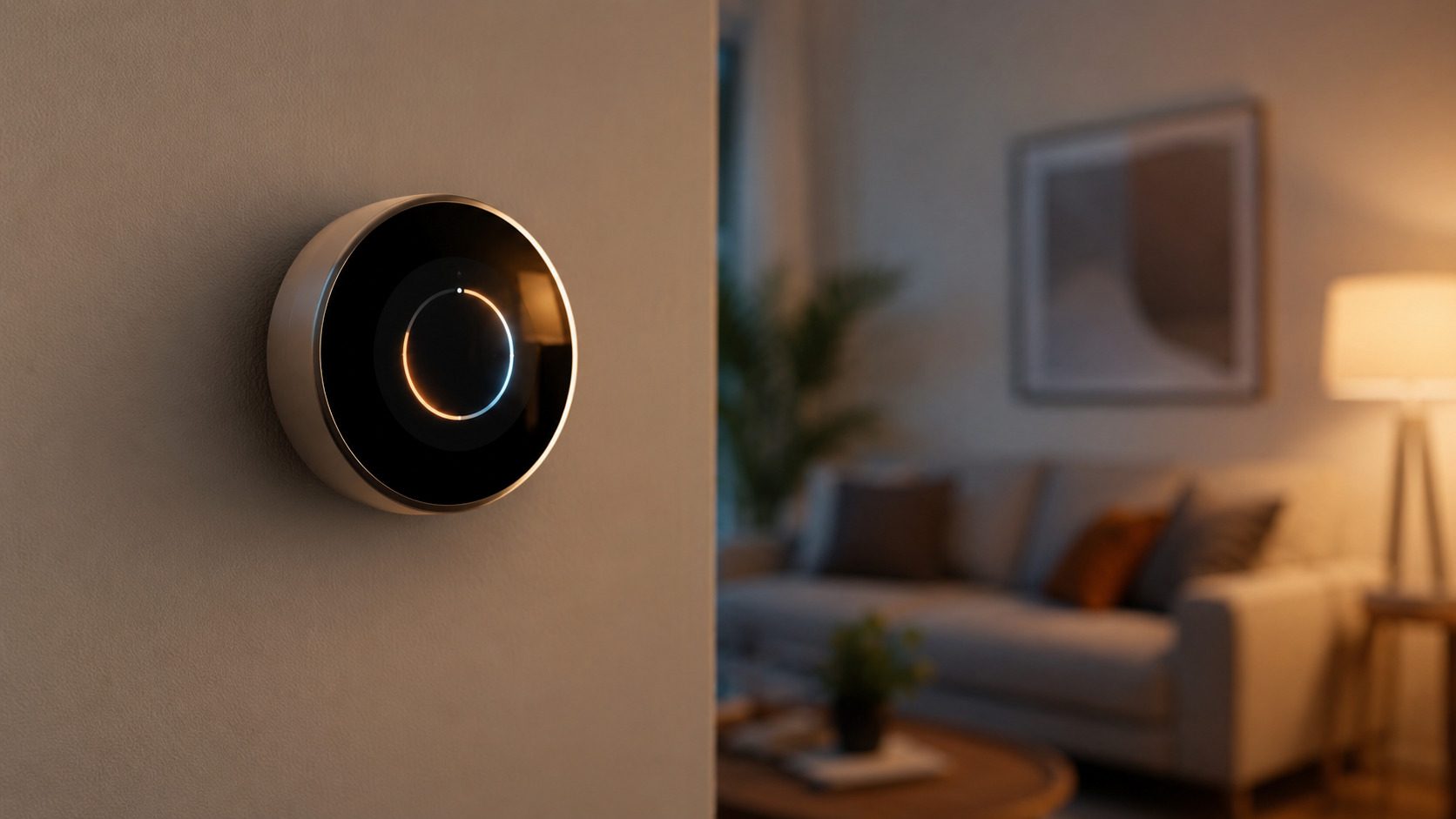
Smart thermostat
Stayed
Saves real money without any input
Robot vacuum
Stayed
Removes an entire chore on a schedule
Two smart plugs on lamps
Stayed
True automation, sunset to bedtime
Outdoor camera
Stayed
Solved an actual problem
Why the Casualties Failed
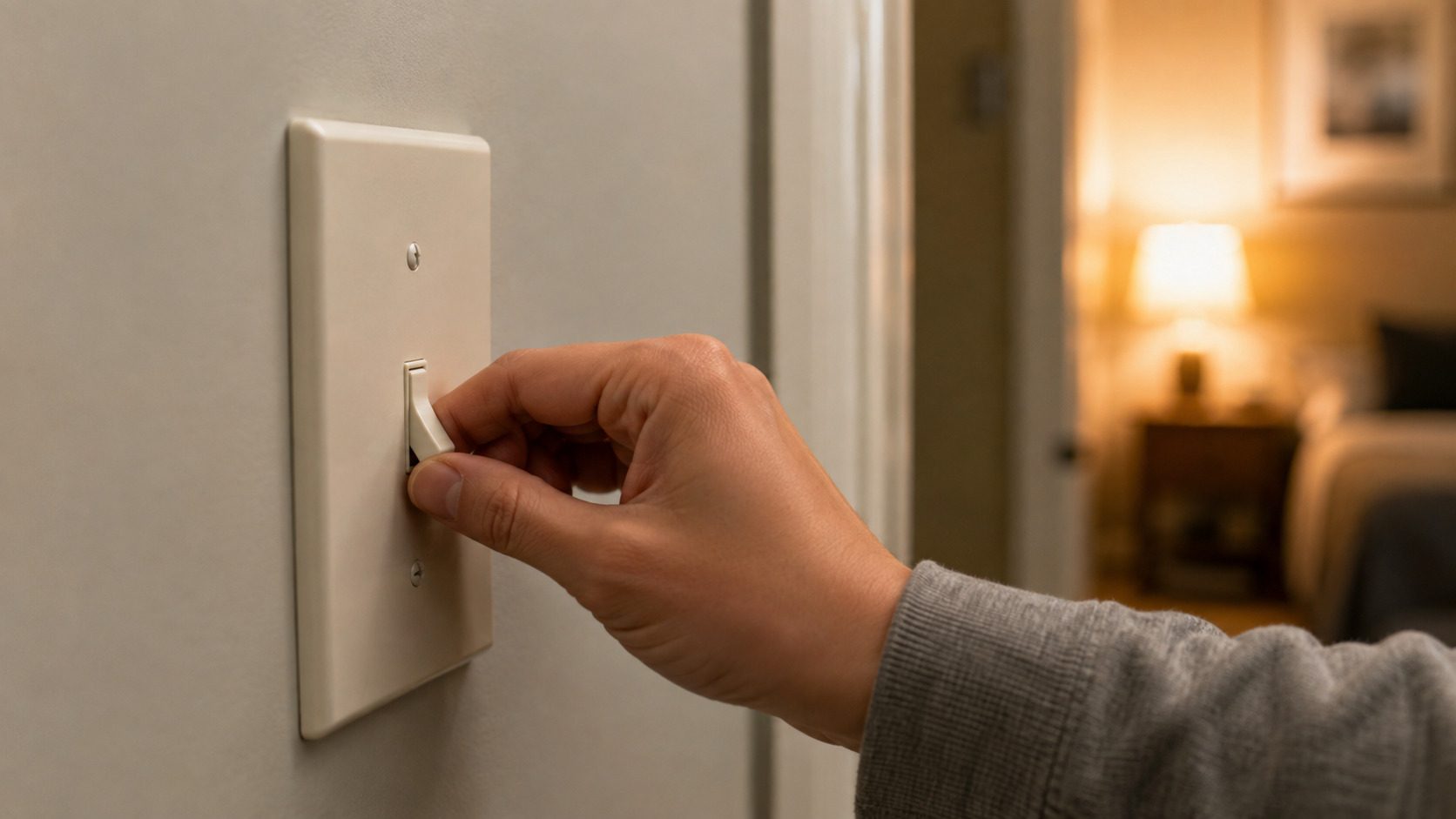
The smart bulbs were the most instructive failure because they are the product everyone buys first. In a room used by more than one person, smart bulbs collide with a century of human habit, which is that people flip wall switches. The moment anyone flips the switch, the smart bulb loses power and becomes a dumb bulb that no app can reach, and asking guests and family to please use the app instead is a losing battle you fight forever. The correct product for shared rooms was a smart switch all along, which keeps the wall control working for humans while adding scheduling underneath, and after replacing three rooms of bulbs with two smart switches the arguments stopped. Smart bulbs still make sense in one place, which is a lamp controlled by one person who accepts the deal.
The plug collection failed for a subtler reason. Turning a fan on from an app is not an improvement over turning a fan on from the fan, it is the same task with more steps and a login. Out of nine plugs, only the two running a genuine automation survived, switching lamps on at sunset and off at bedtime without any human involvement. That distinction, automation versus remote control, turned out to be the master key to the whole year. Remote control is a demo. Automation is a product.
The kettle deserves its own paragraph as the purest gimmick I bought. A kettle you can start from bed still needs water in it, which means someone filled it the night before or is walking to the kitchen anyway. It boiled no faster, cleaned no easier, and cost three times a normal kettle. The bedroom speaker went for quieter reasons, since a microphone next to the bed earned its removal the third time it lit up during a private conversation, and the indoor camera followed for the same family of reasons, recording nothing of value in exchange for a low ambient feeling of being observed in our own living room. The blind motor simply never worked well, grinding loudly through a slow open that hands perform in two seconds.
Why the Survivors Earned Their Place
Every keeper shares the same anatomy. The thermostat learned our schedule and quietly trimmed heating bills by warming the house only when warming mattered, which in a UK winter or a US cold snap is measurable money for zero ongoing effort. The robot vacuum runs at ten each morning whether anyone remembers it exists, and floors that clean themselves is the closest thing to genuine science fiction in this entire product category. The doorbell answers a question every household actually has several times a week, which is who is at the door and where did the parcel go, and it does so without being asked. The two surviving plugs and the outdoor camera all run jobs, not features.
If I could send one sentence back to myself before the spending began, it would be this. Buy nothing smart unless you can name the chore it deletes, and if the answer involves the phrase from your phone, put it back on the shelf.
Frequently Asked Questions
Which smart home device is the best first purchase? A video doorbell or a smart thermostat, depending on whether your bigger daily question is the front door or the heating bill. Both deliver value without asking you to change any habits, which is the trait that predicts long term survival.
Are smart bulbs ever worth buying? Yes, in single user spaces like a desk lamp, a bedroom you do not share, or accent lighting nobody switches at the wall. In shared rooms, buy smart switches instead, which cost about the same per room once you count how many bulbs a switch replaces.
Do smart thermostats really save money? Independent studies and energy suppliers consistently estimate savings around 8 to 15 percent of heating and cooling costs for typical homes, which repays the $120 to $250 purchase within one to two years in most US and UK households.
Is an indoor security camera a bad idea? It is a specific tool that most homes buy for vague reasons. For monitoring a specific risk, like a vulnerable relative or a pet with a medical issue, it earns its place. As general surveillance of your own sofa, it delivers discomfort and nothing else.
What should I check before buying any smart device? Three things. Whether it works locally when the internet is down, whether it supports the Matter standard so it is not trapped in one company's app, and whether the feature you want runs on a schedule or requires you to open your phone. The third check is the one that predicts the drawer.
Are smart plugs useless then? Not at all, but they are automation components rather than magic. On a lamp with a sunset schedule, a heater with a timer safety cutoff, or holiday lights, they are superb. As a way to switch things from an app that your hand could reach faster, they are clutter.
We use cookies to see which reviews and buying guides readers find useful, so we can keep improving them. Accept analytics cookies, or carry on with essential ones only. See our Cookie Policy.






 Get it on
  Download on the