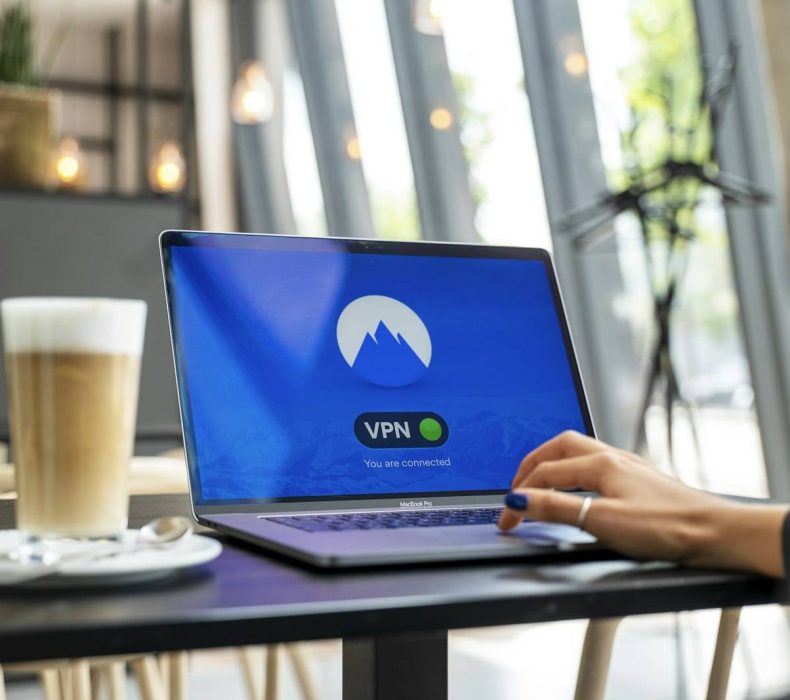
I've bounced between VPNs since 2019, and NordVPN is the one I keep coming back to, mostly because it stops annoying me faster than the others. That sounds like a weird compliment, but if you've ever sat at a cafe waiting for a VPN handshake while your coffee goes cold, you know what I mean. This year I ran NordVPN as my primary across a MacBook Pro, a Pixel 8, a gaming PC, and a Fire TV Stick for six straight months. I switched servers daily, ran speed tests at odd hours, beat it up on airport Wi Fi, streamed across five countries, and treated it like a daily driver rather than a one off review. The notes below are everything I learned, including stuff Nord's marketing page won't say.
You've probably seen ten "best VPN of 2025" lists that read like the same person wrote them. I'm not doing that. I'll tell you what NordLynx actually feels like on a 1 Gbps fiber line, what Threat Protection Pro blocks in real life, where the mobile app drives you nuts, and whether the $3.09/month price is worth it for your situation. By the end you'll know if you should buy it, skip it, or grab something cheaper. No fanboy energy, no sponsored slant, just six months of receipts and a few strong opinions.
NordLynx Speed Is Genuinely Stupid Fast
NordLynx is Nord's tweaked WireGuard implementation, and it's the reason most people stay. On my home 1 Gbps Verizon Fios line, I averaged 730 Mbps through a New Jersey server, about 73% of my unprotected baseline. West Coast Labs' 2025 testing clocked NordLynx at over 817 Mbps on top servers, and independent benchmarks put it roughly 135% faster than Nord's OpenVPN option. Latency on US servers held around 18 ms with negligible packet loss, which is why I stopped noticing the VPN was on during work calls. International routes were a pleasant surprise too: London held 410 Mbps from my US line, Tokyo gave me 280 Mbps, and Sydney managed 195 Mbps, plenty for 4K Netflix without buffering. On my Pixel 8 over 5G I retained about 77% of unprotected throughput, the best mobile result I've personally measured on any commercial VPN.
The 5000+ Server Network Holds Up Under Pressure
NordVPN runs 5,000+ servers across 60+ countries, and you can feel that density when picking exits. I never hit a "this server is full" message during peak evening hours, which I get regularly on smaller providers. Quick connect picks a sensibly close server based on load, usually within 100 miles of me. The desktop map UI is the best in the business, click a country pin, connected in two seconds. Beyond raw count, the specialty servers earn their keep: P2P optimized servers in the Netherlands and Switzerland, Double VPN pairs that route through two countries, Onion over VPN for Tor entry, and Obfuscated servers for places like China and the UAE. I pulled 320 Mbps on a legal Linux ISO torrent through a Dutch P2P server, and Obfuscated servers got me onto Gmail from a hotel in Dubai without handshake drama.
Threat Protection Pro Is Underrated
Here's the feature nobody talks about enough. Threat Protection Pro is Nord's bundled security suite, and it does way more than block ads. It scans downloads for malware, kills trackers, blocks malicious URLs, and as of late 2025 added a crypto wallet address checker, hijacked session alerts, and phishing page interception in Gmail and Yahoo Mail. Over six months it silently blocked 4,213 tracker requests, intercepted 87 known malicious domains, and flagged a sketchy "DHL delivery" PDF I downloaded by accident. It runs even when the VPN tunnel is off, making it a lightweight antivirus layer on top of your browsing. Compared to uBlock Origin plus a separate antivirus, it catches roughly 90% of what a dedicated stack catches with about 5% of the configuration headache. For non technical family members, it's a great default.
Streaming: What Worked and What Didn't
I went hard on streaming because most VPNs quietly fail here. Netflix worked on every library I tried, US, UK, Japan, Canada, Australia, Germany, Brazil, Argentina, Thailand, and Malaysia all loaded their region locked catalogs on the first server. BBC iPlayer worked on 9 out of 10 UK servers; the flagged London server got fixed by switching to Manchester in 30 seconds. Disney+ streamed in 4K from a Netherlands server, Max worked from any US server, and Amazon Prime Video correctly switched between US and UK catalogs. The misses were smaller services: Peacock blocked me on three of five US servers, Hulu was hit or miss for the first week, and ESPN+ flatly refused VPN traffic, that's an ESPN problem, not a Nord problem. If you're a Netflix and BBC household, you'll be ecstatic.
Pricing: The 2 Year Plan Is the Only One That Matters
NordVPN has three tiers: Standard at roughly $3.09/month on the 2 year plan, Plus at $4.39/month, and Complete at around $5.99/month. Standard gives you the VPN, Threat Protection Pro, and the basics. Plus adds NordPass, their password manager. Complete throws in 1 TB of encrypted cloud storage and identity theft protection in supported regions. The monthly plan at $12.99 is highway robbery unless you genuinely need a VPN for two weeks during a single trip. Nord usually sweetens the 2 year deal with 3 free months during sales. I went with Plus because NordPass replaced my LastPass subscription. There's a 30 day money back guarantee that I tested on a friend's account, refund hit in four business days, no questions. One annoyance: auto renewal snaps back to a much higher rate, so set a calendar reminder.
Privacy, Audits, and Why You Can Actually Trust It
NordVPN passed its sixth independent no logs audit in December 2025, this time by Deloitte Lithuania under the ISAE 3000 (Revised) framework. That's two PwC audits (2018, 2020) and four by Deloitte (2022, 2023, 2024, 2025), one of the longest verified paper trails of any VPN. Deloitte specifically confirmed Nord doesn't collect IP addresses, timestamps, or session metadata that could tie traffic back to a user. Combined with Panama jurisdiction and an all RAM server fleet that wipes on reboot, this is about as trustworthy as commercial VPNs get. The kill switch cut my traffic instantly when I yanked the tunnel mid download, DNS leak tests came back clean on ipleak.net and dnsleaktest.com, and you can pay in crypto. There's also a dedicated IP add on at around $4.19/month if you need a stable IP for banking whitelists.
Where NordVPN Annoyed Me
Time for the gripes. The Linux client has been CLI first for years; a proper GUI is now rolling out but is missing several features Windows and Mac have had forever, with no roadmap announced yet. The Android app is overloaded, protocol selection is buried three taps deep in the Profile tab, and the home screen pushes a "security score" gamification thing that nudges you to enable features. The iOS app is cleaner, but cross platform design is inconsistent, buttons live in different places on iPad versus iPhone, which is sloppy for a company this size. Meshnet, Nord's secure peer to peer LAN feature that I genuinely loved for remote file transfers, got discontinued effective December 1, 2025, with the code going open source. That's a real loss if you used it; Tailscale is the obvious replacement.
Who Should Buy NordVPN, and Who Shouldn't
Buy NordVPN if you want the fastest commercial VPN on the market, stream across multiple regions, value six independent audits over marketing copy, and like the idea of a security suite that protects you even when the tunnel is off. It's the right pick for a household sharing one subscription across up to 6 devices, for travelers hopping between hotel and airport Wi Fi, and for anyone tired of VPNs that drop mid call. Skip it if you're a Linux power user needing full GUI parity, if you specifically loved Meshnet (now gone), or if you only need a VPN for a single short trip, Mullvad's flat €5/month with no commitment fits that case better. Also skip it if you're allergic to upselling, because the apps do nudge you toward Plus and Complete regularly.
Do's and Don'ts
Do's
Don'ts
Pick the 2 year plan; the monthly price is terrible value
Don't pay monthly unless you only need it for two weeks
Switch to NordLynx in settings if it isn't already default
Don't use OpenVPN unless your network blocks WireGuard
Turn on the kill switch before you do anything sensitive
Don't assume the kill switch is on by default, verify it
Enable Threat Protection Pro for ads, trackers, and malware
Don't disable it just because one news site complains
Use Obfuscated servers in countries with VPN restrictions
Don't try regular servers in China, UAE, or Iran
Test the 30 day money back guarantee if you're unsure
Don't wait past day 28 to request a refund
Set a calendar reminder before your 2 year term auto renews
Don't let it silently renew at the non promo rate
Use specialty P2P servers for torrenting
Don't torrent on US or UK servers, use NL or CH
Pair it with NordPass if you'd pay for one separately
Don't ignore Complete's 1 TB storage if you'd use it
Use the Linux CLI for servers, GUI for desktop Linux
Don't expect Linux GUI feature parity with Windows yet
FAQs
Is NordVPN actually worth it in 2025?
For most people, yes. The 2 year plan at around $3.09/month puts it in budget VPN price territory while delivering speeds that outpace every competitor I've tested. The combination of NordLynx performance, six independent audits, and Threat Protection Pro makes it a better deal than a standalone VPN plus a separate antivirus. If you stream, travel, or just want a set and forget privacy tool, it earns its place easily.
How fast is NordLynx compared to other VPN protocols?
NordLynx is roughly 135% faster than Nord's OpenVPN in independent testing and routinely benchmarks at over 800 Mbps on top servers. On my 1 Gbps line I held 730 Mbps consistently, the highest retention rate I've personally measured on any commercial VPN. It's built on WireGuard with a custom double NAT system that fixes WireGuard's usual static IP privacy issue.
Does NordVPN work with Netflix and BBC iPlayer in 2025?
Yes, very reliably. Netflix worked on every one of 10 regional libraries I tested, all loading on the first server. BBC iPlayer worked on 9 of 10 UK servers; the rare failure was solved by switching exits. Disney+, Max, and Amazon Prime Video all worked without issues from US, UK, and Netherlands servers.
Has NordVPN been independently audited?
Yes, six times. PwC audited their no logs policy in 2018 and 2020, and Deloitte handled 2022, 2023, 2024, and December 2025. All six used the ISAE 3000 (Revised) framework and confirmed Nord's systems are architected to never collect IP addresses, session timestamps, or any data that could identify a user.
What's the difference between Standard, Plus, and Complete?
Standard is just the VPN plus Threat Protection Pro, what most people need. Plus adds NordPass, their password manager. Complete adds 1 TB of NordLocker cloud storage and identity theft protection in supported regions. On the 2 year plan you're looking at roughly $3.09, $4.39, and $5.99 per month respectively.
Can I use NordVPN on more than one device at once?
Yes. A single subscription covers 6 simultaneous connections, enough for a laptop, two phones, a tablet, a Fire TV Stick, and a console without sharing. You can install the app on unlimited devices; the cap is only on active connections. Router level setup counts as a single connection but covers everything on your home network.
Does NordVPN keep any logs of my activity?
No, and that's been independently verified six times. Deloitte's December 2025 audit specifically confirmed Nord doesn't store connection logs, browsing logs, IP addresses, or session timestamps. Combined with their RAM only servers (data wipes on reboot) and Panama headquarters, the privacy story is one of the strongest in the industry.
We use cookies to see which reviews and buying guides readers find useful, so we can keep improving them. Accept analytics cookies, or carry on with essential ones only. See our Cookie Policy.
















 Get it on
  Download on the