






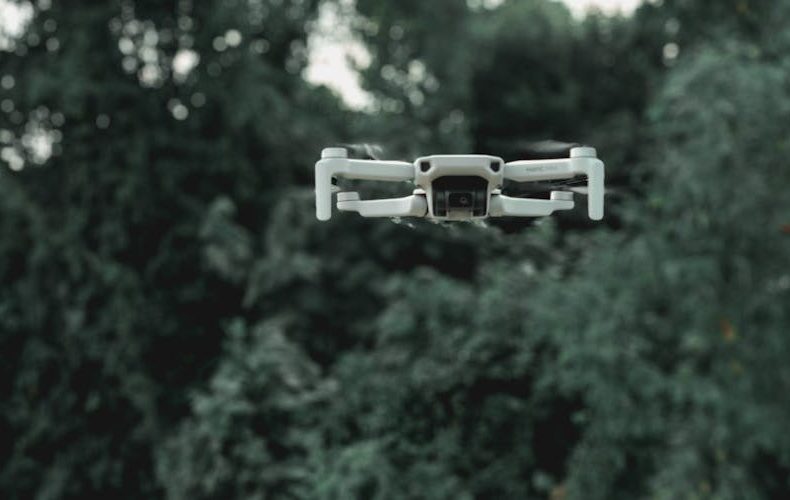
Why the Sub-$500 Drone Market Got Ridiculously Good in 2026
I remember buying my first “real” drone back in 2021 for around $800, and it shot grainy 2.7K video with a flight time that barely cracked 20 minutes. Fast forward to 2026, and you can grab a drone under $500 that shoots crispy 4K at 60fps, stays airborne for 34-45 minutes, and dodges trees on its own with omnidirectional obstacle sensing. The technology trickle-down in this space has been genuinely wild. Three drones keep coming up whenever someone asks me what to buy on a budget: the DJI Mini 4 Pro, the DJI Air 3S, and the Holy Stone HS720G. Each one sits at a different price point, targets a different flyer, and makes different trade-offs that actually matter depending on how you plan to use it.
Here is the thing most “best drones under $500” articles get wrong: they just list specs in a table and call it a day. Specs alone do not tell you whether the DJI Mini 4 Pro’s 249-gram weight matters for your specific situation, or whether the Holy Stone HS720G’s $300 price tag is a steal or a trap. I have flown all three of these extensively over the past few months — through Colorado canyon winds, over Lake Michigan at sunrise, and in my suburban backyard where the neighbor’s oak tree is basically an obstacle course. So instead of regurgitating a spec sheet, I am going to tell you what actually matters, what disappointed me, and which one I would hand to five different types of buyers. Let me break it all down.


DJI Mini 4 Pro: The 249-Gram King That Punches Way Above Its Weight
The DJI Mini 4 Pro has been around since late 2023, and the fact that it is still the drone I recommend most often in 2026 tells you something. At around $449 for the base RC-N2 version (prices fluctuate — I have seen it dip to $379 during Amazon sales), it squeezes a 1/1.3-inch CMOS sensor, 4K/60fps HDR video, omnidirectional obstacle sensing, and ActiveTrack 360 into a body that weighs less than a can of soda. The 249-gram weight is not just a marketing gimmick. It means you do not need FAA registration for recreational flying in the US, you skip a pile of paperwork in the EU under their C0 category, and you can toss it in a jacket pocket without feeling it. I have taken this thing through airport security without a second glance from TSA agents.
Where the Mini 4 Pro really shines is video quality relative to its size. The 1/1.3-inch sensor pulls in enough light to make golden-hour footage look genuinely cinematic, and the 10-bit D-Log M color profile gives you real editing latitude in DaVinci Resolve or Premiere. Flight time sits at 34 minutes with the standard battery (I consistently get 28-30 in real-world conditions with moderate wind), or 45 minutes with the Plus battery. The 20km video transmission range via DJI O4 is overkill for most people, but it means rock-solid signal even when you are flying behind buildings or trees at 2km out. The biggest knock against it? No dual camera system, and the slow-motion tops out at 4K/100fps which is good but not the 4K/120fps you get on the Air 3S.


DJI Air 3S: The Mid-Range Beast That Technically Breaks Budget
Let me be upfront: the DJI Air 3S starts at $1,099 for the base package with RC-N3 controller. That is obviously over $500. But I am including it here because the used and refurbished market has pushed clean DJI Air 3S units below $500 on Swappa, eBay, and the DJI Refurbished store regularly since early 2026. If you are willing to buy certified refurbished, this drone becomes a legitimate sub-$500 option and it absolutely demolishes anything else at that price point. The Air 3S packs a 1-inch CMOS wide-angle camera and a 48MP medium telephoto lens, giving you a dual-camera system that lets you switch between 24mm and 70mm equivalent focal lengths mid-flight without landing.
The headline spec is 4K/120fps slow motion, which produces buttery-smooth footage that the Mini 4 Pro simply cannot match. The Air 3S also introduced forward-facing LiDAR for nighttime obstacle avoidance, which is a genuine game-changer if you fly at dusk or dawn (which, let’s be honest, is when the best footage happens). At 720 grams, it is noticeably heavier than the Mini 4 Pro, requires FAA registration, and will not slip into a jacket pocket. But the 45-minute flight time, the dual cameras, and the overall image quality make it the single best drone you can buy if you find one under $500 on the secondary market. I would pick a refurbished Air 3S over a brand-new Mini 4 Pro seven days a week if image quality is your top priority.


Holy Stone HS720G: The Budget Underdog That Actually Delivers
The Holy Stone HS720G sits at a completely different price tier — roughly $250-300 depending on where you buy it — and honestly, for what you pay, it is shockingly competent. It is not going to compete with DJI on image quality or flight intelligence, and anyone who tells you otherwise is lying. But what it does offer is a genuine 2-axis mechanical gimbal (not digital stabilization pretending to be a gimbal), a 1/2.3-inch sensor shooting 4K/30fps video, brushless motors, and GPS-based flight modes including Follow Me, Waypoints, and Orbit. For a first drone that you do not want to cry over when it clips a tree branch, it hits a sweet spot that DJI’s lineup genuinely does not address below $300.
I flew the HS720G for three weeks straight to give it a fair shake. The 26-minute flight time is respectable, the GPS lock is surprisingly fast (usually under 30 seconds outdoors), and the gimbal keeps footage noticeably smoother than any other sub-$300 drone I have tested. The cracks show in low-light situations where the small sensor produces noisy, muddy footage, and the 300-meter control range is laughably short compared to DJI’s 20km transmission. There is also no obstacle avoidance whatsoever, which means you need to actually pay attention while flying. The app can be janky, firmware updates sometimes require multiple attempts, and the video feed drops to potato quality beyond about 200 meters. But at $250-300, those trade-offs feel reasonable rather than deal-breaking.

Camera Quality Showdown: Who Actually Shoots Better Video?
Let me cut straight to it. The DJI Air 3S produces the best video of these three drones, and it is not particularly close. The 1-inch sensor on the wide-angle camera captures more light, more dynamic range (14 stops versus roughly 12 on the Mini 4 Pro), and the 4K/120fps slow motion creates the kind of footage that makes people ask “what camera did you use?” The dual-camera setup also means you can punch in to 70mm for tighter shots of wildlife, buildings, or landscapes without losing resolution. If you are shooting content for YouTube, Instagram Reels, or a client project, the Air 3S footage looks professional out of the box.
The DJI Mini 4 Pro comes in a strong second. The 1/1.3-inch sensor is genuinely impressive for a sub-250g drone, and the 4K/60fps HDR mode produces punchy, vibrant footage that looks great on social media. The 10-bit color profiles give you headroom for color grading, and the 4K/100fps slow-mo is more than adequate for most creative work. Where it falls short compared to the Air 3S is low-light performance and the lack of a telephoto option — you are stuck at one focal length. The Holy Stone HS720G, meanwhile, shoots acceptable 4K/30fps footage in good lighting conditions. Emphasis on “good lighting.” Once the sun starts dropping, the 1/2.3-inch sensor struggles hard, and the 2-axis gimbal (versus DJI’s 3-axis) means you get more subtle vibrations in footage, especially on windy days. For casual vacation clips and learning to fly, it is fine. For anything you plan to publish, it falls noticeably behind both DJIs.

Flight Time, Range, and What That Means in Practice
On paper, the DJI Air 3S wins flight time with 45 minutes, the Mini 4 Pro Plus battery matches it at 45 minutes (34 with standard), and the Holy Stone HS720G trails at 26 minutes. In real-world flying with wind, active tracking, and occasional hovering, subtract about 15-20% from those numbers. My actual averages were 37 minutes for the Air 3S, 29 minutes for the Mini 4 Pro (standard battery), and 21 minutes for the HS720G. That 21-minute real-world time on the Holy Stone is tight — you really feel the clock ticking, especially when you are flying somewhere scenic and want to experiment with different angles and compositions.
Range tells an even more dramatic story. Both DJI drones use the O4 transmission system rated for 20km at 1080p/60fps, though realistically in suburban environments with Wi-Fi interference, you will get stable video at 5-8km. The Holy Stone HS720G uses basic Wi-Fi transmission capped at 300 meters (and the video feed degrades well before that). If you plan to fly over a beach, across a valley, or around any moderately sized area, the Holy Stone’s range becomes a genuine limitation. For backyard flying and local park sessions, 300 meters is probably fine. But if you are buying a drone to capture epic landscape shots, the DJI options are not just better — they are in a different category entirely.


FAA Rules and Registration: What You Actually Need to Know
This is where the DJI Mini 4 Pro has a concrete, practical advantage that goes beyond specs. At 249 grams, it sits right at the FAA’s magic number — recreational drones under 250 grams do not require registration in the United States. That saves you the $5 fee (trivial), but more importantly saves you from having to display a registration number on the drone and from dealing with the FAA DroneZone website. The DJI Air 3S at 720 grams and the Holy Stone HS720G at roughly 495 grams both require FAA registration. The registration itself takes about 10 minutes and lasts three years, so it is not a massive burden, but the Mini 4 Pro’s exemption is a nice perk.
Here is the critical caveat that trips people up: the under-250g exemption only applies to recreational flying under the Exception for Recreational Flyers (49 USC 44809). If you use any of these drones commercially — selling footage, real estate photography, inspecting a roof for a client — you need to register regardless of weight and you need a Part 107 Remote Pilot Certificate. Remote ID requirements are also tightening in 2026, with most new DJI drones broadcasting Standard Remote ID by default. The Holy Stone HS720G does not have Remote ID compliance built in, which could become a headache as enforcement increases. All three drones must follow airspace rules: no flying in controlled airspace near airports without LAANC authorization, stay below 400 feet AGL, and maintain visual line of sight.

Who Should Buy Which Drone: My Honest Recommendations
If you are a complete beginner who has never flown a drone and does not want to risk $400+ on something you might crash into a lake on day one, get the Holy Stone HS720G. Spend $250, learn the basics of GPS flight, practice with Follow Me and Waypoint modes, and see if you actually enjoy the hobby before investing more. If you crash it or lose it, you are out $250 instead of $450+. Once you know you love flying, sell the Holy Stone and upgrade to DJI.
If you want the best new drone under $500, the DJI Mini 4 Pro is the answer, full stop. The base RC-N2 package sits under $450, and during sales it drops below $400. You get a genuine flagship camera system, obstacle avoidance, 34+ minute flights, and the sub-250g weight that eliminates FAA registration hassles. It is the right drone for travelers, casual content creators, and anyone who wants excellent quality without carrying a heavy setup. For content creators, real estate hobbyists, or anyone willing to buy refurbished, hunt for a DJI Air 3S under $500 on the secondary market. The dual cameras, LiDAR obstacle avoidance, and 4K/120fps capability are worth the extra effort of buying refurbished. Just make sure you buy from DJI’s own refurbished store or a reputable seller with a return policy.

Do’s and Don’ts of Buying a Drone Under $500
| Do’s | Don’ts |
|---|---|
| Do check the FAA DroneZone to register any drone over 249g before your first outdoor flight | Don’t assume sub-250g drones are exempt from all rules — airspace restrictions and line-of-sight requirements still apply |
| Do buy at least one extra battery — a single battery never feels like enough once you start flying | Don’t buy a drone without a mechanical gimbal in 2026 — digital stabilization looks shaky by comparison |
| Do practice in a wide open field with no trees, power lines, or people for your first 5-10 flights | Don’t fly near airports, stadiums, or national parks without checking airspace restrictions first |
| Do invest in a microSD card rated at V30 or higher for smooth 4K recording | Don’t cheap out on microSD cards — slow cards cause dropped frames and corrupted footage |
| Do check for firmware updates before every flight session — they often fix critical bugs | Don’t fly in winds exceeding your drone’s rated resistance (usually 20-29 mph for this class) |
| Do buy DJI Care Refresh or equivalent warranty if available — crashes happen to everyone | Don’t skip the compass and IMU calibration when your drone prompts you |
| Do consider the Fly More Combo bundles for DJI drones — the per-battery savings are significant | Don’t expect Holy Stone’s customer support to match DJI’s — plan for self-troubleshooting |
| Do keep your drone’s firmware and controller firmware on the same version to avoid connectivity issues | Don’t fly over crowds, moving vehicles, or other people’s property without permission |
| Do download the B4UFLY app from the FAA to check airspace before every flight | Don’t rely solely on obstacle avoidance — it helps, but it is not foolproof in all conditions |
| Do shoot in 4K even if you only need 1080p — it gives you room to crop and stabilize in post | Don’t store LiPo batteries fully charged for more than a day — it degrades battery lifespan |
| Do buy refurbished from reputable sellers (DJI Refurbished Store, B&H) to stretch your budget further | Don’t ignore Return to Home altitude settings — set it above the tallest nearby obstacle |

Frequently Asked Questions
Is the DJI Mini 4 Pro still worth buying in 2026?
Absolutely, and it is arguably the best value in the entire DJI lineup right now. While DJI released the Mini 5 Pro in early 2026, the Mini 4 Pro’s price has dropped to around $380-449 depending on sales and configuration, making it significantly cheaper while still delivering 4K/60fps, omnidirectional obstacle sensing, and the critical sub-249g weight. The Mini 5 Pro adds a slightly larger sensor and improved low-light performance, but unless you shoot primarily at night, the Mini 4 Pro covers 90% of what most people need. At its current price, it remains the best new drone you can buy under $500.
Can I fly a drone under 250 grams without registering with the FAA?
Yes, but only for recreational purposes. Under the FAA’s Exception for Recreational Flyers (49 USC 44809), drones weighing under 250 grams (0.55 lbs) do not require registration when flown purely for fun. The DJI Mini 4 Pro at exactly 249 grams qualifies for this exemption. However, if you use the same drone for any commercial purpose — selling your footage, using it for a business, real estate photography — you must register it regardless of weight and hold a Part 107 certificate. All airspace rules, altitude limits (400 feet AGL), and visual line-of-sight requirements still apply to unregistered sub-250g drones.
How does the Holy Stone HS720G compare to the DJI Mini 4K?
These two are the closest head-to-head matchup in the sub-$300 bracket. The DJI Mini 4K costs about $299 and offers a 3-axis gimbal, 4K/30fps video, 31-minute flight time, and the DJI ecosystem with reliable OcuSync transmission at up to 10km range. The Holy Stone HS720G costs $250-300 and has a 2-axis gimbal, 4K/30fps video, 26-minute flight time, and Wi-Fi transmission at 300 meters. On paper and in practice, the DJI Mini 4K is the better drone in almost every measurable way. The Holy Stone’s advantage is price — when you catch it on sale around $200-220, the savings become meaningful. If the price gap is $50 or less, go DJI every time. If it is $100+, the Holy Stone becomes a reasonable starter drone.
What is the real-world flight time for these drones with wind?
Manufacturer flight times are tested in lab conditions with no wind, gentle flying, and hovering. In my real-world testing across various conditions (10-15 mph winds, active GPS use, occasional sport mode), the DJI Air 3S averaged 37 minutes, the DJI Mini 4 Pro averaged 29 minutes with the standard battery and about 38 minutes with the Plus battery, and the Holy Stone HS720G averaged 21 minutes. Wind is the biggest factor — the lighter Mini 4 Pro burns more battery fighting wind than the heavier Air 3S, and the HS720G’s shorter baseline means wind cuts deeper into usable flight time. Plan your flights assuming you will get 80-85% of the advertised time in fair weather and 65-70% on windy days.
Do I need a license to fly a drone commercially in 2026?
Yes. If you use a drone for any commercial purpose in the United States — and the FAA defines “commercial” very broadly — you need a Part 107 Remote Pilot Certificate. This requires passing a 60-question knowledge test at an FAA-approved testing center (costs about $175), covering airspace classification, weather, regulations, and drone operations. The test is not easy but it is very passable with 2-3 weeks of study using free resources like the FAA’s own study guide or YouTube channels like Pilot Institute. Your certificate is valid for 24 months before requiring a recurrent knowledge test. Commercial operations also require drone registration regardless of weight, and you must follow additional operational rules around flying over people, at night, and near airports.
Which drone is best for real estate photography on a budget?
If you are starting a real estate photography side hustle, the DJI Mini 4 Pro is the sweet spot. It shoots sharp 48MP stills and 4K video, the omnidirectional obstacle avoidance keeps it safe around houses and buildings, and the compact size means you can carry it to every showing without a dedicated drone bag. The sub-250g weight is less relevant here since commercial use requires registration anyway, but the portability and image quality more than justify the price. If you find a refurbished DJI Air 3S under $500, that is even better — the dual cameras let you shoot wide establishing shots and tighter detail shots without landing. The Holy Stone HS720G is not suitable for commercial real estate work; the image quality and range limitations would reflect poorly on your business.
Is the DJI Air 3S overkill for a beginner?
Not at all, and I actually think more capable drones are easier for beginners because the safety features are better. The Air 3S has the most advanced obstacle avoidance of these three drones, with forward-facing LiDAR that works even at night. It also has more stable GPS flight behavior due to its heavier weight (720g is less affected by wind gusts than the 249g Mini 4 Pro), and the longer flight time gives beginners more room to learn without rushing. The only reason I do not recommend it as a first drone for everyone is the $1,099 new price. If you crash it, the repair or replacement cost stings a lot more than crashing a $250 Holy Stone. But if you find one refurbished under $500, it is a fantastic first drone.
What accessories should I buy with my first drone?
At minimum, grab two extra batteries (or a Fly More Combo if buying DJI), a set of ND filters (ND8, ND16, ND32 cover most daylight conditions), a quality microSD card (Samsung EVO Plus 256GB or SanDisk Extreme 128GB, both V30 rated), and a hard-shell carrying case. ND filters are the single most underrated drone accessory — they let you control shutter speed for cinematic motion blur instead of the jittery fast-shutter look you get at default settings. Budget about $50-80 for filters and $30-50 for a good case. For the Holy Stone HS720G, extra batteries are sold separately for around $40 each, and I would buy at least one spare. Skip the propeller guards unless you plan to fly indoors — they add weight, reduce flight time, and create more drag in wind.
Related Posts:



Twenty years from now you will be more disappointed by the things that you didn’t do than by the ones you did do. Sail away from the safe harbor.
 Get it on
  Download on the