






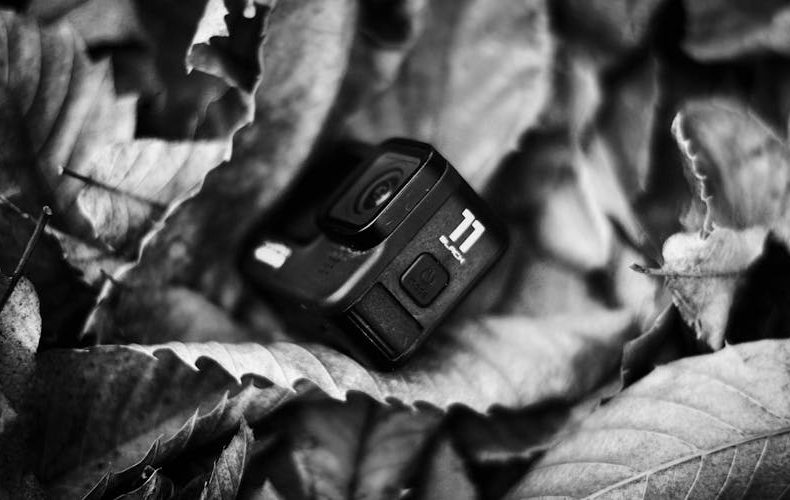
If you've been shopping for an action camera lately, you've noticed something: GoPro isn't the only name in the conversation anymore. DJI has been steadily eating into GoPro's dominance, and the DJI vs GoPro action camera debate is now genuinely difficult to settle. Five years ago, recommending an action camera was simple, you said "GoPro" and moved on. Not anymore. DJI's Osmo Action 6 packs a 1/1.1 inch sensor and a variable aperture that no GoPro can match. Meanwhile, GoPro's Hero 13 Black still holds serious cards in resolution and slow motion. The gap between them has never been smaller, but the differences that remain actually matter depending on how you shoot.
I've spent months going back and forth between both ecosystems, mounting these on helmets, handlebars, and dive housings. No universal winner here, the right pick depends on what you shoot, where you shoot it, and how much post production flexibility you need. This comparison covers sensor quality, battery endurance, stabilization, durability, accessories, and value. No fluff, no sponsored talking points. Just honest takes on where your $350 to $500 should go. I've tested both in rain, snow, underwater, and on bumpy trails, each camera earned my respect in different ways.
DJI vs GoPro Action Camera: The Sensor and Image Quality Gap
Sensor size is the biggest differentiator right now. DJI's Osmo Action 6 packs a 1/1.1 inch stacked CMOS sensor with roughly 38MP. GoPro's Hero 13 Black? A 1/1.9 inch sensor with 27MP. Not a small gap. In side by side stills, DJI's images come out brighter and punchier with better tonal range. The variable aperture (f/2.0 to f/4.0) is a first for action cameras, opening to f/2.0 in dim conditions pulls in light the GoPro's fixed f/2.5 simply can't match. Outdoors in good light, though, the difference narrows. GoPro's color science still produces vibrant, social media ready clips without any grading. Both look great in sunshine. The DJI just handles the tricky stuff better.


Resolution and Slow Motion: Where GoPro Still Dominates
Here's where GoPro fights back. Hard. The Hero 13 shoots 5.3K at 60fps versus DJI's 4K/120fps cap. For YouTube and Instagram, 4K is plenty, platforms compress everything anyway. But cropping in post? That extra resolution gives real breathing room. Slow motion is where GoPro truly flexes: burst slow mo hits 400fps at 720p, and 5.3K at 120fps delivers cinematic slow mo that's still razor sharp. If you're filming skateboard tricks, MTB jumps, or surfing barrels, GoPro wins this round. Not close.


Battery Life: DJI's Knockout Punch
Not even a fair fight. The DJI Osmo Action 6 squeezes over four hours from its 1950mAh battery thanks to an efficient processor. The GoPro Hero 13 Black, same 1950mAh Enduro cell, manages about 90 minutes at 5.3K/30 or roughly 2.5 hours at 1080p. I took the Action 6 on a full day of mountain biking, left it running across three trail sessions, and still had 22% left. The GoPro would've died before lunch. If you're doing all day shoots or multi hour hikes where swapping batteries isn't practical, DJI's battery advantage alone might justify the purchase. Massive difference.


Stabilization Head to Head: HyperSmooth vs RockSteady
Both deliver excellent stabilization, but they shine in different spots. GoPro's HyperSmooth 6.0 is still the gold standard for high frequency vibration, motorcycle mounts, rough dirt roads, constant rattling. Unnervingly smooth. DJI's RockSteady 4.0 has closed the gap for running, skiing, and handheld vlogging. Where DJI pulls ahead is horizon leveling, the Action 6 locks the horizon through more extreme angles before cropping kicks in. For FPV drone mounting, DJI feels more natural. Honestly? Both are exceptional. Stabilization won't be your complaint with either camera.


DJI vs GoPro Action Camera in Extreme Conditions
The DJI Osmo Action 6 is waterproof to 20 meters without housing. GoPro Hero 13 handles 10 meters bare. That extra depth matters for snorkeling, freediving, and casual scuba. DJI also operates from -20C to 45C, cold weather has always been GoPro's weakness, with batteries draining fast and screens lagging below freezing. Both cameras survive drops and scratches. But if you shoot in winter or underwater beyond 10 meters, DJI has a clear edge.


Accessories, Ecosystem, and Pricing
GoPro's accessory ecosystem runs deeper. Period. A decade of third party mounts means you'll find a GoPro mount for any situation. The HB Series modular lens system on the Hero 13, macro, ultra wide, ND filters that auto detect, is genuinely clever. DJI is growing fast but can't match that breadth yet. The Action 6 does pack 50GB of internal storage, which GoPro doesn't offer. DJI Mic integration is seamless if you're already in DJI's audio ecosystem. On pricing: the Action 5 Pro sells at $349, the Action 6 at $499, and the Hero 13 at $399. GoPro's Hero 14 is rumored for Q2 2026 with a 1 inch sensor, GP3 processor, and 8K, but right now, the DJI vs GoPro action camera sweet spot is either the $349 Action 5 Pro or the $399 Hero 13.

Do’s and Don’ts
Both of these cameras reward good habits and punish lazy ones. After months of swapping between DJI and GoPro rigs on helmets, handlebars, and dive housings, these are the rules I now follow on every shoot. Check them before you buy, and again before you mount up.
| Do’s | Don’ts |
|---|---|
| Pick the DJI Action 5 Pro at $349 if you want the best value under $400 | Don't buy the GoPro Hero 13 expecting all-day battery without spare cells |
| Choose GoPro if slow-motion footage is central to your content | Don't ignore the Action 6's variable aperture for mixed-lighting shoots |
| Invest in extra batteries regardless of which brand you pick | Don't assume 5.3K matters if you only post to Instagram and TikTok |
| Test stabilization with your specific activity before committing | Don't mount either camera without a safety tether at high speeds |
| Go DJI for any underwater shooting deeper than 10 meters | Don't buy HB-Series lenses unless you'll actually use them regularly |
| Check GoPro mount compatibility if you have existing accessories | Don't overlook DJI's cold-weather tolerance for winter shooting |
| Update firmware immediately. both brands ship with bugs | Don't format your microSD on a computer; always format in-camera |
| Use DJI's 50GB internal storage as backup, not primary | Don't skip a quality microSD card. cheap cards cause recording failures |
| Compare the Action 5 Pro before jumping to the Action 6 | Don't wait for the Hero 14 if you need a camera right now |
| Shoot in D-Log M or flat profiles if you plan to color grade | Don't record at max resolution for casual social media content |

FAQs
Is the DJI Osmo Action 6 better than the GoPro Hero 13 Black?
Depends on priorities. The Action 6 wins on sensor size (1/1.1 inch vs 1/1.9 inch), battery life (4+ hours vs 90 minutes at top resolution), waterproofing (20m vs 10m), and low light thanks to its f/2.0 aperture. GoPro takes resolution (5.3K60), slow motion (400fps burst), and accessories. Long shoots in variable conditions? DJI. Resolution and slow mo? GoPro.
Which action camera has better stabilization in 2026?
Both are excellent. GoPro's HyperSmooth 6.0 edges out DJI for high frequency vibration like motorcycle and ATV mounts. DJI's RockSteady 4.0 handles horizon leveling and rotational movement better, making it the pick for FPV drones. For running, cycling, and handheld vlogging, the difference is negligible. You won't regret either choice.
Is the DJI Osmo Action 5 Pro still worth buying in 2026?
Absolutely. At $349, its 1/1.3 inch sensor still outperforms GoPro's 1/1.9 inch in low light, battery life hits 240 minutes, it's waterproof to 20 meters, and it records 4K/120fps. Unless you specifically need the Action 6's variable aperture, the 5 Pro saves you $150 with minimal tradeoffs. Killer value.
Can I use GoPro mounts with DJI action cameras?
Not directly, different mounting systems. But DJI includes a 1/4-20 thread, and adapters cost $5-$10 on Amazon. The Hero 13 also added a 1/4-20 thread and magnetic latch, narrowing the gap. Universal third party mounts work with both for $8-$20.
Which action camera is better for vlogging?
DJI Osmo Action 6 edges it out. Brighter front facing OLED, variable aperture for indoor to outdoor transitions, native DJI Mic integration for wireless audio, and 50GB internal storage. GoPro's Media Mod adds a directional mic and HDMI but costs extra and adds bulk.
How long does GoPro Hero 13 battery last versus DJI?
At highest quality: GoPro lasts about 90 minutes (5.3K/30), DJI about 240 minutes (4K). Roughly 2-3x longer per charge. Even at 1080p, GoPro manages 150 minutes versus DJI's 240+. The gap is consistent across every resolution setting.
Should I wait for the GoPro Hero 14 Black?
Rumored for Q2 2026 with a 1 inch sensor, GP3 processor, and 8K/30fps. Could close DJI's sensor advantage if true. But rumors aren't specs. The Hero 13 at $399 or Action 5 Pro at $349 are excellent right now. Only wait if you have zero urgency.
Related Posts:






Twenty years from now you will be more disappointed by the things that you didn’t do than by the ones you did do. Sail away from the safe harbor.
 Get it on
  Download on the