






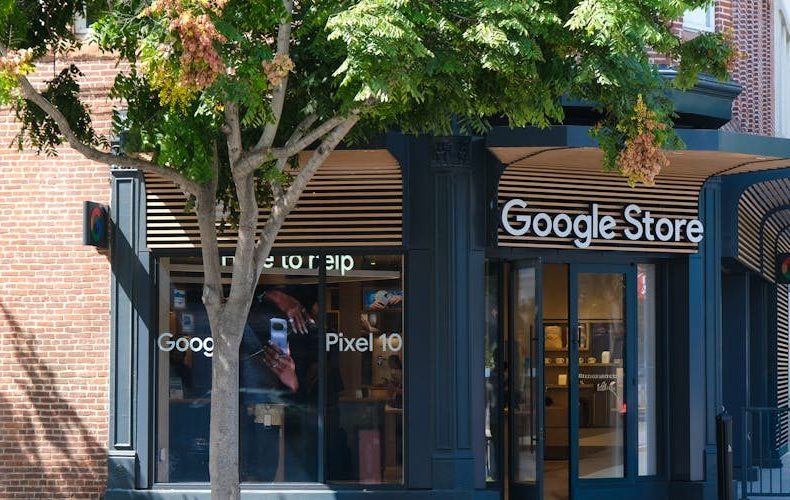
If you're shopping for a premium Android phone right now, you've probably narrowed it down to two names. The Pixel 10 Pro vs Galaxy S26 debate has been raging since Samsung dropped the S26 in March 2026, and this is the closest these two have ever been. Google launched the Pixel 10 Pro in August 2025 at $999, Samsung responded with the Galaxy S26 at $899, a hundred bucks cheaper, but with trade offs that aren't obvious from the spec sheet. I've spent weeks going back and forth, and the "right" answer depends entirely on what you care about. Neither phone is perfect, and anyone who says otherwise is selling something.
Both phones have a 6.3 inch display, both run Android with heavy AI integration, and both take excellent photos. The lazy take? "They're basically the same." They're not. The Pixel 10 Pro runs Google's Tensor G5 on TSMC's 3nm process, while the Galaxy S26 packs the Snapdragon 8 Elite Gen 5 in North America (other regions get the Exynos 2600, whole separate conversation). Cameras look similar on paper but produce different results. Software experience? Night and day. I'm breaking down every category that matters so you can stop second guessing.
Pixel 10 Pro vs Galaxy S26: Design and Display
Both share a 6.3 inch screen with 120Hz refresh rates. Rare apples to apples territory. The Pixel 10 Pro uses Gorilla Glass Victus 2 and Google's signature camera bar across the back, distinctive, love it or hate it. Samsung finally went flat on the S26, ditching those curved edges that plagued earlier models. The S26's Dynamic LTPO AMOLED 2X pushes up to 2600 nits peak brightness, which matters if you read articles outdoors at noon. In hand, both feel premium and roughly equal in weight. Neither reinvents the wheel. Pick the aesthetic you prefer and move on.


Camera Systems: Where the Pixel 10 Pro vs Galaxy S26 Gap Gets Real
Google equipped the Pixel 10 Pro with a 50MP main sensor, 48MP ultrawide, and a 48MP telephoto with 5x optical zoom stretching to 100x digital. Samsung's Galaxy S26? A 50MP main, 12MP ultrawide, and a 10MP telephoto with only 3x optical zoom. The Pixel wins before you even take a photo. Google's AI processing consistently produces sharper, more natural images in daylight, I took comparison shots at a farmers market last month, and the Pixel nailed skin tones every time. The S26 fought back in low light scenarios, though. Samsung's night mode still edges ahead with less noise at high ISO. But that 12MP ultrawide on the S26? Embarrassing next to the Pixel's 48MP version. Not close.


Performance: Snapdragon Brute Force vs Tensor Efficiency
The Snapdragon 8 Elite Gen 5 obliterates the Tensor G5 in benchmarks. Full stop. In 3DMark's Wild Life Extreme, the Snapdragon posted 38.27 FPS while the Pixel couldn't crack 20. For gamers, that gap is real. But the Tensor G5, now on TSMC 3nm, runs dramatically cooler. During a 20 minute stress test, the Pixel used only 10% battery without throttling. The S26 won the sprint but heated up during extended gaming. For everyday tasks, scrolling, multitasking with 12GB RAM on the S26 versus 16GB on the Pixel, both feel instantaneous. The Tensor G5 also packs a 60% faster TPU for on device AI, which matters more than gaming benchmarks for most people.


Battery Life and Charging
The Pixel 10 Pro packs 4,870mAh against the S26's 4,300mAh. That gap shows up clearly, the S26 averaged about 11 hours 28 minutes of screen on time, roughly two hours less than the Pixel. Charging is modest on both: 30W on the Pixel, 25W on the S26. Neither will impress you coming from OnePlus with 100W+ charging. The Pixel supports Qi2 wireless at 15W. Battery life? Pixel wins convincingly.

AI Features and Software
Buyers get a free year of Google AI Pro (~$240 value), unlocking Imagen 4 and Veo 3. Samsung's S26 launches with One UI 8.5 on Android 16, packing AI call screening, Creative Studio, enhanced Audio Eraser, and the flexibility to choose between Bixby, Gemini, or Perplexity. Google's integration feels. They control hardware, OS, and AI models.
This might decide the whole Pixel 10 Pro vs Galaxy S26 matchup. The Pixel ships with Gemini Nano on device, Magic Cue for proactive suggestions, Voice Translate for real time call translation, screen automation that handles tasks inside apps without you lifting a finger. Buyers get a free year of Google AI Pro (~$240 value), unlocking Imagen 4 and Veo 3. Samsung's S26 launches with One UI 8.5 on Android 16, packing AI call screening, Creative Studio, enhanced Audio Eraser, and the flexibility to choose between Bixby, Gemini, or Perplexity. Google's integration feels seamless, they control hardware, OS, and AI models. Samsung's approach is broader but sometimes bolted on. Both promise seven years of updates, but Google delivers day one while Samsung owners wait weeks.

Pricing and Value: The $100 Question
The Pixel 10 Pro starts at $999 for 128GB/16GB RAM. The Galaxy S26 starts at $899 for 256GB/12GB RAM. Samsung dropped the 128GB tier entirely, double the storage at a lower price. But Google gives you 4GB more RAM, plus the free AI Pro subscription. Bump the Pixel to 256GB ($1,059) and it's $160 more than the equivalent S26. For pure hardware value, Samsung wins this generation. Samsung also runs aggressive trade in deals, a friend grabbed the S26 for $499 trading in a two year old phone.

Who Should Buy Which
The Pixel 10 Pro is for people who prioritize camera quality (especially zoom), battery endurance, clean software with day one updates, and deep Gemini AI integration. The Galaxy S26 makes sense if you want raw processing power, gaming performance, 256GB base storage, or you're in Samsung's ecosystem. A buddy switched from Pixel 9 Pro to the S26 for gaming, zero regrets. Another went Pixel 10 Pro after years on Samsung because she was tired of waiting for updates. Both right.

Do’s and Don’ts
After weeks of flipping between these two phones, the practical advice matters more than any single spec win. The table below distills the buying rules that came out of that testing. Read it before you commit, because a few of these points are easy to miss in launch coverage.
| Do’s | Don’ts |
|---|---|
| Compare real-world camera samples. specs don't tell the full story | Don't expect Pixel-level zoom from the S26's 10MP 3x telephoto |
| Factor in Google AI Pro ($240 value) when comparing Pixel pricing | Don't ignore the Exynos vs Snapdragon split outside North America |
| Check Samsung trade-in deals. often more aggressive than Google's | Don't assume Tensor G5 is "slow" because it loses benchmarks |
| Get the Pixel if battery life is your top concern | Don't pick the Pixel for gaming. Snapdragon genuinely outperforms |
| Choose the S26 if you're in Samsung's ecosystem | Don't overlook the ultrawide gap. 48MP vs 12MP is massive |
| Wait for sales during major shopping events | Don't buy at launch if you can wait 2-3 months for drops |
| Test One UI 8.5 and Pixel UI in a store. very different | Don't assume more AI features means better AI |
| Consider 256GB base storage on S26 for 4K/8K video | Don't skip a case. glass backs crack regardless |
| Look at Pixel 10 Pro XL or S26 Ultra for bigger screens | Don't buy the S26 for zoom. 3x can't compete with 5x |
| Read user reviews after 3+ months, not launch-day hype | Don't forget carrier deals that might tip the balance |
The camera rows deserve the most weight, because the zoom and ultrawide gaps are the two hardware differences no software update will close. If long range shots matter to you, the Pixel's 5x telephoto settles the argument, and if they do not, the S26's savings buy a lot of accessories. The pricing rows work together. Google's bundled AI Pro subscription is real value, but only for someone who will actually use it, while Samsung's trade in offers can drop the S26 to midrange money if you have an old phone in a drawer. Region matters more than most reviews admit, since the Exynos version of the S26 sold outside North America behaves differently enough to change the comparison. And the store visit is not optional. One UI and Pixel UI feel so different day to day that five minutes with each will tell you more than any spec table.

FAQs
Is the Pixel 10 Pro worth $100 more than the Galaxy S26? Depends on priorities. Samsung gives double the base storage (256GB vs 128GB) for less money. The Pixel includes free AI Pro (~$240 value), a better camera, and longer battery life.
Is the Pixel 10 Pro camera better than the Galaxy S26? In most scenarios, yes. The 48MP ultrawide and 48MP telephoto with 5x optical zoom give it a hardware edge over the S26's 12MP ultrawide and 10MP 3x telephoto. Google's computational photography produces more natural colors in daylight. The S26 fights back in low-light with cleaner night mode, but for everyday shooting and zoom, the Pixel wins.
Is the Pixel 10 Pro camera better than the Galaxy S26?
In most scenarios, yes. The 48MP ultrawide and 48MP telephoto with 5x optical zoom give it a hardware edge over the S26's 12MP ultrawide and 10MP 3x telephoto. Google's computational photography produces more natural colors in daylight. The S26 fights back in low light with cleaner night mode, but for everyday shooting and zoom, the Pixel wins.
Which has better battery life?
The Pixel wins. Its 4,870mAh battery outlasts the S26's 4,300mAh by roughly two hours in screen on time tests. Charging is 30W on Pixel, 25W on S26, neither qualifies as fast by 2026 standards.
Is the Snapdragon 8 Elite Gen 5 much faster than Tensor G5?
In benchmarks, yes, nearly double the GPU scores. In everyday use, both feel equally fast. The gap only shows during intensive gaming. Google's Tensor G5 compensates with a 60% faster TPU for on device AI, which matters more for daily tasks.
Does the Galaxy S26 get updates as fast as the Pixel?
Not quite. Both promise seven years, but Google delivers on day one. Samsung owners wait weeks to months depending on carrier and region. Google also drops quarterly Feature Drops with new capabilities.
Is the Pixel 10 Pro worth $100 more than the Galaxy S26?
Depends on priorities. Samsung gives double the base storage (256GB vs 128GB) for less money. The Pixel includes free AI Pro (~$240 value), a better camera, and longer battery life. Cameras and software justify the Pixel premium. Raw value favors the S26.
Will these phones hold up in 3-4 years?
Both should age well. Seven years of updates, 12-16GB RAM, and powerful chipsets mean smooth performance for four to five years. Either is a solid long term buy.
Related Posts:







Twenty years from now you will be more disappointed by the things that you didn’t do than by the ones you did do. Sail away from the safe harbor.
 Get it on
  Download on the