






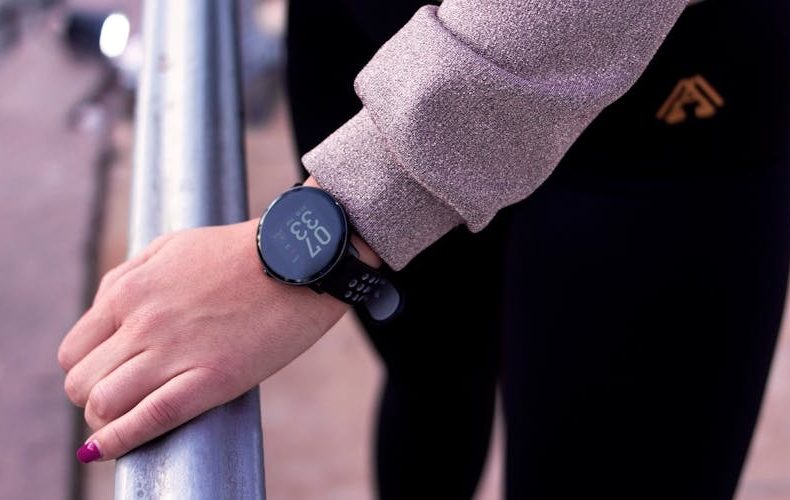
I've been wearing the Samsung Galaxy Watch 8 daily for almost three weeks now, and I'll be honest, I wasn't expecting to like it this much. Samsung's smartwatch line has felt iterative for years, with each generation bringing minor bumps that barely justified the upgrade price. But the Watch 8 genuinely surprised me. The squircle design borrowed from the Galaxy Watch Ultra looks sharp on the wrist, the 3nm Exynos W1000 chip is noticeably snappier than anything Samsung has put in a watch before, and having Google Gemini accessible right from your wrist turns out to be useful in ways I didn't anticipate. At $349 for the 40mm Bluetooth model, it's not cheap, that's a $50 hike over the Watch 7, but the question is whether the upgrades justify the jump.
This Samsung Galaxy Watch 8 review breaks down everything I've found after extended daily use: real world battery performance (spoiler, it's complicated), new health sensors that go beyond usual heart rate stuff, how One UI 8 Watch software feels, and whether you should pick this over the Pixel Watch 4 or save your cash for the Classic. I've tested fitness tracking, sleep monitoring, the Gemini integration, and even compared step counting head to head with Google's offering. No sponsored fluff, just what works and what doesn't.
Design That Finally Feels Fresh
Samsung ditched the pure circle this year. Bold move. The Galaxy Watch 8 adopts a "cushion" shape, a circle set inside a softly squared case.
Samsung ditched the pure circle this year. Bold move. The Galaxy Watch 8 adopts a "cushion" shape, a circle set inside a softly squared case. It's 11% thinner than the Watch 7 at just 8.6mm, and the 40mm model weighs only 30 grams. The Pixel Watch 4 sits at a chunky 12.3mm thick, you feel that difference immediately, especially during sleep tracking. The aluminum frame comes in silver, graphite, and a cream option that looks surprisingly good with casual outfits. Samsung also added pinch gestures, squeeze your thumb and index finger to dismiss notifications or answer calls, genuinely handy when your other hand is holding groceries or a subway pole.


Samsung Galaxy Watch 8 Review: Performance and Chip
The 3nm Exynos W1000 isn't new, it debuted in the Watch 7, but Samsung clearly optimized the software pairing. Apps launch up to 2.7x faster than the old W930 era, and multitasking between Samsung Health, Google Maps, and Spotify no longer triggers that painful stutter. The chip packs a penta core setup: one Cortex A78 at 1.6GHz for heavy lifting, four Cortex A55 cores at 1.5GHz for background tasks. Paired with 2GB of LPDDR5 RAM and 32GB storage, it's responsive. I loaded about 400 offline Spotify tracks and still had room. Samsung stuck with the same chip instead of a rumored W1100, though, the performance ceiling hasn't risen for power users hoping for more.


Battery Life: Good Enough, Not Great
Samsung claims 40 hours for both the 40mm and 44mm models. In practice? With always on display, continuous heart rate monitoring, and sleep tracking, I averaged about 28-30 hours on the 44mm. That's a charge every night watch. Turning off always on display pushed me closer to 36 hours. The 40mm fared worse, around 24-26 hours. For comparison, the Pixel Watch 4 genuinely delivers close to two full days. That gap is real. Fast charging softens the blow, zero to about 45% in 30 minutes via the magnetic charger. Shower, charge, done.


Health Features That Go Beyond the Basics
This is where the Galaxy Watch 8 earns its premium. Two new metrics stood out. Vascular load monitoring tracks stress on your blood vessels during sleep, an early cardiovascular indicator your doctor would normally need office equipment to spot. The Antioxidant Index measures carotenoid levels in your skin, gauging how well your diet supports oxidative stress defenses. Weird metric? Sure. But I adjusted my vegetable intake after seeing consistently low scores for a week. Samsung also launched blood pressure monitoring in the US as of March 2026, joining ECG readings, irregular heart rhythm detection, sleep apnea screening, and SpO2 monitoring. Comprehensive stuff.


Gemini on Your Wrist: More Than a Gimmick
The Galaxy Watch 8 ships with Google Gemini built in. Expected a gimmick. Wasn't. Setting complex timers, drafting quick replies, summarizing notifications, pulling up restaurant info while walking around a new city, worked smoothly about 80% of the time. The other 20%? Voice recognition fumbled in noisy spots or responses took too long over LTE. Not replacing your phone's Gemini experience, but for quick voice queries when pulling out your phone feels awkward, it's legitimately handy.

Samsung Galaxy Watch 8 Review: How It Compares to the Pixel Watch 4
Both start at $349. Display wise, Samsung wins, the 44mm Watch 8 offers a 1.47 inch screen versus the Pixel Watch 4's 1.4 inch panel, and Samsung's 3,000 nit peak brightness crushes the Pixel outdoors. That thinner 8.6mm profile feels more premium too. But the Pixel Watch 4 fights back on battery (genuine two day life), unique safety features (Loss of Pulse Detection, satellite emergency SOS), and step tracking accuracy, in my 6,500 step comparison walk, the Pixel was within 12 steps of manual count while the Watch 8 over counted by about 40. Health depth goes to Samsung. Battery endurance goes to Google.

Galaxy Watch 8 vs Classic: Which One?
The Classic costs $499 for its single 46mm size and brings back the physical rotating bezel. Fantastic for scrolling, deep ridges, satisfying clicks. Here's the catch: the Classic's 46mm case houses only a 1.34 inch display, smaller than the standard 44mm model's 1.47 inch screen. You're wearing a bigger watch with a smaller screen just for a bezel. My take? Unless you specifically love the rotating bezel and traditional watch aesthetic, save the $150 and grab the standard 44mm.

Do’s and Don’ts
Three weeks of daily wear taught me that the Watch 8 rewards people who set it up thoughtfully and punishes those who leave every default on. The table below collects the practical lessons from my testing. Check it before you buy and again when the watch is on your wrist.
| Do’s | Don’ts |
|---|---|
| Get the 44mm model for the larger 1.47-inch display. the size difference is noticeable | Don't buy the 40mm if battery life matters. it barely lasts a full day with AOD on |
| Use continuous heart rate and vascular load monitoring overnight for meaningful health data | Don't expect two-day battery life. Samsung's 40-hour claim requires disabling most features |
| Pair with a Samsung phone for the fullest feature set including blood pressure monitoring | Don't skip calibrating the blood pressure sensor with a real cuff. bad data helps nobody |
| Try the pinch gesture for answering calls. it works surprisingly well in practice | Don't rely on Gemini in noisy environments. voice recognition accuracy drops significantly |
| Enable fall detection and emergency SOS if you're active outdoors | Don't buy the Classic just for aesthetics. its screen is actually smaller than the 44mm standard |
| Download offline Spotify playlists for runs. 32GB handles it easily | Don't keep continuous stress monitoring on if you need the watch to last past 24 hours |
| Use Samsung Health's sleep coaching. the sleep apnea detection is FDA-cleared | Don't assume every Android phone gets full features. BP monitoring requires a Galaxy phone |
| Take advantage of the 3,000-nit display outdoors. set brightness to auto | Don't wear it loosely. skin contact sensors need a snug fit for accurate readings |
| Check the Antioxidant Index weekly to track dietary changes over time | Don't expect the W1000 chip to feel faster than the Watch 7. same processor |
| Wait for sales if $349 feels steep. Samsung regularly drops $50-70 during promos | Don't buy without trying both sizes in-store. wrist comfort varies hugely between 40mm and 44mm |
A few of these deserve emphasis. The size decision matters more than any spec sheet suggests, because the 44mm's bigger display and stronger battery fix the two most common complaints about this watch, yet plenty of buyers default to the smaller case and regret it by dinner. The health features are only as good as your setup discipline: calibrate blood pressure against a real cuff, wear the watch snug enough for the sensors to read cleanly, and give the sleep features a full week before judging the data. Battery management is the other recurring theme. Every continuous monitoring feature you enable trades endurance for insight, so decide which metrics you actually review and turn off the rest. And since Samsung discounts this watch regularly, patience at checkout is often worth $50-70. None of this changes the verdict, it just closes the gap between the watch Samsung markets and the watch you actually live with.

FAQs
Is the Galaxy Watch 8 better than the Pixel Watch 4? They're genuinely competitive at the same $349 price. Samsung wins on display brightness (3,000 nits), thinness (8.6mm vs 12.3mm), and health sensor variety. Pixel Watch 4 wins on battery life (real two-day endurance), step accuracy, and safety features like Loss of Pulse Detection.
Here are the questions I keep getting about the Galaxy Watch 8, answered from my three weeks of daily testing. The short version: it depends on your phone and your patience for nightly charging.
Is the Samsung Galaxy Watch 8 worth buying in 2026?
For most Android users, yes. You're getting a powerful Exynos W1000 chip, a 3,000 nit AMOLED display, and the most comprehensive health sensor suite on any Android wearable, including vascular load monitoring and US blood pressure readings as of March 2026. At $349 for the 40mm Bluetooth model it's not cheap, but the upgrade from a Watch 6 or older is substantial. Watch 7 owners can probably wait.
How long does the Samsung Galaxy Watch 8 battery actually last?
With always on display and continuous monitoring enabled, expect 28-30 hours from the 44mm and 24-26 hours from the 40mm. Samsung's 40 hour figure requires turning off most continuous features. The Classic with its larger battery consistently hits 40+ hours. Fast charging gets you to 45% in 30 minutes.
Should I get the Galaxy Watch 8 or the Classic?
The standard 44mm is the better buy for most people. It costs $349 versus the Classic's $499, has a larger 1.47 inch screen despite a smaller case, and weighs less. The Classic's rotating bezel is satisfying but doesn't justify a $150 premium unless you specifically love that tactile navigation.
Is the Galaxy Watch 8 better than the Pixel Watch 4?
They're genuinely competitive at the same $349 price. Samsung wins on display brightness (3,000 nits), thinness (8.6mm vs 12.3mm), and health sensor variety. Pixel Watch 4 wins on battery life (real two day endurance), step accuracy, and safety features like Loss of Pulse Detection. Samsung phone users should get the Watch 8. Everyone else should seriously consider both.
Does the Galaxy Watch 8 work with non Samsung Android phones?
Yes, with any Android phone running Android 11+ with 1.5GB+ RAM. However, blood pressure monitoring, ECG, and some Samsung Health features are exclusive to Galaxy phones. Core smartwatch features, fitness tracking, and Gemini work fine on any compatible Android device.
What new health features does the Galaxy Watch 8 have?
Two big additions: vascular load monitoring tracks blood vessel stress during sleep for early cardiovascular warning signs, and the Antioxidant Index measures skin carotenoid levels to gauge dietary health. Blood pressure monitoring launched in the US on March 31, 2026. These join existing ECG, irregular heart rhythm detection, sleep apnea screening, SpO2, and continuous stress tracking.
Related Posts:


Twenty years from now you will be more disappointed by the things that you didn’t do than by the ones you did do. Sail away from the safe harbor.
 Get it on
  Download on the