Three hundred dollars used to buy you a compromised smartwatch, dim screen, laggy software, maybe two days of battery if you babied it. That's not where we are anymore. The best smartwatches under $300 in 2026 genuinely compete with models twice their price, and in some cases flat out embarrass them. I've spent months rotating through watches in this bracket, wearing each for a couple weeks, tracking runs, testing notifications, draining batteries on purpose. Same conclusion every time: the sweet spot for most people isn't $500. It's right here. The S10 chip in Apple's cheapest watch is identical silicon to the $799 Ultra 3. Samsung's Galaxy Watch 7 runs the same Exynos W1000 as its Ultra sibling. You're not settling, you're being strategic.
What makes this guide different? I picked six watches, three under $250, three in the $250-$300 range, and I'll tell you exactly who each is for, what it does better, and where it falls short. No spec sheet dumps. I've broken picks across ecosystems, Apple, Samsung, Garmin, Coros, and Amazfit, because the "best" smartwatch depends on what phone you carry and what you actually do with the thing on your wrist. A runner training for a half marathon needs completely different features than someone who just wants notifications and sleep tracking.
Apple Watch SE 3, The Best Smartwatch Under $300 for iPhone Owners
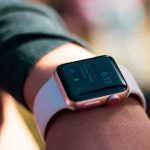
Apple priced the SE 3 at $249 (40mm) and $279 (44mm), then quietly dropped in the S10 chip, same processor as the $799 Ultra 3. Not a typo. You get on device Siri, double tap gestures, sleep apnea detection, wrist temperature sensing, and a Vitals app tracking baseline health overnight. Fast charging finally arrived: fifteen minutes on the cable gives roughly eight hours of use. I plugged mine in while making coffee and it was ready for a full day.
The compromises are livable. Eighteen hours of battery means nightly charging is mandatory. The 1,000 nit display is readable outdoors but noticeably dimmer than the Series 10's 2,000 nits. No always on display on the base model. For an iPhone user who doesn't need multi day battery? Nothing else touches this. Honestly nothing comes close.
Samsung Galaxy Watch 7, Android's Best All Rounder
The 40mm Galaxy Watch 7 squeaks in at $299. Samsung built it around the 3nm Exynos W1000, three times faster than the Watch 6, 30% more power efficient. Zero lag scrolling notifications, instant app launches, and sleep apnea detection powered by on device AI. The sapphire crystal display survived a week of yard work without a scratch.
Battery is the weak point. The 300mAh cell in the 40mm gets you through a day, maybe a day and a half without always on display. Samsung's health ecosystem compensates, body composition, stress tracking, advanced sleep stages, irregular heart rhythm alerts. Carry a Samsung phone and the Watch 7 pairs effortlessly with camera shutter control, Find My Phone, and SmartThings integration.
Garmin Forerunner 165, Best Smartwatches Under $300 2026 for Runners
Garmin could've charged $350 for this and nobody would've blinked. At $249, the Forerunner 165 packs a 1.2 inch AMOLED screen, 11 days of battery in smartwatch mode, and 19 hours of continuous GPS. I ran a half marathon with GPS and heart rate on the entire time, 74% battery remaining afterward. Absurd.
You get Garmin Coach, Daily Suggested Workouts, 25+ sport profiles, Body Battery energy monitoring, and nap detection. What's missing: Training Readiness scores and detailed Training Load breakdowns. Those live on the $350+ Forerunner 265. Casual to intermediate runners won't notice. Periodization nerds might outgrow it. Worth it either way.
Coros Pace 4, Ultralight GPS for Serious Training
Forty grams with silicone band. Thirty two with nylon. The Coros Pace 4 at $249 is featherweight for a GPS watch. The 1.2 inch AMOLED jumped from 240×240 to 390×390 resolution, massive clarity upgrade. Battery? Independent testers verified 35+ hours of continuous GPS with always on display and multi band enabled simultaneously. Borderline ultramarathon territory.
New additions: a third "Action Button," built in mic for voice training notes (surprisingly useful during intervals), and a revamped optical HR sensor with better accuracy at high intensities. The catch, no offline maps (that's the $299 Pace Pro), no app store, no NFC payments. Pure sports tool. Perfect for that job.
Amazfit Balance 2, Maximum Hardware, Minimum Price
Lists at $299, street price around $220 in early 2026. For that money: 1.5 inch AMOLED under sapphire glass, 2,000 nits brightness, 658 mAh battery delivering 21 days of use, dual band GPS across six satellite systems, 10 ATM water resistance, 170+ sport modes. No subscription fees. Ever. The BioTracker 6.0 handles heart rate, SpO2, stress, and menstrual health.
Zepp OS isn't Wear OS, though. No Spotify, no Google Maps, basic notification handling. GPS accuracy is good but not Garmin good for training analysis. If you want three weeks of battery, health tracking, and premium build for $220? Best value on this list. Not the best watch, the best value. Important distinction.
How to Pick the Right One
Ecosystem lock in should be your first filter. Apple Watch on Android? Can't even pair it. Galaxy Watch on a Pixel? Core features work but ECG and blood pressure are Samsung exclusive. Garmin, Coros, and Amazfit play nice with both platforms but offer limited smart features. Match the watch to your life: notifications and apps mean Apple SE 3 or Galaxy Watch 7. Serious running means Garmin 165 or Coros Pace 4. Maximum features per dollar means Amazfit Balance 2. The best smartwatches under $300 in 2026 are genuinely great, just pick the one that fits your actual needs.
Do’s and Don’ts
Buying in this bracket is less about finding a flawless watch and more about avoiding the traps that make people regret a $250 purchase. Most mistakes happen before checkout, wrong ecosystem, wrong size, specs that sound impressive but never get used. Run through this table before you commit.
Do’s
Don’ts
Check ecosystem compatibility first. Apple Watch requires iPhone
Don't buy the Galaxy Watch 7 44mm expecting it under $300. it's $329
Try the watch on in-store. 40mm vs 44mm feels very different on small wrists
Don't assume all AMOLED displays are equal. brightness ranges 1,000 to 2,000 nits
Factor in band and charger costs. proprietary chargers add $20-40
Don't pay for LTE unless you genuinely leave your phone behind regularly
Enable battery saver during sleep tracking to extend charge cycles
Don't expect Garmin or Coros to handle app installs or mobile payments
Update firmware immediately. first-month patches fix real bugs
Don't ignore water resistance ratings if you swim. IP68 and 10 ATM differ
Compare real-world battery tests, not manufacturer claims
Don't buy the Amazfit Active 2 expecting premium build. it's $80
Use the return window to test comfort during workouts and sleep
Don't skip the Music edition Forerunner 165 if you run phoneless
Check if your health insurance offers smartwatch discounts
Don't rely on wrist heart rate for medical decisions
Read reviews from people with similar wrist sizes
Don't chase specs you'll never use. 170 sport modes means nothing if you run and cycle
Set a budget before browsing. feature creep pushes people past $300
Is the Apple Watch SE 3 worth it over the Series 10?
For most people, yes. Same S10 chip, identical watchOS updates, same workout and health tracking. You lose always on display, the brighter 2,000 nit screen, and blood oxygen sensing. If always on matters daily, the Series 10 justifies its premium. Otherwise the SE 3 saves $150+ without compromise.
Can I use the Galaxy Watch 7 with a non Samsung Android phone?
Core features, notifications, fitness, GPS, sleep, work with any Android 11+ phone. But ECG, blood pressure, and body composition are Samsung exclusive via Samsung Health. On a Pixel or OnePlus, you'll miss those tools.
How accurate is GPS on budget smartwatches?
Garmin 165 and Coros Pace 4 track within 1-2% of measured courses using multi band GPS. Apple and Samsung are solid but drift in urban canyons. Amazfit can show 3-5% deviation on complex routes. For training accuracy, Garmin or Coros win.
What's the best smartwatch under $300 for swimming?
Amazfit Balance 2 leads with 10 ATM water resistance, rated for depth swimming. Apple SE 3 and Galaxy Watch 7 handle pool swimming with stroke detection. For dedicated swimmers, the Balance 2's 10 ATM rating and sapphire glass give it the edge.
How long do batteries actually last versus claims?
Apple SE 3's "18 hours" means 14-16 with moderate use. Garmin's "11 days" delivers 7-8 with daily GPS workouts. Amazfit's "21 days" translates to 14-16 with active health tracking. Coros Pace 4's GPS claims hold up best, I hit 33+ hours consistently.
Are budget smartwatches safe for health monitoring?
Every watch here uses validated sensors for heart rate and SpO2. Apple and Samsung have FDA clearance for sleep apnea detection. They're accurate for tracking trends but aren't medical devices, don't replace clinical monitoring for diagnosed conditions.
We use cookies to see which reviews and buying guides readers find useful, so we can keep improving them. Accept analytics cookies, or carry on with essential ones only. See our Cookie Policy.











 Get it on
  Download on the