I wore an Oura Ring 4 on my index finger and an Apple Watch Series 11 on my wrist for six straight weeks. Same workouts, same sleep schedule, same body. The data told two very different stories depending on what I was measuring, and that's the whole problem with this debate. People keep asking "which is better?" when the real answer depends entirely on what you care about tracking. A smart ring and a smartwatch aren't competing products. They're built for different priorities.
Here's what months of testing the smart ring vs smartwatch health tracker 2026 market taught me: rings crush watches at passive biometric monitoring, watches crush rings at active fitness tracking. The tricky part is figuring out which camp you fall into. Most people think they want one thing and actually need the other. I've helped a dozen friends pick between these form factors this year, and the conversations always start the same, someone wants "the best health tracker" without knowing what that means for their routine. This guide breaks it all down.
Smart Ring vs Smartwatch Health Tracker 2026: The Core Split
A smartwatch is your workout buddy, visible, interactive, giving feedback mid run. A smart ring is your sleep doctor, invisible, passive, silently collecting data you review next morning. The Oura Ring 4 weighs under 4 grams. The Apple Watch Series 11 straps a 46mm screen to your wrist with GPS, cellular, and a speaker packed inside. Totally different philosophies. Rings use PPG sensors on the underside of your finger, where arterial blood flow is stronger than at the wrist. A 2024 Sensors study found Oura's finger based heart rate readings hit 99.9% reliability against medical grade ECG. Wrist based watches scored lower due to motion artifacts. The tradeoff? No screen, no GPS, no apps.
Sleep Tracking: Smart Rings Win. Not Close.
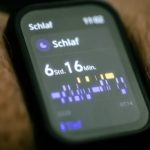
The Oura Ring 4 achieved 79% four stage sleep classification accuracy against polysomnography, outperforming both Fitbit and Apple Watch in the same study. It nails REM detection and deep sleep measurement with no statistically significant difference from lab results. The Apple Watch still underestimates wake time and overestimates light sleep. Practical factor: 98% of ring users wear them overnight versus 67% for watch users. Nobody wants a chunky rectangle pressing into their wrist at 3AM. My Oura stays on 24/7 and I forget it's there.
Active Fitness: Smartwatches Are Non Negotiable
Try running a 10K with just a ring. No pace display, no heart rate zone alerts, no GPS route, no interval timer. That's reality. The Apple Watch Series 11 gives you real time VO2 max, cadence tracking, and workout specific modes from HIIT to swimming. Samsung's Galaxy Watch 8 added a Running Coach with personalized marathon programs plus new Vascular Load and Antioxidant Index metrics no ring matches. If you need mid workout data, buy a watch. Period.
Battery Life and the Charging Math
Oura Ring 4: roughly 7 days per charge. Samsung Galaxy Ring: about the same. Apple Watch Series 11: 24 hours. One day. You're charging every single night, which kills overnight sleep tracking unless you find a weird daytime window. The Galaxy Watch 8 manages about 40 hours. Apple Watch Ultra 3 pushes 42 hours, but that's $799. The charging math is simple, rings charge weekly, watches charge daily. The best health tracker is the one you're actually wearing when data matters.
Price Reality: Watch Out for Subscriptions
The Oura Ring 4 starts at $349, climbing to $499 for gold. But Oura charges $5.99/month for full data access, $72 per year. Over three years, that $349 ring costs $565. Samsung's Galaxy Ring sits at $399 with zero subscription, but works only with Android. The Apple Watch Series 11 starts at $399 (currently $299 on Amazon sale). Galaxy Watch 8 starts at $349.99. Neither watch charges subscriptions. Smart ring vs smartwatch health tracker 2026 pricing isn't just sticker price, factor in monthly fees and phone compatibility.
Who Should Buy Which
Buy a ring if sleep quality is your primary concern, you hate wrist bulk, and you want set it and forget it monitoring. The Oura Ring 4 is strongest for iOS/Android users who'll stomach the subscription. Samsung Galaxy Ring is better value for Android users. Skip a ring if you run or do structured workouts more than three times weekly. Buy a watch if you exercise actively and want real time feedback. Apple Watch Series 11 remains the best all rounder for iPhone users. Galaxy Watch 8 owns the Android side. A friend switched from Oura to Galaxy Watch 8 when she started marathon training, couldn't stand not seeing her pace. Fair enough.
Do’s and Don’ts
Ring or watch, most regrets in this category come from mismatched expectations rather than bad hardware. The table below compresses six weeks of side by side testing into quick rules, compatibility checks, subscription math, sizing, and charging habits included. Run through both columns before you commit to either form factor.
Do’s
Don’ts
Match the device to your primary goal. sleep vs active fitness
Don't buy both unless you have a specific dual-tracking need
Check phone compatibility first (Galaxy Ring = Android only)
Don't assume a ring replaces a watch for workouts
Factor subscription costs into ring pricing comparisons
Don't ignore Oura's $5.99/month when budgeting
Use the free sizing kit before committing to a ring
Don't guess ring size. loose fit means bad sensor data
Charge your watch during a consistent daily window for sleep tracking
Don't expect accurate sleep data from a watch charged overnight
Read independent accuracy studies, not just marketing
Don't trust "medical-grade" labels without FDA clearance
Consider battery life as a core feature, not an afterthought
Don't buy Apple Watch primarily for sleep tracking
Check if your health insurance offers wearable discounts
Don't pick a ring if you need GPS for running
Test the return policy window thoroughly
Don't keep a device past the return window if it doesn't click
Set realistic expectations. wearables aren't medical devices
Don't diagnose conditions based solely on wearable data
FAQs
Is a smart ring more accurate than a smartwatch for health tracking?
Depends what you're measuring. For resting heart rate, HRV, and sleep staging, the Oura Ring 4 consistently outperforms wrist based watches, the finger's denser capillary network provides a stronger optical signal, hitting 99.9% reliability for resting heart rate. During active workouts, smartwatches handle motion artifacts better with algorithms tuned for high motion scenarios. Rings win at rest, watches win during exercise.
Can a smart ring replace a smartwatch completely?
Not for most people. Rings handle passive monitoring beautifully, sleep, recovery, resting heart rate, HRV, steps. But no notifications, no real time workout metrics, no GPS, no apps. If you rarely interact with your watch screen, a ring could work. If you rely on Apple Pay and wrist notifications, you'll miss them within a week.
Which smart ring is the best value in 2026?
Samsung Galaxy Ring at $399 with no subscription if you're on Android. Oura Ring 4 starts cheaper at $349 but the monthly fee adds up. RingConn Gen 2 has emerged as a solid budget option with no subscription, though tracking accuracy trails Oura and Samsung.
How long do smart rings last before replacement?
Expect 2-3 years. Both Oura and Samsung use titanium shells that resist scratches, but batteries retain about 80% capacity after 500 charge cycles. No user replaceable batteries, once it degrades, you're buying new. That $349 ring every 2.5 years works out to about $140 per year before subscriptions.
Do I need a subscription for a smart ring?
Oura requires $5.99/month for full features, without it, you lose detailed HRV analysis, trend tracking, and guided content. Samsung Galaxy Ring and RingConn Gen 2 are both subscription free with full feature access. Over three years, Oura's fees add $215 to your total cost.
Is the Apple Watch Series 11 good for sleep tracking?
Adequate, not great. The 24 hour battery finally makes overnight wear possible if you charge during the day. But sleep staging still underestimates wake time compared to lab polysomnography. For the same $399, an Oura Ring delivers significantly more accurate sleep data. The Watch's strength is everything else, workouts, notifications, daily utility.
We use cookies to see which reviews and buying guides readers find useful, so we can keep improving them. Accept analytics cookies, or carry on with essential ones only. See our Cookie Policy.










 Get it on
  Download on the