






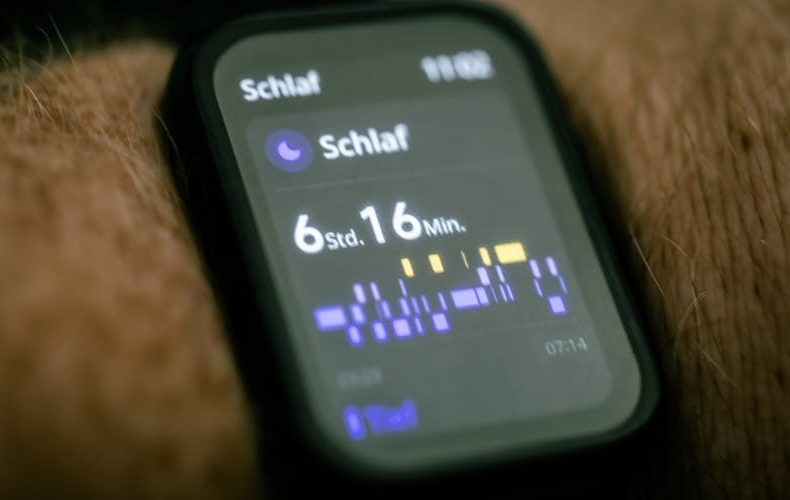
I tracked my sleep with three different wearables simultaneously for over a month. That meant wearing an Oura Ring 4 on one hand, a Garmin Venu 4 on one wrist, and an Apple Watch Series 11 on the other. My partner thought I'd lost it. Honestly, fair point. But here's what drove me to it: every "best sleep tracker" list online just rehashes spec sheets without actually comparing how these devices perform night after night on the same person. The best wearables for sleep tracking 2026 aren't necessarily the ones with the longest feature list, they're the ones that consistently tell you something useful about your sleep that you can act on. And after 30+ nights of parallel tracking, the differences between these three are starker than most reviews let on.
Here's the thing most people miss about sleep trackers. Accuracy varies wildly depending on what specific metric you care about, deep sleep detection, REM tracking, wake time sensitivity, or overall sleep duration. A 2025 study published in SLEEP Advances tested six consumer wearables against polysomnography (the gold standard lab test), and the results were humbling for some big names. I've owned every generation of Oura Ring since the Gen 2, used Garmin watches for running for years, and switched between Apple Watch models more times than I can count. This isn't a spec sheet comparison. I'm going to walk you through what actually matters when you're picking a sleep tracker, and which of these three earns a spot on your nightstand (or finger).
Oura Ring 4: Still the Best Wearables for Sleep Tracking 2026 Pick
The Oura Ring 4 remains the device I'd hand to anyone who asks me "what should I buy for sleep tracking?" without hesitation. Its Smart Sensing 2.0 system uses red and infrared LEDs for blood oxygen, green and infrared PPG sensors for heart rate and HRV, plus a digital temperature sensor, all packed into a titanium ring weighing between 4 and 6 grams depending on size. That finger placement matters enormously. Arteries in your finger sit closer to the surface than those in your wrist, which means cleaner signal, less motion artifact, and more reliable readings while you toss and turn. Independent validation studies place Oura at roughly 85% accuracy for sleep stage classification against polysomnography, and it showed no statistically significant difference from lab results across wake, light sleep, deep sleep, and REM stages. At $349 plus a $5.99/month membership, it's not cheap. But the battery lasts up to 8 days, which means you're not charging it every night and missing data. That alone puts it ahead.

Apple Watch Series 11: Great Smartwatch, Decent Sleep Tracker
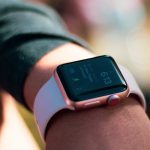
Apple's Series 11 made real progress on sleep this year. The new sleep score feature, finally, assigns a nightly quality rating based on duration, bedtime consistency, wake ups, and time in each stage. The AI supported algorithms improved deep sleep and REM detection compared to the Series 10, and the FDA cleared ECG plus sleep apnea detection add genuine medical value you won't find on a ring. But there's a tradeoff nobody at Apple talks about. Battery life is 24 hours. That's it. So you're either charging before bed and hoping you remember to put it back on, or you're charging in the morning and missing activity data. I found myself forgetting to charge probably twice a week, which means gaps in my sleep data, the exact opposite of what a sleep tracker should do. The $399 starting price (sometimes on sale for $299) is competitive, but you're really buying a smartwatch that also tracks sleep, not a dedicated sleep device.
Garmin Venu 4: The Marathon Runner That Sleeps Well Too
Garmin's Venu 4 surprised me. Not because its sleep tracking is the most accurate, it isn't, but because the ecosystem around it is genuinely useful. The new Sleep Alignment feature, introduced in Garmin's Q1 2026 software update, visualizes your circadian rhythm consistency over time. After about three weeks of data, it suggests optimal bedtime and wake windows based on your actual patterns, not generic "adults need 7-9 hours" advice. The Body Battery metric ties sleep quality directly to your next day energy estimate, and honestly, it was right more often than I expected. The Venu 4 costs $549.99 for either the 41mm or 45mm, which is steep. Battery life hits up to 12 days in smartwatch mode though, absolutely crushing both competitors. Where Garmin falls short is raw accuracy. A 2025 study gave the Garmin Vivosmart a Cohen's kappa of just 0.21 for sleep stage agreement with polysomnography, and while the Venu 4's newer sensors are better, Garmin still struggles most with REM detection.

Best Wearables for Sleep Tracking 2026: Accuracy Head to Head
Let me cut through the marketing. When researchers put these devices against polysomnography, a clear hierarchy emerges. Oura Ring consistently scored highest for overall sleep stage agreement, particularly strong in REM and light sleep detection. Apple Watch ranked second, with a Cohen's kappa of 0.53 (moderate agreement) and notably better wake time detection than any competitor, it catches those 3 AM bathroom trips that Oura sometimes misses. Garmin landed mid to low tier, performing worse than Oura and Apple but better than some budget options. The practical difference? On a night where I got 7 hours and 12 minutes according to my sleep lab app, Oura reported 7 hours 8 minutes, Apple Watch said 6 hours 54 minutes, and Garmin claimed 7 hours 31 minutes. Garmin consistently overestimated my total sleep by 15-25 minutes. Not terrible, but noticeable over time.
Comfort and Wearability: The Factor Nobody Benchmarks
This is where the ring form factor just wins. Period. The Oura Ring 4 weighs so little I genuinely forget it's there. I've never once woken up because of it, never had a pressure mark on my finger, never felt it shift during the night. The Apple Watch Series 11, even with the smaller 42mm case, still has that hard glass face pressing against your wrist when you sleep on your side. I got used to it after a week, but "got used to it" isn't the same as "doesn't notice it." The Garmin Venu 4 is slightly more comfortable than the Apple Watch thanks to its lighter build (not by much, we're talking a few grams), but it's still a watch on your wrist while you sleep. If you're a side sleeper or someone who moves a lot at night, the ring is objectively less intrusive. A friend of mine returned her Apple Watch specifically because it kept waking her up when she rolled onto her wrist. Hard to track sleep if the tracker is disrupting it.
Subscription Costs and Long Term Value
No paywalls, no tiers, no "premium insights" locked behind a monthly fee. So the real three-year cost breakdown: Oura runs about $559, Apple Watch sits at $399 (or $299 on sale), and Garmin comes in at $549.99. The cheapest option is Apple, the most expensive is Oura, but Oura gives you the best sleep data.
The hidden cost conversation matters here more than most review sites admit. Oura charges $5.99/month ($69.99/year) for full feature access, without it, you lose sleep staging details, readiness scores, and guided content. Over three years, that's roughly $210 in subscriptions on top of the $349 hardware. Apple Watch has zero subscription for sleep tracking. Everything works out of the box. Garmin Connect is also free, with full sleep data included. No paywalls, no tiers, no "premium insights" locked behind a monthly fee. So the real three year cost breakdown: Oura runs about $559, Apple Watch sits at $399 (or $299 on sale), and Garmin comes in at $549.99. The cheapest option is Apple, the most expensive is Oura, but Oura gives you the best sleep data. Worth it? Depends on whether sleep is your primary concern or just one of many features you want from a wearable.
Who Should Buy What: Honest Recommendations
Skip the Garmin Venu 4 if sleep tracking is your primary goal. Seriously. It's a phenomenal fitness watch, Body Battery, training load, GPS accuracy for runs, but $549.99 for mid tier sleep data is a hard sell. Buy the Garmin if you're a runner or cyclist who also wants decent sleep insights, not the other way around. The Apple Watch Series 11 makes sense if you already live in Apple's ecosystem and want notifications, Apple Pay, fall detection, and sleep tracking all in one device. Just accept the battery compromise and build a charging routine. The Oura Ring 4 is the answer if you care about sleep above all else. It's the most accurate, most comfortable, and most focused on the single job of understanding your rest. I've recommended it to at least six people this year. Not one has complained.
Do’s and Don’ts
A month of wearing three trackers at once taught me as much about habits as it did about hardware. This table boils those lessons down to the essentials that apply no matter which device you pick. Skim it before you buy, then again after your first week of data.
| Do’s | Don’ts |
|---|---|
| Wear your tracker every night for at least 2 weeks before judging accuracy | Don't compare a single night's data to draw conclusions about a device |
| Charge your Apple Watch during a consistent window each day so you don't miss sleep data | Don't wear a smartwatch so tight it leaves marks. it won't improve sensor readings |
| Use Oura's temperature trend data to spot early illness signs | Don't obsess over sleep stage minutes. trends over weeks matter more than one night |
| Enable Garmin's Sleep Alignment feature and give it 3 weeks to calibrate | Don't buy a $549 Garmin primarily for sleep tracking when Oura does it better for $349 |
| Set a consistent bedtime window in your tracker app for more accurate detection | Don't expect any consumer wearable to match polysomnography-level precision |
| Check your HRV trends weekly rather than daily for meaningful patterns | Don't charge your sleep tracker overnight and then wonder why you have no sleep data |
| Try the Oura sizing kit before buying. wrong size kills sensor accuracy | Don't ignore the subscription costs when comparing prices between devices |
| Use sleep data to adjust caffeine cutoff times (I moved mine to 1 PM and saw results) | Don't stack multiple sleep trackers permanently. test, compare, then pick one |
| Enable sleep apnea detection on Apple Watch if you snore or feel unrested | Don't buy a sleep tracker expecting it to fix your sleep. it only measures |
| Review your 30-day sleep trends monthly to spot gradual changes | Don't rely solely on a daily sleep score without understanding what drives it |
FAQs
These are the questions that landed in my inbox most often while I was running this three device experiment. Quick, honest answers below.
Which wearable is the most accurate for sleep tracking in 2026?
The Oura Ring 4 consistently leads in independent accuracy studies. Research published in SLEEP Advances and validated against polysomnography shows Oura achieving approximately 85% accuracy for sleep stage classification, with no statistically significant difference from lab results across wake, light sleep, deep sleep, and REM. Apple Watch Series 11 comes second with moderate agreement (Cohen's kappa 0.53), particularly strong at detecting wake periods. Garmin's wearables have historically scored lower, with older models showing only fair agreement (kappa 0.21), though the Venu 4's newer sensors have improved somewhat.
Is the Oura Ring 4 worth the subscription fee for sleep tracking?
That depends on how seriously you take sleep optimization. Without the $5.99/month Oura membership, you lose detailed sleep staging, readiness scores, and long term trend analysis, basically the features that make Oura worth buying in the first place. Over three years, you'll spend about $210 on subscriptions plus $349 for the ring. If you just want a basic "you slept 7 hours" readout, save your money and get an Apple Watch. But if you want actionable REM and deep sleep breakdowns, temperature trend alerts, and HRV based readiness scores, the subscription justifies itself within a few months of actually using the data.
Can the Apple Watch Series 11 detect sleep apnea?
Yes, and this is one of Apple's genuine differentiators. The Series 11 has FDA cleared sleep apnea detection that monitors breathing disturbances overnight. It uses the accelerometer to track subtle wrist movements associated with interrupted breathing patterns. If it detects consistent signs of moderate to severe sleep apnea over multiple nights, it alerts you and recommends consulting a doctor. This feature alone has pushed several people I know toward a formal sleep study they'd been putting off. Neither Oura nor Garmin offers FDA cleared apnea detection at this level.
How does Garmin's Body Battery relate to sleep quality?
Body Battery is Garmin's proprietary energy estimation that combines sleep quality, stress levels, heart rate variability, and daily activity into a single 0-100 score. Higher sleep quality directly boosts your morning Body Battery reading. After using it for a month on the Venu 4, I found it was surprisingly predictive, mornings where Body Battery showed 85+ genuinely correlated with days I felt sharp and productive, while sub 40 readings matched days I was dragging by 2 PM. It's not a sleep metric per se, but it contextualizes your sleep data in a way that raw stage by stage numbers don't.
Do sleep trackers actually improve your sleep?
Not directly, no wearable will make you sleep better just by wearing it. But the data can drive behavioral changes that do. After tracking with Oura for six months, I identified that my deep sleep doubled on nights I stopped eating after 7 PM and kept my bedroom at 66 degrees Fahrenheit. The tracker didn't fix anything; it just showed me which habits correlated with better rest. A 2024 review in the Journal of Clinical Sleep Medicine found that self monitoring with wearables modestly improved sleep hygiene behaviors in 60% of study participants. The key is actually reviewing your data and adjusting, not just collecting it.
Is it worth wearing a ring and a watch for sleep tracking?
No. I did it for this comparison and I wouldn't recommend it long term. Pick one device and commit to it for at least three months. Wearing multiple trackers creates conflicting data that'll drive you crazy, one says you got 45 minutes of deep sleep, the other says 28, and you have no idea which to believe. The only exception is a brief one to two week comparison period when you're deciding which device to keep. After that, sell or return the loser and trust a single data source for consistent trend tracking.
What's the best budget sleep tracker alternative in 2026?
If $349 for Oura or $399-549 for a smartwatch is too steep, the Fitbit Charge 6 (around $149) offers surprisingly competent sleep tracking with updated algorithms that are narrowing the accuracy gap with premium devices. You get sleep stages, a sleep score, SpO2 monitoring, and no subscription required for basic features. It won't match Oura's precision for REM and deep sleep detection, but for someone who just wants reliable nightly insights without spending flagship prices, it's the clear budget pick. Samsung's Galaxy Ring is another option around $299, though its sleep algorithm is still maturing.
How long do these wearables last before needing replacement?
Battery degradation is real across all three. Oura Ring 4's titanium build is durable, but expect battery capacity to decline noticeably after 2-2.5 years, you'll go from 8 day battery life down to maybe 4-5 days. Apple Watch batteries typically hold up for about 3 years before charging frequency becomes annoying. Garmin's Venu 4, with its 12 day battery life to start, has the most runway, even at 60% capacity after three years, you're still looking at 7+ days between charges. Garmin wins the longevity game handily, which partially justifies that $549.99 price tag if you plan to keep the device for several years.
Related Posts:

Twenty years from now you will be more disappointed by the things that you didn’t do than by the ones you did do. Sail away from the safe harbor.
 Get it on
  Download on the