






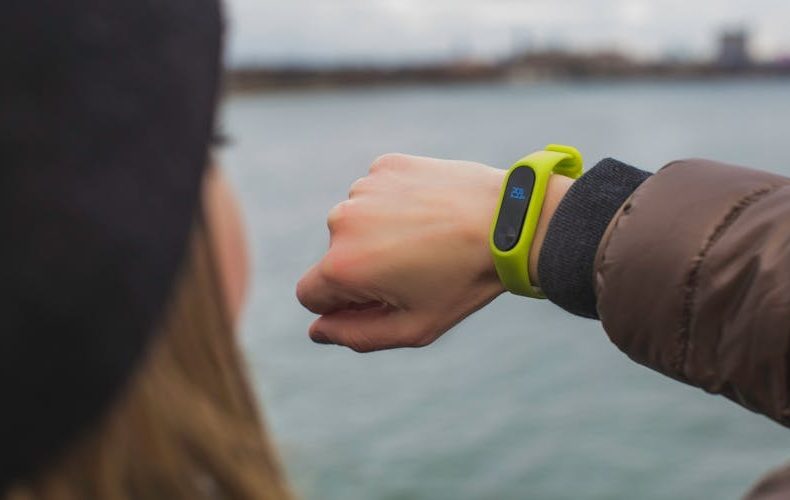
I've worn smartwatches for years. Apple Watch, Galaxy Watch, Garmin Venu, the whole rotation. And every single morning, I'd wake up with a red indent on my wrist and a vague resentment toward the thing that was supposed to be improving my health. Then a friend handed me an Oura Ring 4 and told me to try it for a month. That was five months ago. The watch has been sitting in a drawer since week two. Not because the Oura Ring does everything a smartwatch can, it absolutely doesn't, but because it does the things I actually care about (sleep quality, recovery, stress trends) with less friction and more accuracy than anything I've strapped to my wrist. At $349 for the base model, it's not cheap. But it changed how I think about wearables entirely.
This Oura Ring 4 review isn't going to read like a spec sheet. You can find those anywhere. What I want to dig into is the real question most people researching this ring are asking: should you ditch your smartwatch for a smart ring, or are they solving different problems? I've tested both side by side, wearing the Oura on one hand and an Apple Watch Ultra 2 on my wrist, tracking the same nights, the same workouts, the same stressful Tuesday afternoon meetings. The results were genuinely surprising in places, and I'll share the specific numbers. I'll also be blunt about where Oura falls short, because the $5.99/month subscription and limited workout tracking aren't minor caveats.
What the Oura Ring 4 Actually Tracks (And What It Doesn't)
The Oura Ring 4 monitors heart rate, heart rate variability (HRV), blood oxygen saturation (SpO2), skin temperature trends, respiratory rate, and sleep stages. That's a serious sensor suite crammed into a titanium band that weighs between 4 and 6 grams depending on your size. The Smart Sensing 2.0 system uses 18 signal pathways, up from just 4 LEDs in the Gen 3, which explains why accuracy improved by up to 120% in certain metrics according to Oura's own validation data. It tracks steps, calories, and activity minutes too, but those are secondary features. Where this ring earns its reputation is passive health monitoring: the stuff it measures while you're sleeping, sitting at your desk, or just living your life without thinking about it. No screen to check. No notifications buzzing. Just quiet data collection that surfaces insights in the app each morning.
The list of what it does not do matters just as much. There is no GPS, no live workout feedback, no notifications and no screen of any kind, so it will never replace a smartwatch for training sessions or texts. Oura made a deliberate trade here. By skipping those features, the ring stays small, comfortable and focused on recovery data most watches handle poorly.


Oura Ring 4 Review: Sleep Tracking That Rivals a Sleep Lab
Sleep tracking is where this ring genuinely separates itself. A 2024 study compared the Oura Ring against polysomnography, the clinical gold standard, and found no statistically significant difference in detecting wake time, light sleep, deep sleep, and REM stages. That's remarkable for a consumer device. I cross referenced my own data against my Apple Watch Ultra 2 for 30 consecutive nights. The Oura consistently detected my sleep onset within 3-5 minutes of when I actually fell asleep (I kept a manual log). The Apple Watch overestimated my deep sleep by roughly 12-18 minutes on average. Small difference? Maybe. But when you're using that data to adjust your bedtime or evaluate whether that magnesium supplement is actually working, precision matters. The nightly Sleep Score is genuinely useful, not gamified nonsense, but a clear number that correlates with how I actually feel the next morning. I've learned that anything below 72 means I'm going to be dragging by 2 PM.


Heart Rate and HRV: How Accurate Is the Finger?
Here's something most people don't realize: your finger is actually a better place to measure heart rate than your wrist. Less bone interference, more consistent blood flow, fewer motion artifacts. The Oura Ring 4 matched my Apple Watch readings during rest and light activity within ±2-3 bpm. During intense exercise, that gap widens, but you're not supposed to use this ring as a workout heart rate monitor anyway. Where the finger placement really shines is HRV tracking overnight. HRV is arguably the single most useful health metric for gauging recovery, stress load, and overall autonomic nervous system balance. The Oura measures it continuously during sleep with minimal noise. My overnight HRV readings on the Oura were consistently 8-15ms higher than the Apple Watch reported, and after checking against a chest strap, the Oura was closer to the chest strap's numbers. Not perfect. But closer.


Battery Life: 8 Days Is Real (With a Caveat)
Oura advertises up to 8 days of battery life, and in my testing that's achievable, if you turn off SpO2 monitoring. With blood oxygen sensing enabled during sleep, I averaged 5-6 days before needing to charge. Still dramatically better than any smartwatch. My Apple Watch Ultra 2 lasts about 36 hours with always on display. The Galaxy Watch 7 barely hits a full day with continuous heart rate on. Charging the Oura takes about 60-80 minutes on its little USB C cradle. One catch: smaller ring sizes (4-7) have physically smaller batteries, and some users report only 4-5 days even with SpO2 off. If you're a size 6, temper your expectations. I wear a size 10 and consistently hit 7 days with SpO2 on only during sleep hours.

The Subscription Problem Nobody Likes Talking About
This is the part of my Oura Ring 4 review where I stop being nice. The ring costs $349-$499 depending on finish. Then Oura wants $5.99/month, or $69.99/year, for a membership that unlocks basically every useful feature. Without it, you get your three daily scores (Sleep, Readiness, Activity) and not much else. No trends, no detailed breakdowns, no guided content, no AI powered insights. Worse: if you cancel, you lose access to your historical data visualization. That's your data, collected by hardware you paid for, held hostage behind a subscription wall. Frustrating. I pay it because the insights are genuinely valuable to me, but I won't pretend it doesn't sting. The total first year cost with the base ring plus annual membership is about $419. Over three years, a reasonable lifespan before battery degradation becomes an issue, you're looking at roughly $559. That's Apple Watch territory for a device that does significantly less.

Oura Ring 4 vs Smartwatch: Who Should Pick What
This isn't an either or for everyone, but it is for most people's budgets. Here's how I'd break it down based on actual use. If your priority is sleep optimization, stress management, recovery tracking, or general wellness monitoring, and you don't need a screen on your wrist, the Oura Ring 4 is the better tool. Period. The comfort advantage alone is massive. Sleeping with a ring on your finger is nothing; sleeping with a watch on your wrist is annoying at best. If you need GPS tracked runs, real time workout metrics, phone notifications, music control, or any kind of active sports tracking, a smartwatch wins by a mile. The Oura detects walks, runs, and cycling automatically but gives you no live feedback and no route data. Step counting is also less accurate on a finger than a wrist, Oura undercounted my steps by about 800-1200 per day compared to my phone's pedometer. Some people wear both. A friend of mine rocks an Apple Watch during the day for notifications and workouts, then switches to the Oura at night for sleep tracking. That's the ideal setup if money isn't a concern.

Build Quality and Comfort: The Daily Wear Factor
The Oura Ring 4 is fully titanium, no plastic components like the Gen 3 had. It's rated to 100m water resistance, so showers, pools, and even the occasional sauna are fine. I've worn mine in the ocean, in the gym, while doing dishes, and while sleeping. Forgot it was there most of the time. Honestly. The flat inner sensor surface is a smart design choice, older Oura rings had a bump that some people found irritating. The standard black finish does show micro scratches after a few months. If that bothers you, the Stealth finish with its Diamond Like Carbon coating resists scratches much better, though it costs $399 instead of $349. The Ceramic edition ($499) uses zirconia ceramic rated 8.5 on the Mohs hardness scale, which is about as scratch proof as a consumer device gets. Sizing is permanent though, your ring size is your ring size. If you gain or lose significant weight, you might need a new one. Oura sends a free sizing kit before purchase, and I'd strongly recommend wearing the sample ring for at least three full days before ordering.

Who Shouldn't Buy the Oura Ring 4
Not everyone needs this ring. Blunt truth. If you're a serious athlete who needs real time pace, cadence, or power data during training, skip it. If you want phone notifications on your wrist, skip it. If you're not willing to pay $5.99/month indefinitely, skip it, because the ring without the subscription is an expensive piece of jewelry that shows you three numbers. If you already have an Apple Watch and you sleep fine with it on, the marginal accuracy improvement in sleep tracking probably isn't worth $349. And if you work with your hands, construction, climbing, heavy lifting, a ring on your finger is a liability, not a tool. This is a wellness first device for people who want the most accurate passive health data possible with zero daily friction. That's a specific audience. But if you're in it, nothing else comes close right now.
Two more groups should think twice. Anyone prone to checking health numbers obsessively may find that a daily Readiness Score feeds anxiety instead of easing it, and people with very small ring sizes should factor in the weaker battery life smaller bands deliver. If any of this sounds like you, a basic fitness band or no tracker at all is the smarter buy.

Do’s and Don’ts
After five months of daily wear, the lessons that matter have less to do with specs and more to do with habits. The table below collects the practical rules I wish someone had handed me on day one. Skim it before you order, and again when the ring arrives.
| Do’s | Don’ts |
|---|---|
| Use the free sizing kit and wear it 3+ days before ordering your actual ring | Don't guess your ring size based on jewelry you already own. sensor fit matters more |
| Keep SpO2 monitoring on sleep-only mode to preserve battery life | Don't expect 8-day battery life with all sensors running continuously |
| Check your Readiness Score each morning before planning intense workouts | Don't ignore consistently low Readiness Scores. they correlate with illness onset |
| Charge the ring during your morning routine so it's ready for nighttime tracking | Don't let the battery die overnight. that's your most valuable data window |
| Compare trends over weeks, not individual daily scores | Don't obsess over a single night's Sleep Score. one bad night means nothing |
| Pair with a smartwatch if you need real-time workout metrics | Don't rely on the Oura Ring for GPS tracking, live pace, or route mapping |
| Choose the Stealth or Ceramic finish if you work with your hands frequently | Don't pick the standard Black finish if scratches bother you. it marks easily |
| Give the algorithm 2-4 nights to calibrate before trusting deep sleep data | Don't panic if your first few nights show weird sleep staging numbers |
| Use the Oura app's temperature trending to catch early signs of illness | Don't treat the ring as a medical diagnostic device. it's a wellness tracker |
| Remove the ring during heavy deadlifts or activities with high grip pressure | Don't wear it rock climbing or doing manual labor where impact damage is likely |
| Budget for the $5.99/month subscription as part of the total cost | Don't buy the ring expecting full functionality without the membership |
A few of these deserve extra emphasis. The sizing kit is not optional ceremony, because fingers swell overnight and shrink in the cold, and a fit that feels fine at noon can be loose at 3 AM, which is exactly when the sensors need steady skin contact. Charging habits matter more than raw battery life. Topping the ring up while you shower or brush your teeth means it never dies at midnight, and the overnight window is where all the valuable recovery data lives. Finally, treat every score as a trend line rather than a verdict. One rough Sleep Score after a late dinner tells you nothing, but three weeks of slowly declining Readiness is a signal worth acting on. The ring rewards people who zoom out, and it punishes people who refresh the app looking for a daily grade.

FAQs
Is the Oura Ring 4 worth it without the subscription?
Honestly, barely. Without the $5.99/month Oura Membership, you lose access to detailed sleep stage breakdowns, long term health trends, guided content, and the AI powered insights that make the data actionable. You'll still see your three daily scores, Sleep, Readiness, and Activity, but that's about it. The ring essentially becomes a very expensive step counter and basic sleep tracker. If you're not willing to commit to the subscription long term, I'd seriously reconsider the purchase. The hardware is excellent, but the value is in the software layer that sits behind the paywall.
How does Oura Ring 4 sleep tracking compare to Apple Watch?
In my side by side testing over 30 nights, the Oura Ring 4 was more accurate at detecting sleep onset, wake periods, and deep sleep duration. A clinical study comparing both devices against polysomnography found the Oura's sleep staging had no statistically significant difference from lab results. The Apple Watch tends to overestimate deep sleep by 12-18 minutes and sometimes misses brief wake periods entirely. The Oura also captures skin temperature trends overnight, which the Apple Watch doesn't do from the wrist. For pure sleep tracking accuracy, the Oura wins clearly.
Can I wear the Oura Ring 4 in water and the shower?
Yes, the Oura Ring 4 is rated to 100 meters of water resistance. Showers, swimming pools, and ocean swims are all fine. I've worn mine in saltwater multiple times with zero issues. The titanium construction handles temperature changes well too, saunas and hot tubs are explicitly supported by Oura. Just avoid exposure to harsh chemicals like chlorine bleach or industrial solvents, which could potentially damage the sensor coatings over time.
Does the Oura Ring 4 count steps accurately?
It's decent but not as accurate as a wrist based device. In my testing, the Oura Ring 4 undercounted steps by roughly 800-1200 per day compared to my iPhone's built in pedometer. Finger based motion detection doesn't capture arm swing the way a wrist sensor does, so activities like pushing a shopping cart or walking with your hands in your pockets will register fewer steps. If precise step counting is important to your fitness goals, a smartwatch or dedicated pedometer will serve you better.
How long does the Oura Ring 4 battery actually last?
Oura claims up to 8 days, and that's achievable on larger ring sizes (8+) with blood oxygen monitoring turned off. In real world use with SpO2 enabled during sleep, expect 5-6 days. Smaller ring sizes (4-7) have physically smaller batteries and may only get 4-5 days. Charging takes about 60-80 minutes on the included USB C cradle. Compared to smartwatches that need daily charging, even the worst case Oura battery life is a significant improvement.
What's the difference between the Oura Ring 4 finishes?
The base model in Silver or Black costs $349. Brushed Silver and Stealth finishes run $399, the Stealth option uses a Diamond Like Carbon coating that resists scratches far better than the standard finishes. Gold and Rose Gold versions cost $499. The Ceramic edition, also $499, is made from zirconia ceramic rated 8.5 on the Mohs hardness scale, making it the most durable option. Functionally, all finishes contain identical sensors and deliver the same tracking performance. The difference is purely aesthetic and durability related.
Is the Oura Ring 4 comfortable to sleep in?
Extremely. This is one of its biggest advantages over smartwatches. The Gen 4 has a flat inner sensor surface, previous generations had a noticeable bump that irritated some users. At 4-6 grams depending on size, most people forget they're wearing it within two or three nights. I've never once been woken up by the ring or felt it digging into my finger during sleep. Compare that to wearing even a lightweight smartwatch to bed, where wrist pressure and screen glare are constant minor annoyances.
Should I buy the Oura Ring 4 or a Samsung Galaxy Ring?
The Oura Ring 4 remains the more accurate and feature rich option as of early 2026. Samsung's Galaxy Ring is a solid competitor with tighter Galaxy ecosystem integration and no mandatory subscription, but its sleep tracking accuracy hasn't matched the Oura in independent testing. The Galaxy Ring also has fewer sensor pathways (8 vs Oura's 18) and a shorter track record of scientific validation. If you're deep in the Samsung ecosystem and want a subscription free smart ring, the Galaxy Ring makes sense. For raw health data accuracy, the Oura is still ahead.
Related Posts:

Twenty years from now you will be more disappointed by the things that you didn’t do than by the ones you did do. Sail away from the safe harbor.
 Get it on
  Download on the