






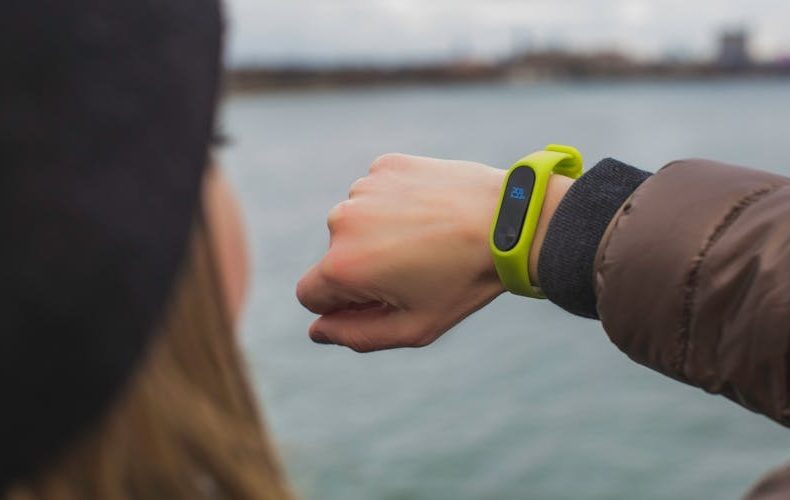
You're staring at two very different ways to track your health, and this decision trips up more people than it should. The Oura Ring 4 vs Apple Watch Series 11 debate isn't about which is "better", it's about what you actually want from a wearable. One sits invisibly on your finger, quietly logging sleep stages with research grade accuracy. The other straps to your wrist and does roughly nine hundred things, from ECG readings to replying to texts. I've spent months wearing both simultaneously (yes, I looked ridiculous), and the answer depends entirely on what problem you're solving. Short version: Oura wins sleep and recovery. Apple Watch dominates everything else.
Here's the thing, these two barely compete with each other. The Oura Ring 4 is a dedicated health tracker disguised as jewelry at $349 plus $5.99/month membership. The Apple Watch Series 11 starts at $399 and tries to be your phone, wallet, fitness coach, and medical device simultaneously. Some people wear both. Not crazy, actually the setup I'd recommend if budget allows. But most folks want one device, and picking wrong means overpaying for features you'll ignore.
Oura Ring 4 vs Apple Watch Series 11: Design and Daily Wear
The Oura Ring 4 is titanium inside and out, weighs practically nothing, and comes in six finishes from Silver to Rose Gold. Sizes 4 through 15. You forget it's there. Not marketing fluff, I genuinely forget mine until I bump it on a dumbbell. For sleep, it's perfection. No bulky screen pressing into your face when you roll onto your side at 3 AM.
The Apple Watch Series 11 weighs 34.6g (42mm), sits 9.7mm thick, and looks great with new ceramic coated ION X glass. But comfortable for 24/7 wear? The Oura Ring has it beat by a country mile on sheer wearability.


Sleep Tracking: Where the Oura Ring 4 Dominates
This is Oura's home turf. A 2024 study in Sensors compared both against polysomnography, the clinical gold standard, and the Oura Ring 4 showed no statistically significant difference from lab results across wake, light, deep, and REM stages. No significant difference from a sleep lab. The Smart Sensing 2.0 system uses an 18 pathway PPG sensor array that adapts to your finger's physiology.
The Apple Watch Series 11 added a Sleep Score in watchOS 26. Decent improvement. But it still underestimates wake time and deep sleep compared to clinical measurements. Oura doesn't just tell you whether you slept well, it tells you why, breaking down HRV trends, respiratory rate, and temperature deviations into a Readiness Score that correlates with how you actually feel.


Heart Health: Apple Watch Series 11 Takes This Round
The Apple Watch Series 11 has an FDA cleared ECG detecting atrial fibrillation. Period. Oura doesn't. If cardiac monitoring matters, and for anyone over 50 or with family heart history, it should, this alone might settle things. Apple also added hypertension notifications, analyzing vascular patterns over 30 day periods. Their clinical study caught about 40% of undiagnosed cases, over 50% for stage 2 hypertension.
Important caveat: it won't give you a blood pressure number. It flags patterns, then tells you to buy a cuff. Restricted to undiagnosed users over 22. The Oura Ring 4 tracks resting heart rate at 99.9% reliability with solid HRV and improved SpO2. Good stuff, but no rhythm alerts.


Battery Life: Not Even Close
Oura Ring 4 lasts 5 to 8 days. Larger sizes hit 7-8 days; smaller rings (sizes 4-7) get 4-5 because the battery is physically tinier. Charge via USB C while you shower twice a week. Done.
Apple Watch Series 11 gets "up to 24 hours." Real world with always on display and notifications? You're charging nightly. Which creates an obvious problem for sleep tracking, you need to find another charging window. Most people do the morning routine charge. Works, but it's a compromise the Oura Ring simply doesn't require.


Fitness Tracking and Smart Features
The Apple Watch is a legitimate training companion, GPS, real time heart rate zones, Workout Buddy with Apple Intelligence coaching, 100+ workout types, swimming support. If you run, cycle, or lift and want mid session data, nothing here competes.
The Oura Ring 4 tracks activity passively. Steps, calorie burn, VO2 Max estimates (new with Gen 4). No GPS, no real time display. It tells you whether today's a good day to push hard or dial back. Different job entirely. On smart features, the Apple Watch runs watchOS 26 with 5G, 64GB storage, calls, texts, Apple Pay, fall detection. The Oura Ring has Bluetooth. Syncs to your phone. That's it. Some consider that simplicity a feature.


Oura Ring 4 vs Apple Watch Series 11: Total Cost Breakdown
Real numbers. Oura Ring 4: $349 + $69.99/year membership = roughly $489 over two years. Without the membership, you lose detailed insights, essentially mandatory. Apple Watch Series 11: $399 (42mm) or $429 (46mm). Cellular adds $100 plus ~$10/month. No subscription required. GPS only over two years: $399 flat. Oura is pricier long term. But $6/month for the best sleep tracker available isn't unreasonable.

Do’s and Don’ts
Months of wearing both taught me that most disappointment with either device comes from expecting it to do the other one's job. The table below sorts out which habits get the most from each, and which assumptions lead people to return a perfectly good tracker. Check it against your own routine before you order either one.
| Do’s | Don’ts |
|---|---|
| Pick Oura Ring 4 if sleep optimization is your primary goal | Don't buy Oura expecting real-time workout metrics |
| Choose Apple Watch if you want ECG and heart rhythm monitoring | Don't assume Apple Watch sleep tracking matches Oura's accuracy |
| Budget for Oura's $5.99/month membership. it's practically required | Don't skip the membership and expect useful Oura data |
| Get Apple Watch cellular if you run without your phone | Don't pay for cellular if your phone is always nearby |
| Use the Oura sizing kit before ordering. fit affects accuracy | Don't guess ring size from regular jewelry sizing |
| Use Apple Watch hypertension alerts if you're over 40 with no diagnosis | Don't treat hypertension notifications as medical blood pressure readings |
| Charge Apple Watch during your morning routine for uninterrupted sleep data | Don't expect Apple Watch to last a full day plus overnight tracking |
| Consider wearing both. they genuinely complement each other | Don't assume one device perfectly replaces the other |
| Check phone compatibility (Oura works iOS and Android; Apple Watch is iPhone only) | Don't buy Apple Watch if you're on Android. it won't pair |
| Use Oura's Readiness Score to plan daily training intensity | Don't ignore recovery data and train hard when your body needs rest |

FAQs
Does Apple Watch Series 11 measure blood pressure? No. Common misconception. It offers hypertension notifications, analyzing vascular patterns over 30 days to flag possible undiagnosed high blood pressure.
It's the difference between "you slept okay" and understanding exactly which stages were disrupted. Most users find it worth it despite the added cost.
Do I actually need the Oura membership? Practically, yes. Without the $5.99/month subscription, you get basic daily scores only. The membership unlocks sleep stage breakdowns, long-term trends, personalized recommendations, and SpO2 monitoring.
Is the Oura Ring 4 more accurate than Apple Watch Series 11 for sleep?
Yes, backed by clinical research. A peer reviewed study comparing both against polysomnography found the Oura Ring 4's sleep staging showed no statistically significant difference from lab results. The Apple Watch improved with its Sleep Score feature but still underestimates wake time and deep sleep. The 18 pathway PPG Smart Sensing 2.0 system gives Oura a genuine technical edge for overnight biometrics.
Can I use the Oura Ring 4 with Android?
Absolutely. The Oura Ring 4 works with both iOS and Android, which is a major advantage over the Apple Watch Series 11, iPhone only, no exceptions. If you're on a Samsung Galaxy or Pixel, Oura is your best premium health tracker option in this comparison. Same app features on both platforms.
Do I actually need the Oura membership?
Practically, yes. Without the $5.99/month subscription, you get basic daily scores only. The membership unlocks sleep stage breakdowns, long term trends, personalized recommendations, and SpO2 monitoring. It's the difference between "you slept okay" and understanding exactly which stages were disrupted. Most users find it worth it despite the added cost.
Does Apple Watch Series 11 measure blood pressure?
No. Common misconception. It offers hypertension notifications, analyzing vascular patterns over 30 days to flag possible undiagnosed high blood pressure. No actual number like a cuff provides. Apple's study caught about 40% of undiagnosed cases. If alerted, confirm with an actual cuff for seven days.
Which is better for workouts?
Apple Watch Series 11, hands down. Built in GPS, real time heart rate zones, 100+ workout types, swimming support, and AI powered coaching. Oura Ring tracks activity passively, steps, calories, VO2 Max, but has no screen, no GPS, no mid exercise metrics. Oura tells you if you're recovered enough to train. Apple Watch tracks the training itself.
Can I shower and swim with both?
Both handle showers fine. Oura Ring 4 is rated to 100 meters, swimming, snorkeling, saunas. Apple Watch Series 11 is WR50 rated to 50 meters, fine for pool swimming. Neither is meant for scuba.
Is buying both worth it?
If you have ~$750 and take health seriously, wearing both makes genuine sense. Oura handles sleep and recovery; Apple Watch covers daytime fitness, ECG, and smartwatch functionality. They overlap less than you'd think. Several athletes run this dual setup daily.
Related Posts:

Twenty years from now you will be more disappointed by the things that you didn’t do than by the ones you did do. Sail away from the safe harbor.
 Get it on
  Download on the