





If you're stuck choosing between the Garmin Fenix 9 vs Apple Watch Ultra 2, you're not alone, this is one of the most searched smartwatch comparisons heading into 2026. Here's the thing most comparison articles won't tell you upfront: the Fenix 9 hasn't officially launched yet. Garmin's CEO confirmed a 2026 release (likely August October), but right now the Fenix 8 is the current flagship at $999. The Apple Watch Ultra 2 launched in September 2023 at $799, and while Apple released the Ultra 3 in September 2025, the Ultra 2 is still floating around at steep discounts, some retailers have it for $499. So this comparison is really about the Garmin Fenix ecosystem versus Apple's rugged line, using real hardware you can buy today plus what's confirmed for the Fenix 9.
I've spent the last several months rotating between a Fenix 8 47mm AMOLED and an Apple Watch Ultra 2, logging runs, hikes, and one particularly miserable rainy camping trip in the Cascades. My buddy who trains for Ironman events swears by his Fenix and literally had his Apple Watch die mid race during a 70.3. These watches serve fundamentally different philosophies, Garmin builds for athletes and adventurers first, Apple builds for the connected lifestyle first, and that distinction matters more than any spec sheet. I'll break down exactly where each one excels and where each one falls flat, so you can spend your money on the watch that actually fits your life.
Garmin Fenix 9 vs Apple Watch Ultra 2: Design and Build Quality
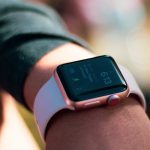
The Ultra 2 screams "I do extreme sports," which is either a plus or a minus depending on your personality.
Both watches are built to survive punishment. Tough is the baseline here. The Apple Watch Ultra 2 uses a 49mm titanium case with a flat sapphire crystal display and that distinctive orange Action Button. It's rated to MIL STD 810H, handles temperatures from -20C to 55C, and carries IP6X dust resistance. At 61.4 grams (without the band), it's surprisingly manageable on the wrist for something this rugged. The Garmin Fenix 8 comes in three sizes, 43mm, 47mm, and 51mm, with either an AMOLED or solar MIP display. Titanium with sapphire glass is available, though it'll push your total past $1,100. The round face versus Apple's squircle is honestly a personal preference thing, but I'll say this: the Fenix looks more like a traditional watch. Nobody at a dinner table gives it a second glance. The Ultra 2 screams "I do extreme sports," which is either a plus or a minus depending on your personality.


Battery Life: Where Garmin Absolutely Dominates
This isn't close. Not even a little. The Garmin Fenix 8 47mm AMOLED lasts up to 29 days in smartwatch mode and 48 hours in continuous GPS. Real world testing with always on display, notifications, and regular syncing? Consistently 16 to 18 days. The solar models are even more absurd, the 51mm version claims 149 hours of GPS only runtime. During a three day backcountry trip in Michigan's Upper Peninsula, the Fenix 8 came home with 42% battery left. The Apple Watch Ultra 2? It needed charging on night two despite running Low Power Mode. Apple claims 36 hours of regular use and 12 hours of continuous GPS workout tracking. That's workable for daily life and shorter activities. But if you're running an ultra, a multi day hike, or training for an Ironman, the math simply doesn't work. A friend's Ultra 2 died during the bike portion of his first 70.3, he lost all pacing and heart rate data for the run. Brutal. The Fenix 9 is expected to improve power efficiency further with a refined chipset, which means Garmin's lead here will only grow.

GPS Accuracy and Navigation
Both watches deliver excellent GPS accuracy in open terrain. The Apple Watch Ultra 2 uses dual frequency GPS (L1 and L5) and in marathon testing, it nailed the 26.2 mile distance almost perfectly. The Fenix 8 supports GPS, GLONASS, Galileo, QZSS, and BeiDou with multi band GNSS and Garmin's SatIQ technology, which automatically balances accuracy and battery consumption. In dense forests and urban canyons, the Fenix 8 has a slight edge, its multi constellation approach handles signal bounce better. But here's where Garmin truly separates itself: navigation. The Fenix 8 has full preloaded topographic maps, ClimbPro for ascent planning, dynamic routing, and turn by turn breadcrumb navigation. You can plan a route on your phone, sync it to the watch, and follow it through backcountry trails without pulling out your phone once. The Apple Watch Ultra 2 has basic waypoint navigation and backtrack, which is fine for retracing your steps but nowhere near the depth Garmin offers. For the Fenix 9, rumors point to tri band GNSS with potential 50cm level accuracy. Worth watching.

Fitness and Health Tracking: Different Strengths
The Apple Watch Ultra 2 covers the essentials well, heart rate monitoring, blood oxygen, ECG, sleep tracking with sleep apnea detection, and crash detection. Apple's step counter accuracy sits around 97%, and the Health app organizes everything cleanly. For casual fitness users and people who want health monitoring integrated into their iPhone ecosystem, it's genuinely excellent. The Garmin Fenix 8 goes deeper. Way deeper. Training load, training status, VO2 max estimation, recovery advisor, race predictor, body battery energy monitoring, HRV status, real time stamina tracking, and sport specific metrics for everything from trail running to open water swimming. It supports true multi sport mode for triathlons, smoothly transitioning between swim, bike, and run within a single activity. The Ultra 2 can't do that. If you're a serious endurance athlete who wants granular training data, Garmin wins this category by a mile. If you want a health focused smartwatch that also tracks workouts, Apple's approach is cleaner and simpler. Neither answer is wrong. Depends entirely on what you need.

Smart Features and Ecosystem
AirDrop a photo to your Mac while your watch reminds you of your next meeting. The Fenix 8 added a speaker and microphone for the first time, enabling voice commands for starting activities and setting alarms. It supports Garmin Pay, music storage (up to 2,000 songs from Spotify, Deezer, or Amazon Music), and smartphone notifications.
Apple wins here. Obviously. The Ultra 2 runs watchOS with full app store access, Apple Pay, iMessage, phone calls through the speaker, Siri, and deep integration with every Apple device you own. AirDrop a photo to your Mac while your watch reminds you of your next meeting. Seamless. The Fenix 8 added a speaker and microphone for the first time, enabling voice commands for starting activities and setting alarms. It supports Garmin Pay, music storage (up to 2,000 songs from Spotify, Deezer, or Amazon Music), and smartphone notifications. But the app ecosystem is thin compared to Apple's, and the user interface, while improved, still feels utilitarian. One massive advantage for Garmin though: cross platform compatibility. The Fenix works with both iOS and Android. The Apple Watch? iPhone only. Period. If you're an Android user, this comparison is already over.

Garmin Fenix 9 vs Apple Watch Ultra 2: Pricing and Value
The Apple Watch Ultra 2 originally launched at $799 but has dropped to around $499 at many retailers since the Ultra 3 arrived at the same $799 price point. The Garmin Fenix 8 AMOLED 47mm starts at $999, with titanium sapphire models pushing past $1,100. That's a significant price gap. At $499, the Ultra 2 is arguably the best value in rugged smartwatches right now, you're getting a titanium body, sapphire display, excellent GPS, and the full Apple ecosystem for half the Fenix 8's price. But value isn't just about sticker price. If you need multi day battery life for backcountry adventures, or if you're training for endurance events and need Garmin's training metrics, the extra $500 pays for itself in functionality you'll actually use. The Fenix 9 is expected to match or slightly exceed current Fenix 8 pricing, with the base model likely around $999-$1,099 and titanium sapphire variants reaching $1,299-$1,499.

Water Resistance and Dive Capability
Both watches are rated to 100 meters of water resistance and both function as recreational dive computers down to 40 meters. The Ultra 2 earned EN 13319 certification as a depth gauge, which is the same standard certified dive computers follow. The Fenix 8 matched this capability, adding proper dive logging that works alongside Garmin's Descent line. For swimmers, both track pool and open water sessions effectively. The Fenix 8 adds open water swim metrics like stroke distance and SWOLF that go beyond what Apple offers. If scuba diving is a priority, either watch handles recreational depths. For serious diving, you'd still want a dedicated computer, but for occasional resort dives, both are capable enough.

Who Should Buy Which Watch?
Let me be direct. Buy the Garmin Fenix 8 (or wait for the Fenix 9) if you're a trail runner, hiker, triathlete, or anyone who spends multiple days away from a charger. The navigation alone justifies it for backcountry use. Buy the Apple Watch Ultra 2 if you want a rugged smartwatch that integrates perfectly with your iPhone, handles everyday smart features brilliantly, and covers fitness tracking for gym sessions, runs, and casual outdoor activities. The Garmin Fenix 9 vs Apple Watch Ultra 2 debate ultimately comes down to what you prioritize, athletic depth or connected convenience. Both are outstanding products that happen to serve different people.

Do’s and Don’ts
Choosing between these two comes down to matching the watch to how you actually spend your weekends, not to which spec sheet reads better. The table below distills the advice from every section above into calls you can act on today. Read it before you commit to either ecosystem, because switching later gets expensive once you have bands, subscriptions and years of training history tied to one platform.
| Do’s | Don’ts |
|---|---|
| Buy the Ultra 2 now at $499 if you want Apple ecosystem integration on a budget | Don't buy the Fenix 8 if you only use it for step counting and notifications |
| Wait for the Fenix 9 if you want Garmin's latest GPS and sensor tech | Don't expect the Apple Watch Ultra 2 to last a full weekend camping trip without a charger |
| Get the Fenix 8 AMOLED 47mm for the best balance of screen quality and battery | Don't buy the Ultra 2 if you use an Android phone. it won't work at all |
| Use Garmin's SatIQ mode to automatically balance GPS accuracy and battery drain | Don't ignore the Ultra 3 at $799 if you want Apple's latest health features like blood pressure monitoring |
| Test both watches in-store before committing. wrist feel matters more than specs | Don't assume more expensive means better for your specific use case |
| Consider the Fenix 8 Solar if you need 100+ hours of GPS for ultra-distance events | Don't rely on Apple Watch backtrack navigation for unfamiliar backcountry trails |
| Use Garmin Connect's training metrics if you follow a structured training plan | Don't skip reading user forums. real-world battery reports vary from official claims |
| Buy a screen protector for either watch if you're doing serious rock scrambling | Don't cheap out on bands. a good strap makes a $1,000 watch actually comfortable |
| Check retailer refurbished options for the Ultra 2. certified units run under $400 | Don't expect software updates for the Ultra 2 to match the Ultra 3's feature set indefinitely |
| Download offline maps on the Fenix before heading into areas with no cell coverage | Don't buy either watch purely based on brand loyalty without comparing your actual needs |

FAQs
Can I use either watch for scuba diving? Both are rated for recreational scuba diving to 40 meters and carry EN 13319 depth gauge certification. The Ultra 2 has Apple's built-in Depth app that logs water temperature, time, and depth during dives. The Fenix 8 offers similar functionality with integration into Garmin's Descent ecosystem for more detailed dive logging.
Which watch is better for hiking and backpacking? The Garmin Fenix 8, hands down. Preloaded topographic maps, ClimbPro ascent tracking, dynamic routing, and multi-week battery life make it the clear choice for serious backcountry use. During a week-long backpacking test, the Fenix 8 finished with over 40% battery while the Ultra 2 needed charging by night two.
Which watch has better heart rate accuracy? In controlled testing, both watches deliver heart rate accuracy within a few BPM of a chest strap for steady-state activities like easy runs and cycling. The Apple Watch Ultra 2 showed readings within plus or minus 0.02 BPM in lab conditions, which is impressive. However, during high-intensity intervals and cold-weather activities, wrist-based optical sensors on both watches can struggle.
Does the Garmin Fenix 8 work with iPhones? Absolutely. The Garmin Connect app runs on both iOS and Android, and you get full notification mirroring, music control, and data syncing on an iPhone. You won't get iMessage replies or Apple Pay obviously (those are Apple Watch exclusives), but for fitness tracking and smart notifications, the Fenix 8 pairs perfectly fine with an iPhone. This cross-platform flexibility is actually one of Garmin's biggest selling points for people who might switch phones down the road.
Can the Apple Watch Ultra 2 handle ultramarathon distances? Technically yes, but it's tight. Apple claims 12 hours of continuous GPS in standard mode and up to 17 hours in Low Power Mode with reduced GPS and heart rate frequency. A 50-mile ultra that takes 10 to 12 hours should be manageable in Low Power Mode, though you'll sacrifice some data granularity.
Is the Garmin Fenix 9 worth waiting for over buying the Fenix 8 now? That depends on your timeline. Garmin's CEO confirmed a 2026 launch, likely between August and October, but no specs have been officially announced. Patents suggest tri-band GNSS with sub-meter accuracy, potential blood sugar monitoring via pulse spectroscopy, and a thinner case with improved power efficiency.
Is the Garmin Fenix 9 worth waiting for over buying the Fenix 8 now?
That depends on your timeline. Garmin's CEO confirmed a 2026 launch, likely between August and October, but no specs have been officially announced. Patents suggest tri band GNSS with sub meter accuracy, potential blood sugar monitoring via pulse spectroscopy, and a thinner case with improved power efficiency. If you need a watch right now, the Fenix 8 is a phenomenal device that'll serve you well for years. If you can wait six months, the Fenix 9 could bring meaningful upgrades, especially in GPS accuracy and health sensors. I'd only wait if you're not in a rush.
Can the Apple Watch Ultra 2 handle ultramarathon distances?
Technically yes, but it's tight. Apple claims 12 hours of continuous GPS in standard mode and up to 17 hours in Low Power Mode with reduced GPS and heart rate frequency. A 50 mile ultra that takes 10 to 12 hours should be manageable in Low Power Mode, though you'll sacrifice some data granularity. Anything longer, a 100 miler or multi stage event, and you'll likely need to charge mid race or accept data gaps. The Fenix 8 handles these distances without breaking a sweat, often finishing with 30-40% battery remaining.
Does the Garmin Fenix 8 work with iPhones?
Absolutely. The Garmin Connect app runs on both iOS and Android, and you get full notification mirroring, music control, and data syncing on an iPhone. You won't get iMessage replies or Apple Pay obviously, those are Apple Watch exclusives, but for fitness tracking and smart notifications, the Fenix 8 pairs perfectly fine with an iPhone. This cross platform flexibility is actually one of Garmin's biggest selling points for people who might switch phones down the road.
Which watch has better heart rate accuracy?
In controlled testing, both watches deliver heart rate accuracy within a few BPM of a chest strap for steady state activities like easy runs and cycling. The Apple Watch Ultra 2 showed readings within plus or minus 0.02 BPM in lab conditions, which is impressive. However, during high intensity intervals and cold weather activities, wrist based optical sensors on both watches can struggle. The Fenix 8 supports external Bluetooth and ANT+ chest straps for maximum accuracy during racing. The Ultra 2 only supports Bluetooth chest straps. For casual training, both are more than accurate enough.
Is the Apple Watch Ultra 2 still worth buying in 2026?
At $499 or less, it's a steal. You're getting a titanium and sapphire watch with dual frequency GPS, cellular connectivity, and the full Apple ecosystem for nearly half its original price. The Ultra 3 adds blood pressure monitoring, 5G, satellite connectivity, and slightly better battery life (42 hours vs 36), but the Ultra 2 still handles 90% of what most people need. If you don't care about those Ultra 3 additions, saving $300 on the Ultra 2 makes a lot of financial sense.
Which watch is better for hiking and backpacking?
The Garmin Fenix 8, hands down. Preloaded topographic maps, ClimbPro ascent tracking, dynamic routing, and multi week battery life make it the clear choice for serious backcountry use. During a week long backpacking test, the Fenix 8 finished with over 40% battery while the Ultra 2 needed charging by night two. The Ultra 2's backtrack feature is useful for retracing your route, but it's no substitute for full turn by turn navigation on preloaded topo maps. If your hikes are day trips on well marked trails, the Ultra 2 is perfectly fine. Multi day backcountry? Garmin wins every time.
What about the Apple Watch Ultra 3, should I consider that instead?
The Ultra 3 launched in September 2025 at $799 and brings meaningful upgrades: the S10 chip, blood pressure monitoring with hypertension detection, 5G cellular, satellite connectivity, 42 hour battery life, and slimmer bezels. If you're committed to Apple's ecosystem and want the latest health features, the Ultra 3 is the better buy over the Ultra 2. But the core Garmin vs Apple trade offs remain, the Ultra 3 still can't match Garmin's battery life, navigation depth, or training analytics. It's a better Apple Watch, not a Garmin killer.
Can I use either watch for scuba diving?
Both are rated for recreational scuba diving to 40 meters and carry EN 13319 depth gauge certification. The Ultra 2 has Apple's built in Depth app that logs water temperature, time, and depth during dives. The Fenix 8 offers similar functionality with integration into Garmin's Descent ecosystem for more detailed dive logging. Neither watch replaces a proper dive computer for technical diving or dives beyond 40 meters. For occasional vacation dives at a resort, both perform well. The Fenix 8's edge here is longer battery life, so you don't have to worry about charging between morning and afternoon dives.
Related Posts:




Twenty years from now you will be more disappointed by the things that you didn’t do than by the ones you did do. Sail away from the safe harbor.
 Get it on
  Download on the