






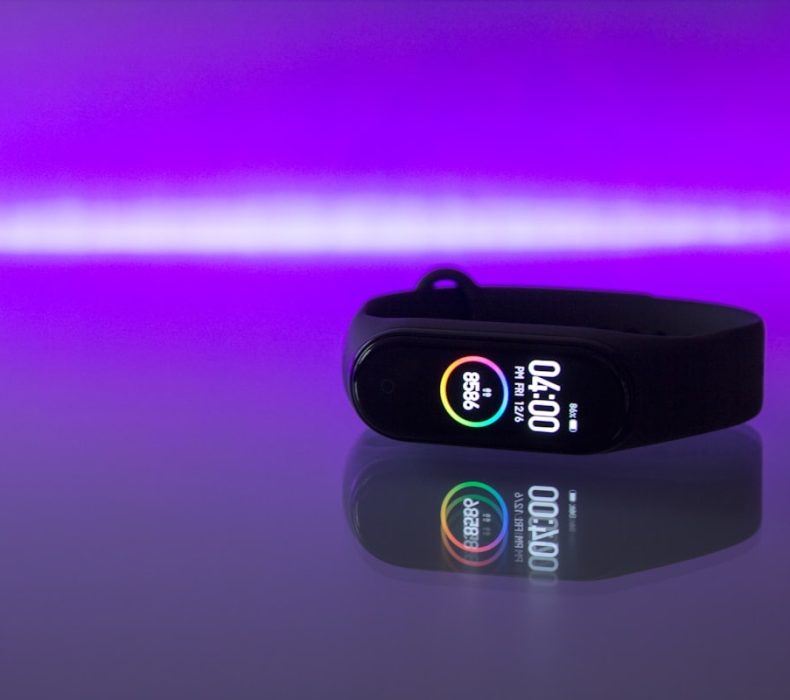
Best Fitness Trackers Under $100 in 2026: Xiaomi Smart Band 10 vs Amazfit Bip 6 vs Fitbit Inspire 3
Spending $300 or more on a fitness tracker makes zero sense when you just want something that counts your steps, tracks your sleep, and nudges you to move more throughout the day. The sub-$100 fitness tracker market has gotten absurdly good in 2026, and three devices keep showing up in every recommendation thread, every subreddit, and every “best of” list: the Xiaomi Smart Band 10 at $49.99, the Amazfit Bip 6 at $79.99, and the Fitbit Inspire 3 at $79.95. Each one takes a different approach to what a budget fitness band should be. Xiaomi went ultra cheap with a slim band that lasts three weeks on a charge. Amazfit crammed a full smartwatch experience, GPS, maps, Bluetooth calling, into something that costs less than a dinner for two. Fitbit leaned into its ecosystem and health tracking pedigree. I’ve dug into the real specs, user reviews, and hands on comparisons to figure out which one actually deserves your money, because “best” means nothing without context about what you specifically need.
Here’s the thing nobody tells you about budget fitness trackers: the gap between a $50 band and a $300 smartwatch has never been smaller. Five years ago, buying cheap meant you got a laggy screen, garbage heart rate readings, and a sync app that crashed every third day. That’s not the case anymore. The Xiaomi Smart Band 10 has a 1.72 inch AMOLED display that’s genuinely gorgeous. The Amazfit Bip 6 packs built in GPS with offline maps, which used to be exclusive to $200+ watches. The Fitbit Inspire 3 gives you stress management scores and detailed sleep staging that rivals what Fitbit charges twice as much for on its Sense line. But they each have weak spots too, and I’m not going to sugarcoat them. By the time you finish reading this, you’ll know exactly which tracker matches your workout style, your phone ecosystem, and your tolerance for app quality, because that last one matters more than most reviewers admit.


Xiaomi Smart Band 10: The Battery Life King at $49.99
The Xiaomi Smart Band 10 is the cheapest option here by a wide margin, and honestly, it punches way above its price tag. For $49.99, you get a 1.72 inch AMOLED display running at 60Hz with 1,500 nits of peak brightness, bright enough to read clearly even in direct sunlight at the beach. The display resolution sits at 212 x 520 pixels, which is sharp for a band this small. Xiaomi packed in a 233mAh battery that delivers a legitimate 21 days of standard use, or about 9 days if you keep the always on display running. That’s not marketing fluff either, real world tests consistently confirm 18-20 days with heart rate monitoring enabled and notifications coming through. You charge it maybe twice a month. The band tracks heart rate 24/7, monitors blood oxygen levels, handles stress tracking, and covers sleep staging. It’s 5ATM water resistant, so pool swimming is fine, and the upgraded nine axis sensor with AI enhanced stroke recognition claims 96% accuracy for swim tracking. Bluetooth 5.4 keeps the connection to your phone solid for GPS piggyback and notifications. The biggest trade off? No built in GPS. You need your phone nearby for location tracking during runs. And the Mi Fitness app, while functional, isn’t winning any design awards.


Amazfit Bip 6: The Feature Packed Overachiever at $79.99
The Amazfit Bip 6 is trying to be a full smartwatch at a fitness band price, and it mostly succeeds. The 1.97 inch AMOLED display is the largest in this comparison, significantly bigger than the Xiaomi’s screen and absolutely dwarfing the tiny Fitbit. It has an aluminum alloy frame with a fiber reinforced polymer body, which gives it a surprisingly premium feel for $79.99. The headline feature is built in GPS with five satellite support plus offline downloadable maps with turn by turn navigation. You can leave your phone at home during a run and still get accurate route tracking. That alone separates it from both competitors. Amazfit threw in 140+ workout modes, Bluetooth calling directly from the watch, an AI coaching feature, and 5ATM water resistance. Battery life runs about 14 days in typical use, which is shorter than the Xiaomi but still excellent. The catch? The single frequency GPS is accurate for casual runners but tends to underreport distance on winding trails compared to dual frequency watches. If you’re training for a marathon and need dead accurate pace splits, you might notice the drift over longer distances. For casual 5K runs and neighborhood jogs, it’s perfectly fine. The Zepp companion app is solid and full featured with detailed workout analytics.

Fitbit Inspire 3: The Health Ecosystem Play at $79.95
Fitbit has been in the fitness tracking game longer than almost anyone, and the Inspire 3 reflects that maturity, but also some frustrating stagnation. At $79.95, you get a 0.81 inch color AMOLED display that’s clean and readable but feels genuinely tiny after looking at the Amazfit’s nearly 2 inch screen. The Inspire 3 weighs just 20 grams, making it the lightest tracker here by a significant margin. You’ll forget you’re wearing it, which is actually a big deal for sleep tracking comfort. Health features are where Fitbit still flexes: 24/7 heart rate, SpO2 blood oxygen monitoring, skin temperature variation tracking, a daily Stress Management Score, and detailed sleep staging with REM, light, and deep sleep breakdowns. The Fitbit app remains one of the best health dashboards available, clean interface, social challenges with friends, and genuinely useful trend tracking over weeks and months. Battery life hits about 10 days, which is respectable but the shortest here. The big downsides: no built in GPS (phone required), only 20 exercise modes compared to Amazfit’s 140+, and Fitbit Premium still pushes a subscription for some advanced insights that used to be free. Google’s acquisition hasn’t exactly accelerated innovation on this product line either. The Inspire 3 first launched in 2022, and while it’s still sold and supported, it hasn’t received a hardware refresh. You’re buying proven reliability, not cutting edge features.

Head to Head Specs Comparison
Numbers don’t lie, so let’s put all three trackers side by side on the metrics that actually matter for daily use. The Xiaomi Smart Band 10 leads on battery at 21 days and wins on price at $49.99, it’s literally half the cost of the other two. The Amazfit Bip 6 dominates on display size (1.97 inches vs 1.72 vs 0.81), built in GPS, and sheer feature count with 140+ workout modes and Bluetooth calling. The Fitbit Inspire 3 takes the crown for weight at 20 grams and arguably has the best companion app ecosystem. For heart rate accuracy, all three are comparable for resting measurements, but the Fitbit and Amazfit edge ahead during intense interval training where wrist based sensors struggle. The Xiaomi’s swim tracking AI is genuinely impressive if pool workouts are your thing. On water resistance, all three match at 5ATM. Notification handling works on all three, though the Amazfit’s larger screen makes reading full text messages much more pleasant than squinting at the Fitbit’s tiny display. If you’re an iPhone user, Fitbit integrates most seamlessly with Apple Health. Android users will find the Amazfit and Xiaomi apps slightly more flexible.

Real World Performance: What Reviewers Actually Say
Spec sheets only tell half the story, so here’s what consistent patterns emerge from hundreds of user reviews. The Xiaomi Smart Band 10 gets universal praise for its battery life and display quality relative to cost, people genuinely can’t believe how good the screen looks for fifty bucks. The common complaints center on the Mi Fitness app feeling clunky, occasional Bluetooth disconnects on older Android phones, and the lack of standalone GPS for serious runners. The Amazfit Bip 6 earns top marks for feeling like a $150+ watch at half the price. Reviewers love the GPS, the large display, and the Bluetooth calling feature. The main gripe is GPS accuracy on longer runs, multiple testers reported distance measurements running 3-5% short compared to dedicated running watches on routes over 10 kilometers. The Fitbit Inspire 3 scores highest on sleep tracking quality and the companion app experience. Long term users love the community features and health trend analysis. The repeated criticism is that the hardware feels dated, the screen is too small, and Google’s Fitbit Premium subscription creates a paywall around features competitors offer for free. If you value raw value for money, the Xiaomi wins. If you want the most capable device, Amazfit wins. If you want the most polished health ecosystem, Fitbit wins.

Do’s and Don’ts: Buying a Budget Fitness Tracker in 2026
| Do’s | Don’ts |
|---|---|
| Do buy the Xiaomi Smart Band 10 if your top priorities are battery life and saving money | Don’t pick the Xiaomi if you run outdoors frequently and want GPS without carrying your phone |
| Do choose the Amazfit Bip 6 if you want built in GPS and a large AMOLED display under $80 | Don’t rely on the Bip 6’s GPS for marathon training splits where 3-5% distance drift matters |
| Do get the Fitbit Inspire 3 if sleep tracking accuracy and a polished health dashboard matter most | Don’t buy the Inspire 3 expecting a modern display, the 0.81 inch screen feels cramped in 2026 |
| Do check which companion app works best with your phone OS before purchasing | Don’t assume all fitness tracker apps are equal, app quality varies wildly between these three |
| Do take advantage of the Amazfit Bip 6’s Bluetooth calling if you often leave your phone behind | Don’t pay for Fitbit Premium unless you genuinely use the advanced insights, the free tier covers basics |
| Do consider swim tracking needs, Xiaomi’s AI stroke recognition is the best at this price | Don’t expect any of these trackers to match an Apple Watch or Garmin on workout accuracy |
| Do wear your tracker 24/7 including sleep for the most useful health trend data | Don’t buy the cheapest option just because it’s cheap if GPS is something you’ll actually use |
| Do read return policies, most retailers give you 30 days to test comfort and accuracy | Don’t overlook band comfort for sleep, the Fitbit’s 20g weight genuinely helps overnight |
| Do update firmware immediately after purchase for the latest tracking algorithms | Don’t ignore water resistance ratings, all three handle pools but none are rated for diving |
| Do compare real user reviews on battery life rather than trusting manufacturer claims | Don’t buy the Fitbit Inspire 3 purely on brand name, Amazfit and Xiaomi have caught up fast |

My Verdict: Which Budget Fitness Tracker Should You Buy?
I’ll give you three clear answers for three clear buyer profiles. If you just want a reliable fitness band that tracks steps, heart rate, and sleep without thinking about charging it for three weeks, the Xiaomi Smart Band 10 at $49.99 is a no brainer. It’s absurdly cheap for what you get, the AMOLED screen is beautiful, and the battery life is genuinely class leading. I’d recommend it to anyone who’s new to fitness tracking or doesn’t want to spend real money figuring out if they’ll actually wear a tracker consistently. If you’re an active person who runs, cycles, or hikes outdoors regularly and wants GPS, a big readable screen, and near smartwatch features, the Amazfit Bip 6 at $79.99 is the best overall value in this group. Built in GPS, offline maps, Bluetooth calling, and 140+ workout modes in a watch that costs less than $80 is genuinely hard to beat. The GPS accuracy won’t satisfy competitive runners, but for recreational fitness, it’s more than adequate. If you’re already invested in the Fitbit ecosystem, have friends on Fitbit challenges, and care deeply about sleep analysis and long term health trends, the Inspire 3 at $79.95 still makes sense, but I’d honestly suggest waiting to see if Google releases an updated model, because the hardware is starting to show its age. For most people reading this buying guide in 2026, the Amazfit Bip 6 offers the best balance of features, build quality, and price. That’s where my money would go.

Frequently Asked Questions
Which budget fitness tracker has the most accurate heart rate sensor?
All three trackers use optical wrist based heart rate sensors, and for resting heart rate and light exercise, they’re all within a few BPM of a chest strap. During high intensity interval training and activities with a lot of wrist movement, the Fitbit Inspire 3 and Amazfit Bip 6 tend to perform slightly better than the Xiaomi Smart Band 10. That said, none of them will match a dedicated chest strap monitor like a Polar H10 for real time accuracy during sprints or heavy lifting. If heart rate accuracy during intense workouts is critical for your training, pair any of these bands with a chest strap. For daily health monitoring, step counting, and moderate exercise tracking, all three are reliable enough to base fitness decisions on.
Can the Xiaomi Smart Band 10 track GPS without my phone?
No. The Xiaomi Smart Band 10 does not have built in GPS hardware. It uses “connected GPS,” which means it piggybacks off your smartphone’s GPS signal via Bluetooth 5.4. You’ll need to carry your phone during runs, bike rides, or hikes to get route mapping and distance tracking. If running phone free is important to you, the Amazfit Bip 6 is the only tracker in this comparison with built in five satellite GPS and offline downloadable maps. The Fitbit Inspire 3 also lacks standalone GPS and requires phone tethering for location data. This is the single biggest reason to spend the extra $30 on the Amazfit over the Xiaomi.
Is the Fitbit Inspire 3 still worth buying in 2026?
It depends on what you value. The Inspire 3 originally launched in late 2022, so the hardware design is nearly four years old at this point. The 0.81 inch display feels small compared to modern competitors, and it lacks features like built in GPS and Bluetooth calling that the Amazfit Bip 6 offers at essentially the same price. However, the Fitbit ecosystem, the app, community challenges, sleep analysis, and Stress Management Score, remains one of the best in the business. If you already have friends on Fitbit, use Fitbit’s social features, or specifically trust Fitbit’s sleep tracking algorithms, the Inspire 3 is a solid choice. If you’re starting fresh with no ecosystem loyalty, the Amazfit Bip 6 gives you significantly more hardware for the same money.
How long do these budget fitness trackers actually last before they need replacing?
Expect 2-3 years of solid daily use from any of these devices. Battery capacity degrades over hundreds of charge cycles, so a tracker that lasts 21 days new might last 14-16 days after 18 months of use. The Xiaomi Smart Band 10 has an advantage here because its 21 day battery means fewer charge cycles per year, which theoretically extends its total lifespan. Software support varies: Fitbit has historically provided firmware updates for 2-3 years post launch, Amazfit typically supports devices for about 2 years, and Xiaomi pushes updates for roughly 18-24 months. The physical hardware, screens, sensors, straps, rarely fails before the software stops getting updates. Budget for a replacement every 2-3 years, which at these prices is a pretty easy pill to swallow.
Do any of these fitness trackers work with both iPhone and Android?
Yes, all three work with both platforms, but the experience isn’t identical across ecosystems. The Fitbit Inspire 3 requires iOS 16.4 or later and Android 11.0 or later, it integrates well with Apple Health on iPhone and Google Health Connect on Android. The Amazfit Bip 6 uses the Zepp app, which runs on both platforms and syncs data to Apple Health, Google Fit, and Strava. The Xiaomi Smart Band 10 uses the Mi Fitness app on both platforms. In general, Android users get a slightly better experience with the Xiaomi and Amazfit due to deeper notification handling and more granular app permissions. iPhone users find the Fitbit integration the smoothest, though the Amazfit app is perfectly functional on iOS too. None of these trackers support direct Siri or Google Assistant voice commands.
Can I swim with all three of these fitness trackers?
All three carry a 5ATM water resistance rating, which means they’re safe for pool swimming, showering, and surface level water activities. The Xiaomi Smart Band 10 stands out here with its AI enhanced stroke recognition technology that claims 96% accuracy for identifying swim strokes, backstroke, breaststroke, butterfly, and freestyle. The Amazfit Bip 6 tracks pool swimming with lap counting and stroke detection across its 140+ workout modes. The Fitbit Inspire 3 supports swim tracking and is water resistant to 50 meters. None of these are rated for scuba diving, high velocity water sports like waterskiing, or hot tub use (extreme heat can compromise the seals). For regular pool laps and open water casual swimming, all three hold up perfectly well.
What’s the biggest weakness of each tracker I should know about?
I’ll be direct. The Xiaomi Smart Band 10’s biggest weakness is the Mi Fitness app, it’s functional but clunky, with a dated UI and occasional sync hiccups that can be frustrating. The hardware outpaces the software significantly. The Amazfit Bip 6’s Achilles heel is its single frequency GPS accuracy on longer runs. Multiple independent tests show it underreporting distance by 3-5% on runs over 10 kilometers, especially on winding paths with tree cover. If precise pace tracking matters for your training, that’s a real problem. The Fitbit Inspire 3’s biggest weakness is that it feels like a 2022 product in 2026, the tiny screen, limited workout modes (20 vs 140+), and Google’s push toward Fitbit Premium subscriptions for features competitors include for free all add up to a device that’s coasting on brand reputation rather than innovating. Know these trade offs going in and none of them will disappoint you.
Should I just save up for a Garmin or Apple Watch instead?
It depends on your fitness goals. If you’re a serious runner training for races, a triathlete, or someone who needs advanced metrics like running dynamics, VO2 max trends, and recovery advisors, then yes, a Garmin Forerunner 265 ($300) or Apple Watch SE ($249) will serve you significantly better. But if you’re a casual exerciser who wants to track daily steps, monitor sleep quality, get move reminders, and see basic workout stats without spending a fortune, these sub-$100 trackers cover 80-90% of what most people actually need. The Amazfit Bip 6 in particular blurs the line between budget tracker and mid range smartwatch with its GPS, maps, and calling features. My honest advice: start with one of these three, wear it consistently for six months, and only upgrade if you hit a specific limitation that bothers you during actual use. Most people never outgrow a good budget tracker.
Related Posts:

- Tags:

Twenty years from now you will be more disappointed by the things that you didn’t do than by the ones you did do. Sail away from the safe harbor.
 Get it on
  Download on the