Robot vacuums have gotten absurdly good. Like, "I forgot I owned a regular vacuum" good. Two years ago you'd spend $1,500 and still babysit the thing around chair legs and shoe piles. Now a $500 machine maps your entire apartment with LiDAR, dodges dog toys, washes its own mop pads with hot water, and empties its own dustbin for two months straight. The jump from 2024 to 2026 isn't incremental, it's the difference between a clumsy Roomba bouncing off walls and a quiet little disc that genuinely cleans while you sleep. I've spent months tracking every major release and comparing real world test data from labs that actually weigh debris before and after runs. The market has never been this competitive, and that's great news for your floors.
Here's what changed this year. Hot water mopping docks are standard above $400, not a premium flex anymore. AI obstacle avoidance recognizes over 280 object types on the best models, up from maybe 80 two years back. And the first robots with retractable legs are literally stepping over door thresholds instead of getting stuck. The price floor dropped too: you can get 90% of flagship performance for under $600 if you pick right. This guide covers the best robot vacuums 2026 has produced across budgets and home sizes. No fluff, just the picks that matter.
Best Overall: Dreame X60 Max Ultra Complete
The Dreame X60 Max Ultra Complete earned the top spot on Vacuum Wars after its CES 2026 debut. At $1,699.99 retail (often $1,359 during promos), it's expensive. No sugarcoating that. But 35,000 Pa of suction in a body just 7.95 cm tall, thin enough to slide under most couches, is genuinely impressive. Dual AI cameras identify over 280 object types, routing around cables, socks, and building blocks with millimeter precision. The mopping pads spin at 230 RPM with 15 newtons of pressure, and the ThermoHub dock washes them with 100 degree Celsius water. At 55 dB in standard mode, it's quieter than a conversation. The DuoBrush system handles long hair without tangling. Period. If budget isn't the constraint, this is the one.
Best Value: Dreame L50 Ultra at $799
Not everyone needs to spend $1,700. The L50 Ultra listed at $1,399.99 originally but routinely sells for $799. It held the number one ranking for months before the X60 unseated it, scoring 3.97 on Vacuum Wars' composite scale. The standout feature is the ProLeap system, retractable legs that climb thresholds up to 2 cm tall. Older home with raised doorframes? This matters more than extra suction ever will. The dock empties, refills, adds solution, and heat dries automatically. For homes under 2,000 square feet, you're getting 95% of the X60 experience at half the cost. Smart buying.
Best Budget Robot Vacuum 2026: MOVA P10 Pro Ultra
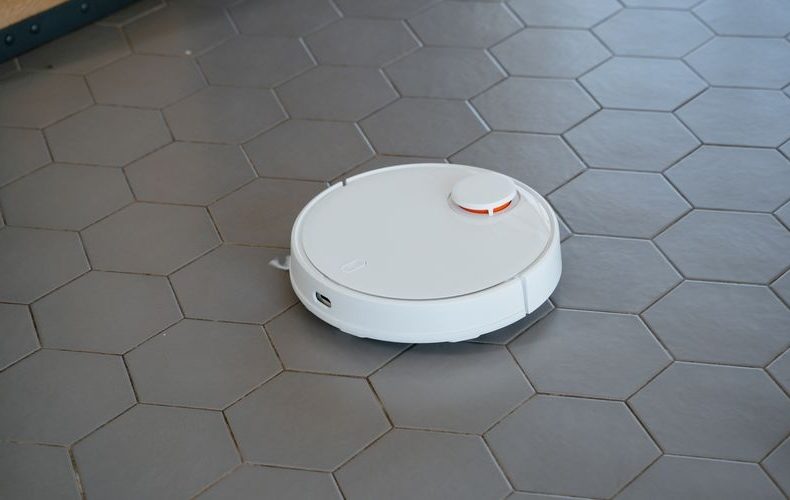
Budget used to mean "it vacuums, kind of." Not anymore. The MOVA P10 Pro Ultra runs $500-600, and the Gen2 hit $499 during launch. You get 13,000 Pa suction on the original (26,000 Pa on the Gen2), LiDAR navigation, 360-degree obstacle avoidance, and a dock that empties, washes with 140-degree-Fahrenheit water, and heat-dries.
Budget used to mean "it vacuums, kind of." Not anymore. The MOVA P10 Pro Ultra runs $500-600, and the Gen2 hit $499 during launch. You get 13,000 Pa suction on the original (26,000 Pa on the Gen2), LiDAR navigation, 360 degree obstacle avoidance, and a dock that empties, washes with 140 degree Fahrenheit water, and heat dries. The 5,200 mAh battery covers roughly 4,300 square feet per charge. A 3.2 liter dust bag lasts 75 days. The only real trade off versus Dreame flagships? Less precise avoidance and no retractable legs. If your floors are level, you won't miss either.
Best for Pet Owners: iRobot Roomba Combo j9+
iRobot doesn't win the spec sheet war anymore. The j9+ costs around $1,000 and delivers less raw suction than robots half its price. So why recommend it? Software intelligence. iRobot OS learns your preferences, suggests schedules based on pollen seasons and pet shedding patterns, and adjusts intensity room by room. Then there's the P.O.O.P. guarantee, if the robot runs through pet waste, iRobot replaces it free. Bold promise. The dual rubber extractors resist hair tangling far better than bristle brushes, and the dock empties debris for 60 days. Not the best on pure metrics, but for pet households where avoiding catastrophic messes trumps peak suction, it earns its premium.
Best Robot Vacuum for Large Homes: Roborock S8 MaxV Ultra
Big homes need runtime and a dustbin that doesn't fill mid run. The S8 MaxV Ultra delivers 10,000 Pa HyperForce suction, 99.8% debris removal by weight on hardwood in lab tests. The VibraRise 3.0 mopping system scrubs at 4,000 vibrations per minute and lifts 20 mm on carpet. Navigation combines 3D structured light with an RGB camera. At $1,799.99 it's the priciest pick here, but for spaces over 2,000 square feet, the recharge and resume capability plus a dock that washes, dries, empties, and refills makes it genuinely set and forget.
What to Buy at Every Price in the Best Robot Vacuums 2026 Lineup
Under $400, the Roborock Q5 Max+ delivers LiDAR, 5,500 Pa suction, and a self emptying dock for $399. That's 80% of premium performance without mopping. Between $500-$900 is where value peaks, the MOVA Gen2 and Dreame L50 Ultra offer features that cost $1,400+ eighteen months ago. Above $1,000, you're paying for top tier obstacle avoidance, whisper quiet operation, and retractable legs. Worth it? Depends on your floors and whether you have a toddler who treats LEGO bricks as carpet decorations.
Do’s and Don’ts
Owning a robot vacuum is mostly hands free, but a few smart habits decide whether it stays that way. The table below collects the practical rules I have learned from months of tracking these machines, from dock placement to maintenance schedules. Give it a scan before you buy or set up your first robot.
Do’s
Don’ts
Measure furniture clearance before buying. most robots need 3.2+ inches
Don't buy on suction numbers alone; 10,000 vs 13,000 Pa barely matters on hard floors
Get a self-emptying dock. manual emptying gets old by week two
Don't skip LiDAR for cheaper bump-and-run navigation
Look for hot water mop washing in the dock
Don't assume expensive means best; a $500 MOVA outcleans a $1,000 Roomba on raw metrics
Set no-go zones in the app before the first run
Don't ignore noise if you vacuum at night; stay under 65 dB
Buy during launch promos for $100-$340 off
Don't forget to empty the dock water tank weekly. mold grows fast
Replace side brushes every 3-4 months
Don't place the dock on thick carpet; it needs flat hard surface
Schedule runs while you're out for best obstacle avoidance
Don't expect robot mops to handle sticky spills. they're for dust and light grime
Check Wi-Fi coverage across the robot's cleaning area
Read reviews from 3+ months post-launch to catch firmware bugs
Don't skip measuring door thresholds. above 2 cm needs retractable legs
Consider two robots for multi-story homes instead of carrying one
Don't run the robot on already-wet floors; it applies its own water
FAQs
How long do robot vacuums last?
Most last 4-6 years with maintenance. Batteries degrade around year 3-4, but replacement cells cost $50-$80 from iRobot or Roborock. Side brushes and filters run $15-$30 per set every 3-6 months. LiDAR sensors rarely fail within warranty, but out of warranty repairs often cost more than a new mid range model.
Are robot vacuums worth it for small apartments?
Absolutely. A studio under 500 square feet finishes in under 20 minutes per run. The real value is consistency, daily passes prevent visible dust and pet hair buildup. For apartments, prioritize noise: the eufy 11S MAX at 55 dB or Tikom G8000 Max at 45 dB won't anger neighbors through shared walls.
Do robot vacuums work on carpet?
Great on low to medium pile. For carpets, you want 5,000+ Pa suction, the Dreame X60 at 35,000 Pa and MOVA Gen2 at 26,000 Pa both scored top tier in carpet deep clean tests. Most auto detect carpet and boost suction. Shag rugs remain the weak spot though. Still need an upright for those.
Robot vacuum with mop combo, worth it?
In 2026, yes. Models like the Dreame X60 and Roborock S8 MaxV Ultra use spinning pads with 12-15 newtons of pressure and 4,000 scrubs per minute. That handles 80% of daily floor maintenance on tile and hardwood. Keep a manual mop for monthly deep cleans and sticky messes.
How often should I run my robot vacuum?
Daily or every other day. Frequent light passes reduce brush wear and keep floors consistently clean. Pet owners, daily is non negotiable. Self emptying docks mean you only touch the dust bag every 60-75 days, making daily runs sustainable without any effort.
What's the difference between LiDAR and camera navigation?
LiDAR creates precise maps and works in total darkness. Camera based systems excel at object recognition but struggle without light. The best 2026 models combine both. If choosing one, LiDAR only at $400-$600 outperforms camera only at the same price for actual cleaning efficiency.
We use cookies to see which reviews and buying guides readers find useful, so we can keep improving them. Accept analytics cookies, or carry on with essential ones only. See our Cookie Policy.











 Get it on
  Download on the