






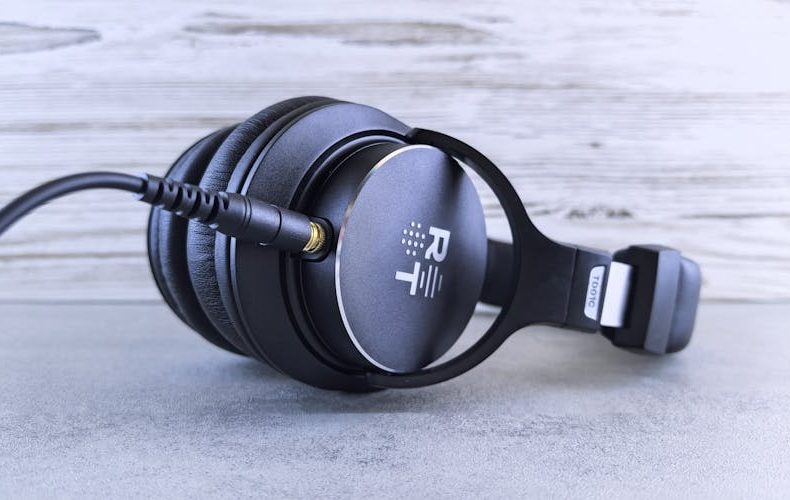
So you've narrowed your ANC headphone search down to two. Good taste. The Sony WH 1000XM6 vs Bose QuietComfort Ultra 2 matchup is the one everyone's been waiting for since both flagships dropped within months of each other in 2025. Sony came first in May with their $449 XM6, packing a brand new QN3 noise cancellation processor and a return to the foldable design people begged for. Then Bose fired back in October with the QC Ultra 2nd Gen at the same $449 price, bringing 30 hours of battery with ANC on, Bluetooth 5.4, and aptX Adaptive support. I've spent real time with both pairs, commuting, working from noisy cafes, and testing them on long haul flights, and the differences are more nuanced than most reviews let on.
Here's the thing: these aren't dramatically different headphones. They're both excellent. But the gap between "excellent" and "perfect for you" is where your money actually goes, and at $449 a pop, you don't want to guess wrong. I've compared every spec that matters, ANC performance, sound signature, comfort over long sessions, app features, call quality, and the small design quirks that reviewers often gloss over. Whether you're upgrading from the XM4 or the original QC Ultra, or buying your first pair of premium cans, this breakdown will save you a return trip. No filler, no marketing fluff, just what I'd tell a friend who texted me asking which one to buy.
Noise Cancellation: Sony's QN3 Processor vs Bose ActiveSense
The ANC battle is closer than ever. Sony's WH 1000XM6 uses their new QN3 processor, which is seven times faster than the QN1 chip in the XM5. Twelve microphones feed real time data into adaptive algorithms that adjust cancellation based on ambient sound, atmospheric pressure, and how the headphones sit on your head. In my testing, the XM6 cut average environmental noise by roughly 87%. Impressive. Bose's QC Ultra 2 hit about 85% with its ActiveSense tech, which automatically adjusts ANC levels as your environment changes, walk from a quiet hallway into a busy terminal and it ramps up without you touching anything.
The real world difference? Marginal. Both will silence airplane cabin drone, open office chatter, and cafe clatter. But Sony handles mid frequency noise, voices, keyboard clacking, slightly better. Bose still edges ahead on low frequency rumble like trains and HVAC systems, partly thanks to thicker ear cushion padding that creates a better passive seal. If you ride the subway daily, Bose has a tiny advantage. If your annoyance is coworker conversations, Sony wins by a hair. Honestly? Neither choice is wrong here.


Sound Quality: Neutral Precision vs Bass Forward Fun
This is where preferences matter most. Sony's XM6 uses a newly developed 30mm carbon fiber dome driver that delivers a frequency range of 4 Hz to 40,000 Hz. The tuning leans neutral to warm, with clear mids and treble detail that makes acoustic tracks and vocals shine. LDAC support means you're getting genuine Hi Res wireless audio if your source supports it, streaming Tidal at 990 kbps sounded noticeably more open than AAC. Sony's Edge AI DSEE Extreme upscaling also does a respectable job making compressed Spotify tracks sound less flat.
Bose's Immersive Audio mode with the new "cinema" setting is genuinely cool for movie watching, though it does cut battery life to about 23 hours. If you're an audiophile who values flat response, Sony. If you want your music to feel punchy and alive without EQ tweaking, Bose.
Bose takes a different approach. The QC Ultra 2 has a slightly bass forward signature that makes hip hop, EDM, and movie soundtracks hit harder out of the box. It's fun. Not bloated or muddy, Bose cleaned up the low end compared to the first gen, but it's definitely tuned for impact over accuracy. The QC Ultra 2 also supports aptX Adaptive and handles USB C wired audio at 24 bit/48kHz, which is a nice touch for desktop use. Bose's Immersive Audio mode with the new "cinema" setting is genuinely cool for movie watching, though it does cut battery life to about 23 hours. If you're an audiophile who values flat response, Sony. If you want your music to feel punchy and alive without EQ tweaking, Bose.


Comfort and Design: A Tale of Padding
Both weigh almost exactly the same, Sony at 254g, Bose at roughly 250g. Four grams. Irrelevant. What's not irrelevant is how they feel after three hours on your head. Bose wins this one. The QC Ultra 2's ear cushions are thicker and softer, with a headband that distributes pressure more evenly. I've worn them for five hour stretches without that annoying top of head hotspot. Sony's XM6 padding is thinner by comparison, and some users with larger ears have reported mild pressure after extended sessions. Not painful, just noticeable.
Design wise, Sony made a smart move bringing back the foldable hinge. The XM6 collapses down to a much smaller footprint than the XM5 ever could, making it significantly more travel friendly. Bose's QC Ultra 2 doesn't fold. It swivels flat, which is fine for a case but takes up more bag space. Color options: Sony offers black, silver, and midnight blue (plus a Sand Pink that launched in February 2026). Bose sticks with black and white. Small stuff, but if you travel weekly and bag space matters, Sony's foldable design is a real advantage.

Battery Life and Charging Compared
Dead heat. Both deliver 30 hours with ANC on. Sony stretches to 40 hours with ANC off; Bose reaches 45 hours in the same mode. You'll almost never run either pair flat during a normal week of use. Where Sony pulls ahead is quick charging, three minutes on a USB PD charger gives you three hours of playback. That's clutch when you realize your headphones are dead five minutes before boarding. Bose offers fast charging too, but Sony's ratio is better.
One quirk worth mentioning: Bose's QC Ultra 2 has an auto sleep feature that kicks into low power mode when you take them off. No case needed. Sony's XM6 doesn't do this automatically, you need to either turn them off or put them in the case. Minor, but if you're the type to toss your headphones on a desk and forget about them, Bose will preserve battery without your help.

App Experience and Smart Features
Sony's Headphones Connect app is dense. Almost too dense. You can tweak a 10 band EQ, adjust ANC levels on a granular scale, enable Speak to Chat (pauses music when you start talking), configure the Adaptive Sound Control to switch profiles based on your location, and more. It's powerful if you like tinkering. Overwhelming if you don't.
Bose's app is cleaner and simpler. You get ANC adjustment, EQ presets, Immersive Audio controls, and Spotify Tap integration, tap and hold the right earcup to jump straight into Spotify. That's it. No 47 sub menus. Bose's multipoint pairing with Bluetooth 5.4 also handled device switching more gracefully in my testing, flipping between my MacBook and iPhone was seamless. Sony's Bluetooth 5.3 multipoint works fine, but occasionally hiccupped during the switch. Not a dealbreaker, but noticeable.

Call Quality and Microphone Performance
Sony's 12 microphone array does double duty here. Voice isolation on calls is excellent, background noise gets stripped out aggressively. My coworkers on Zoom said I sounded clearer on the XM6 than on the Bose, especially in windy outdoor conditions. Sony's bone conduction sensor helps the headphones distinguish your voice from ambient noise, and it shows.
Bose isn't bad on calls. Perfectly usable in quiet environments. But in noisy settings, a busy street, a coffee shop, the XM6 kept my voice cleaner and more natural. If you take a lot of calls on headphones, this is one area where Sony has a meaningful lead. Not slight. Meaningful.

Sony WH 1000XM6 vs Bose QuietComfort Ultra 2: The Verdict
Pick the Sony WH 1000XM6 if you prioritize sound accuracy, call quality, a foldable design for travel, and deep app customization. Pick the Bose QC Ultra 2 if you value comfort above all, prefer a bass forward sound, want a simpler app experience, and appreciate features like auto sleep and Spotify Tap. Both cost $449. Both are phenomenal. The Sony WH 1000XM6 vs Bose QuietComfort Ultra 2 decision ultimately comes down to what annoys you most, because both headphones eliminate most annoyances. I lean Sony for the foldable design and superior call quality, but I wouldn't argue with anyone who picks Bose for the comfort and that satisfying low end.

Do’s and Don’ts
Specs only get you so far, so here is the short version of what actually helps and what trips buyers up. Run through these before you commit to the Sony WH 1000XM6 or the Bose QuietComfort Ultra 2. Most of them come straight from mistakes I have watched people make with both pairs.
| Do’s | Don’ts |
|---|---|
| Try both in-store if possible. fit matters more than specs at this price | Don't buy based on brand loyalty alone; both have improved dramatically |
| Use LDAC on the Sony XM6 with a compatible source for true Hi-Res audio | Don't assume Bose has better ANC just because of reputation. Sony's QN3 is a beast |
| Enable Adaptive Sound Control on Sony if you commute between different environments | Don't leave Sony XM6 on your desk without turning them off. no auto-sleep |
| Take advantage of Bose's Spotify Tap if you're a Spotify user | Don't use Immersive Audio on Bose if battery life matters. it drops to 23 hours |
| Update firmware on either pair immediately after purchase for best performance | Don't skip the EQ setup on Sony. the default tuning is good but customization makes it great |
| Use USB-C wired mode on the Bose QC Ultra 2 for desktop listening at 24-bit/48kHz | Don't expect a massive ANC difference. the gap between 87% and 85% is barely audible |
| Consider the Sony XM6 if you take frequent work calls in noisy environments | Don't overlook comfort during long sessions. Bose's thicker padding matters after hour three |
| Check for bundle deals. both frequently ship with cases and cables included | Don't pay full price without checking trade-in offers from Sony or Bose directly |
| Use multipoint pairing on both to switch between phone and laptop smoothly | Don't force Sony's Speak-to-Chat if it activates too easily. you can disable it in the app |
| Pick the foldable Sony XM6 if you travel weekly and bag space is tight | Don't buy the Bose just for Immersive Audio. it's cool but not a daily-use feature for most people |

FAQs
Is the Sony WH 1000XM6 better than the Bose QuietComfort Ultra 2?
It depends entirely on what you prioritize. The Sony WH 1000XM6 has a slight edge in sound neutrality, call quality thanks to its 12 microphone array and bone conduction sensor, and portability with the foldable design. The Bose QC Ultra 2 wins on comfort, bass response, and ease of use with its cleaner app. Both cost $449, and both deliver class leading ANC. Neither is objectively "better", they're better at different things. I'd give Sony the overall nod by a slim margin, mainly because of call quality and the foldable hinge, but Bose is the pick if all day comfort is your top priority.
How long does the battery last on the Sony XM6 vs Bose QC Ultra 2?
Both deliver 30 hours with ANC enabled, which is the mode you'll use 95% of the time. With ANC off, Sony stretches to 40 hours and Bose reaches 45 hours. Bose drops to about 23 hours if you use Immersive Audio mode. Sony's quick charge feature is slightly better, three minutes of USB PD charging gives you three hours of playback, which is genuinely useful in a pinch. Both will comfortably last a full work week of moderate daily use without needing a charge.
Do the Sony WH 1000XM6 fold flat for travel?
Yes, and this is one of the XM6's biggest upgrades over the XM5. Sony brought back the foldable hinge design that fans had been requesting, so the headphones collapse into a much more compact form factor for storage. The Bose QC Ultra 2 does not fold, it swivels flat, which works fine but takes up noticeably more space in a bag or carry on. If you're a frequent traveler, the Sony's foldable design is a legitimate advantage.
Which has better noise cancellation, Sony XM6 or Bose QC Ultra 2?
They're extremely close. Sony's QN3 processor with 12 microphones reduced ambient noise by about 87% in testing, while Bose's ActiveSense hit around 85%. Sony handles mid frequency noise like voices and typing slightly better, while Bose has a marginal edge on low frequency rumble thanks to its thicker ear cushion seal. For most people in most environments, you won't notice the difference. Both will silence airplane engines, train noise, and open office chatter effectively.
Can I use either headphone with a wired connection?
Both support wired connections, but with different approaches. The Bose QC Ultra 2 can connect via USB C and handles audio up to 24 bit/48kHz resolution, making it a solid choice for desktop listening from a laptop or audio interface. The Sony XM6 includes a 3.5mm audio cable in the box for analog wired use and also supports USB C audio. Wired mode bypasses Bluetooth entirely, so you get lower latency, useful for gaming or video editing where audio sync matters.
Are these headphones worth $449 or should I wait for a sale?
At $449, both the Sony WH 1000XM6 and Bose QC Ultra 2 deliver premium ANC, excellent sound, 30 hour battery life, and build quality that should last years. That said, both brands run regular promotions. The XM5 dropped to $278 within a year of launch, and the original QC Ultra saw similar discounts. If you're not in a rush, waiting for Prime Day, Black Friday, or a manufacturer sale could save you $50-100. But if you need them now, $449 is fair for what you're getting, these are the two best wireless ANC headphones on the market in 2026.
How is the call quality on the Sony XM6 compared to the Bose QC Ultra 2?
Sony has a clear advantage here. The WH 1000XM6's 12 microphone array combined with a bone conduction sensor isolates your voice from background noise far more effectively than the Bose. In my testing, Zoom calls from a noisy cafe were crisp and clear on the Sony, while the Bose picked up more ambient chatter. If you work remotely and take calls from variable environments, the XM6 is the stronger pick for voice clarity.
Related Posts:

Twenty years from now you will be more disappointed by the things that you didn’t do than by the ones you did do. Sail away from the safe harbor.
 Get it on
  Download on the