






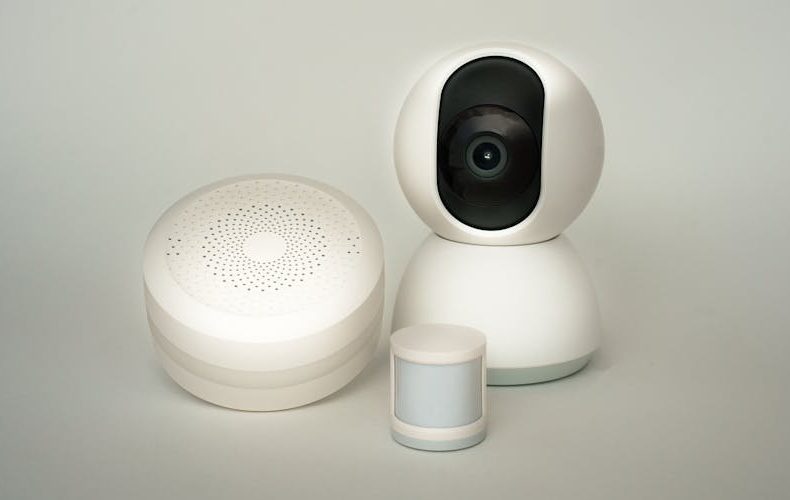
Picking a home security system shouldn't feel like buying a used car, but here we are. Three big names, Ring, ADT, and SimpliSafe, all promising to protect your home, all with different pricing structures, different hardware philosophies, and wildly different contract terms. I've spent the last several weeks testing all three setups in my own home, swapping base stations and sensors like some kind of security obsessed maniac, and the differences are bigger than any spec sheet will tell you. The Ring Alarm vs ADT vs SimpliSafe 2026 debate comes down to what you actually value: rock bottom monthly costs, deep smart home integration, or the peace of mind that comes with a legacy brand and professional installation.
Here's what makes this comparison tricky. All three systems will protect your home. All three have professional monitoring options, smartphone apps, and contact sensors that do exactly what they're supposed to do. But the experience of living with each one is surprisingly different, from how the app handles alerts to how much you're paying per month twelve months from now when the promo pricing expires. I've dug into every plan tier, tested the smart home integrations with both Alexa and Google Home, and I'm going to lay out exactly where each system wins and where it falls flat. No marketing fluff. Just what I'd actually tell a friend who texted me asking which one to buy.
Ring Alarm vs ADT vs SimpliSafe 2026: Pricing Breakdown
Money talks, so let's start there. Ring Alarm's entry point is hard to beat, the 5 piece kit runs $199.99 and the 14 piece kit tops out around $329.99. Monitoring through Ring Protect Pro costs $20/month with no contract. That's it. No hidden fees, no installation charges, no three year commitment hanging over your head. SimpliSafe's equipment packages range from $250 to $730 depending on how many sensors you need, though they run sales constantly, I've seen the $529 kit drop to $199 during holiday promos. Their monitoring jumped to $22.99/month for Standard and $32.99/month for the Core plan (formerly Fast Protect) as of early 2026. Still no contract, which is nice. ADT is the expensive one. Equipment packages start at $269 for the DIY Self Setup line, but monitoring runs $24.99 to $49.99/month and comes with a 36 month contract. Cancel early? You're looking at fees north of $500. That contract is the single biggest reason people skip ADT entirely.


Installation: 30 Minutes vs. Half a Day
Ring and SimpliSafe are genuinely plug and play. I had Ring's 8 piece kit mounted and operational in about 35 minutes, peel and stick sensors, scan QR codes, done. SimpliSafe took slightly longer at around 45 minutes because the base station setup has a few more steps, but nothing that requires tools or technical knowledge. Both use pre applied adhesive strips that hold surprisingly well. ADT Self Setup has gotten much better since they partnered with Google Nest. The hardware is solid and installation is still DIY friendly, but the app walkthrough is clunkier than Ring's or SimpliSafe's. If you opt for ADT's professional installation instead, a technician comes out, places everything optimally, and tests the system, but you'll wait 3-7 days for the appointment and it locks you into that contract. Worth it if you have a large home with complex entry points. Overkill for a two bedroom apartment.

Monitoring Plans: What You Actually Get for Your Money
Ring Protect Pro at $20/month includes 24/7 professional monitoring, cellular backup, 24 hour battery backup in the Alarm Pro base station, and 60 days of video storage for all your Ring cameras. One subscription covers unlimited cameras. That's genuinely impressive value. SimpliSafe's Standard plan at $22.99/month gets you professional monitoring with police and fire dispatch, but no video storage, you'll need the $32.99 Core plan for that, which adds cloud recording for up to 10 cameras plus smart home integrations with Alexa and Google Assistant. ADT starts at $24.99/month for basic monitoring, but their Smart plan at $29.99/month is what most people actually want since it includes the app controls and smart home features. The top tier plan hits $49.99/month. Here's the thing nobody mentions: Ring's single $20 plan covers everything ADT charges $30-50/month for. Over three years, that's a difference of $360 to $1,080.

Smart Home Integration: Ring Owns the Alexa Ecosystem
Ring cameras show feeds on Echo Shows. Routines trigger based on alarm status. It's the most security-to-smart-home experience available.
This isn't even close if you're an Alexa household. Ring is made by Amazon. The integration is native, deep, and automatic. "Alexa, arm Ring in away mode" works instantly.
This isn't even close if you're an Alexa household. Ring is made by Amazon. The integration is native, deep, and automatic. "Alexa, arm Ring in away mode" works instantly. Ring cameras show feeds on Echo Shows. Routines trigger based on alarm status. It's the most seamless security to smart home experience available. ADT has solid integration with Google Nest devices thanks to their partnership, and they support Z Wave accessories for lights, locks, and thermostats. If you're a Google Home user, ADT actually edges out Ring here. SimpliSafe's smart home story is the weakest of the three. You get basic Alexa and Google Assistant commands, arm the system, check status, but you can't disarm with voice, and there's no support for third party smart lights, plugs, or thermostats. If you want your security system to be the brain of a connected home, SimpliSafe isn't it. Functional? Sure. But limited.

Hardware Quality and Sensor Range
Ring's sensors use Z Wave for communication and get excellent range, I tested contact sensors through two interior walls at 50+ feet with zero dropouts. The Alarm Pro base station doubles as an eero Wi Fi 6 router, which is brilliant if you need mesh coverage but makes the unit physically larger than competitors. SimpliSafe's sensors have a reported 400 foot range from the base station, which is the best in this comparison. Their hardware feels slightly more premium than Ring's, thicker plastic, heavier magnets on the contact sensors. The base station is compact and the built in siren hits 95 decibels. Loud enough to wake a neighborhood. ADT Self Setup uses Google Nest hardware for cameras and their own branded sensors. Build quality is excellent, but replacement sensors and add ons cost more than either competitor. A single ADT door sensor runs about $30 versus $20 for Ring and $15 for SimpliSafe.

Contract Terms and Cancellation: The Dealbreaker
No contracts from Ring. Cancel anytime. No contracts from SimpliSafe. Cancel anytime. Three year contract from ADT with early termination fees that can exceed $500. That's the entire section, really. If commitment flexibility matters to you, and it should, ADT is the only one that locks you in. Both Ring and SimpliSafe let you pause monitoring, downgrade plans, or walk away entirely without paying a penalty. I've canceled and restarted SimpliSafe monitoring twice during testing with zero friction. ADT's contract exists because they subsidize equipment costs upfront, which makes sense from their perspective but puts the financial risk squarely on you if your situation changes.

Camera Ecosystem and Video Storage
Ring's camera lineup is massive. Doorbell cameras, indoor cams, outdoor stick up cams, floodlight cams, the new Ring Pan Tilt Indoor Cam, all covered under that single $20/month Ring Protect Pro plan with 60 days of cloud storage. No per camera fees. SimpliSafe sells their own cameras too, including the excellent SimpliCam and the wireless outdoor camera, but video storage requires the $32.99/month Core plan and caps at 10 cameras. The cameras themselves are solid but the selection is smaller than Ring's. ADT leverages Google Nest cameras, which are arguably the best hardware in this comparison, the Nest Cam with floodlight is phenomenal, but you're paying ADT's premium monitoring fees on top of Nest Aware subscriptions if you want more than basic recording. Camera costs add up fast with ADT.

Who Should Buy What: Honest Recommendations
Ring Alarm is the best overall value in 2026. Period. The $20/month all inclusive monitoring, native Alexa integration, massive camera ecosystem, and zero contracts make it the default recommendation for most people. If your home runs on Amazon devices, this is a no brainer. SimpliSafe wins if you want the most flexible, standalone system with no ecosystem commitment. Their hardware range is excellent, the 400 foot sensor range is best in class, and the no contract monitoring gives you complete freedom. Just know the monthly costs have been creeping up, $22.99/month today might be $27.99/month by next year based on their recent track record. ADT makes sense in exactly one scenario: you want a professional to install everything, you value the brand's 150 year reputation, and you're confident you'll stay in your home for three plus years. The Google Nest hardware is great. The monitoring is reliable. But you're paying a premium for the ADT name, and that 36 month contract is a genuine commitment.

Do’s and Don’ts
Home security purchases go wrong in predictable ways, and most of them are avoidable with a little homework. This table pulls together the practical lessons from testing Ring Alarm, ADT, and SimpliSafe side by side. Skim it before you order a kit.
| Do’s | Don’ts |
|---|---|
| Compare total 3-year cost including equipment, not just monthly fees | Don't sign ADT's 36-month contract if you might move within two years |
| Test sensor range in your actual home before committing to a system | Don't assume all "professional monitoring" plans include the same features |
| Check if your homeowner's insurance offers a discount for monitored security | Don't buy ADT equipment at full price. wait for their frequent sales |
| Start with a basic kit and add sensors later as you learn what you need | Don't skip cellular backup. WiFi-only systems fail during power outages |
| Use the free self-monitoring tier first to test any system's app and alerts | Don't forget to factor in camera subscription costs when comparing Ring vs ADT |
| Read the cancellation policy before buying, especially with ADT | Don't rely on voice-assistant disarming as your only method. it's a backup |
| Mount motion sensors 7 feet high and angled downward for best detection | Don't place the base station in a basement or closet where siren volume drops |
| Enable two-factor authentication on your security app immediately | Don't buy SimpliSafe if deep smart home automation is a priority |
| Consider battery-powered sensors for rental properties you can't drill into | Don't overlook the total camera ecosystem cost. it adds up across all three |
| Check Z-Wave compatibility if you want your security system to control smart locks | Don't assume the cheapest monthly plan includes professional dispatch to police |

FAQs
Can I switch from ADT to Ring or SimpliSafe easily? Switching is straightforward from a hardware perspective since Ring and SimpliSafe are fully self-installed. You just set up the new system and remove the old one. The complication is ADT's contract. If you're still within your 36-month commitment, you'll owe early termination fees that could exceed $500.
Do Ring Alarm and SimpliSafe work during power outages? Both have battery backup in their base stations. Ring Alarm Pro offers 24-hour battery backup, while SimpliSafe's base station lasts about 24 hours as well. However, full functionality during outages requires cellular backup, which means a paid monitoring plan for both systems.
Which home security system has the best smart home integration? Ring dominates for Alexa users with native Amazon integration. Arming, disarming, camera feeds on Echo Shows, and automated routines all work naturally. ADT is the better choice for Google Home households thanks to their Google Nest partnership, supporting Nest cameras, thermostats, and speakers natively. SimpliSafe offers basic Alexa and Google Assistant compatibility for arming and status checks, but lacks support for third-party smart devices like lights, plugs, and thermostats. Your existing smart home ecosystem should drive this decision.
Can I install Ring Alarm or SimpliSafe myself without any tools? Absolutely. Both systems use peel-and-stick adhesive for door and window sensors, and the base stations simply plug into a wall outlet. Ring's app walks you through each sensor placement with QR code scanning.
Does ADT still require a contract in 2026? Yes. ADT's professionally monitored plans still require a 36-month contract, and early termination fees can run over $500 depending on how much time remains. Their ADT Self Setup line uses the same contract terms.
Is Ring Alarm better than SimpliSafe in 2026?
For most people, yes. Ring Alarm offers lower monthly monitoring costs at $20/month versus SimpliSafe's $22.99-$32.99/month, includes unlimited camera cloud storage in that single plan, and has far deeper smart home integration through Amazon's Alexa ecosystem. SimpliSafe wins on sensor range and standalone simplicity, but Ring's overall value proposition is stronger in 2026, especially if you already own any Ring cameras or Echo devices. The gap has widened since SimpliSafe raised their monitoring prices in early 2026.
Does ADT still require a contract in 2026?
Yes. ADT's professionally monitored plans still require a 36 month contract, and early termination fees can run over $500 depending on how much time remains. Their ADT Self Setup line uses the same contract terms. This is the single biggest competitive disadvantage ADT faces against Ring and SimpliSafe, both of which offer month to month monitoring with no cancellation penalties whatsoever. ADT subsidizes equipment costs through the contract, but you're taking on the financial risk.
Can I install Ring Alarm or SimpliSafe myself without any tools?
Absolutely. Both systems use peel and stick adhesive for door and window sensors, and the base stations simply plug into a wall outlet. Ring's app walks you through each sensor placement with QR code scanning, I had an 8 piece kit running in 35 minutes. SimpliSafe takes slightly longer at around 45 minutes but is equally tool free. Neither requires drilling, wiring, or any technical expertise. ADT Self Setup is also DIY friendly, though their app walkthrough isn't quite as polished.
Which home security system has the best smart home integration?
Ring dominates for Alexa users with native Amazon integration, arming, disarming, camera feeds on Echo Shows, and automated routines all work naturally. ADT is the better choice for Google Home households thanks to their Google Nest partnership, supporting Nest cameras, thermostats, and speakers natively. SimpliSafe offers basic Alexa and Google Assistant compatibility for arming and status checks, but lacks support for third party smart devices like lights, plugs, and thermostats. Your existing smart home ecosystem should drive this decision.
How much does Ring Alarm cost per month compared to ADT and SimpliSafe?
Ring Protect Pro costs $20/month and includes professional monitoring, cellular backup, and unlimited camera cloud storage. SimpliSafe's Standard plan runs $22.99/month for monitoring only, add video storage and you're at $32.99/month on the Core plan. ADT starts at $24.99/month for basic monitoring but most users need the $29.99 Smart plan for app features, and the top tier hits $49.99/month. Over three years with no equipment costs factored in, Ring costs $720, SimpliSafe runs $828-$1,188, and ADT ranges from $900-$1,800.
Is ADT Self Setup worth it in 2026?
ADT Self Setup makes sense if you specifically want Google Nest camera hardware paired with professional monitoring and you're willing to commit for three years. The Nest cameras are excellent, the monitoring is reliable, and ADT's brand carries weight with insurance companies, some insurers offer larger discounts for ADT specifically. But you're paying $5-30/month more than Ring for comparable features, and that contract is non negotiable. For renters or anyone who might move, Ring or SimpliSafe are better choices, full stop.
Do Ring Alarm and SimpliSafe work during power outages?
Both have battery backup in their base stations, Ring Alarm Pro offers 24 hour battery backup, while SimpliSafe's base station lasts about 24 hours as well. However, full functionality during outages requires cellular backup, which means a paid monitoring plan for both systems. Ring Protect Pro includes cellular backup at $20/month. SimpliSafe requires the $22.99+ Standard plan. Without cellular backup, your system can still sound a local siren but can't contact monitoring centers or send you smartphone alerts during an internet outage.
Can I switch from ADT to Ring or SimpliSafe easily?
Switching is straightforward from a hardware perspective since Ring and SimpliSafe are fully self installed, you just set up the new system and remove the old one. The complication is ADT's contract. If you're still within your 36 month commitment, you'll owe early termination fees that could exceed $500. Once the contract expires, you can cancel ADT monitoring and keep using their sensors as unmonitored alarms, but they won't work with Ring or SimpliSafe base stations. You'll need entirely new sensors, which typically means buying a starter kit from your new provider.
Related Posts:



Twenty years from now you will be more disappointed by the things that you didn’t do than by the ones you did do. Sail away from the safe harbor.
 Get it on
  Download on the