






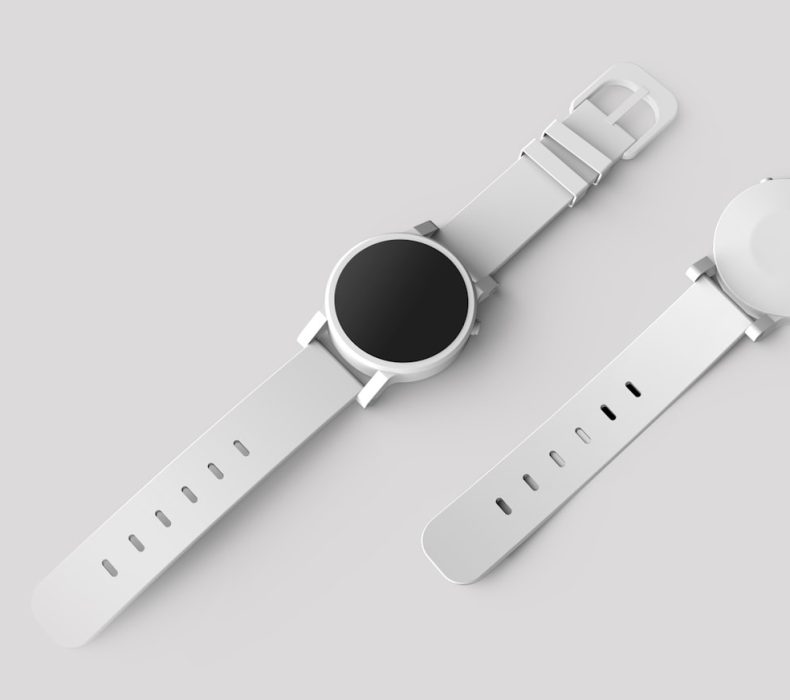
Amazfit Active 2 Review: A $70 Smartwatch That Punches Way Above Its Price
The Amazfit Active 2 has been sitting on my wrist for about three months now, and I keep having the same thought: how is this thing only $80? At its regular retail price of $99.99 for the standard silicone strap version — and frequently available for $79.99 on Amazon sales, sometimes dipping near $70 during Prime Day — this smartwatch delivers a 1.32-inch AMOLED display, built-in GPS with offline maps, 160+ workout modes, Bluetooth calling, and up to 10 days of battery life. Those are specs you’d normally see on watches costing $200 or more. The stainless steel bezel gives it a surprisingly premium look that doesn’t scream “budget” on your wrist, and at just 29.5 grams, you genuinely forget you’re wearing it. I picked this up expecting a disposable fitness band with a color screen, and what I got was a legitimately capable smartwatch that handles 90% of what my old Garmin Venu did.
But let me be upfront about something before you rush to checkout — the Amazfit Active 2 is not perfect, and the compromises it makes are worth understanding before you spend your money. The Zepp app can be clunky and occasionally loses sync, the heart rate sensor isn’t as accurate as a Garmin or Apple Watch during high-intensity intervals, and Amazfit replaced Amazon Alexa with their own Zepp Flow AI assistant, which is honestly a downgrade in usefulness. The third-party app ecosystem is basically nonexistent compared to Wear OS. So is this the best cheap smartwatch you can buy in 2026, or are you better off saving up for something pricier? I’ve tested the GPS against an Apple Watch Ultra 2, tracked sleep for weeks, run with it in the rain, and pushed every feature to its limits. Here’s the full Amazfit Active 2 review with zero sugarcoating.
Amazfit Active 2 Specs: What $80-$100 Actually Gets You
The Amazfit Active 2 comes in three flavors: the Standard round ($99.99), the Premium round ($129.99 with leather strap, sapphire glass, and NFC), and a Square version ($119.99). This review focuses on the Standard round, which is the one most people should buy. You get a 1.32-inch AMOLED display with 466×466 resolution and peak brightness of 2,000 nits — that’s bright enough to read in direct sunlight without squinting, which budget smartwatches historically botch completely. The 44mm stainless steel case measures 43.9×43.9×9.9mm and weighs 29.5 grams with the silicone strap. Under the hood, there’s Bluetooth 5.2 BLE for phone connectivity and calls, a built-in microphone and speaker, GPS with five-satellite positioning, a BioTracker sensor for heart rate and SpO2, plus a body temperature sensor. Water resistance is rated at 5 ATM, meaning it handles swimming, rain, and shower splashes without any issue. Storage-wise, you’re looking at enough space for about 400 watch face styles, and the Zepp app is free — no subscription wall like Fitbit Premium.
Display and Design: Looks Twice Its Price
This is where Amazfit really nailed it. The 1.32-inch AMOLED panel is vibrant with deep blacks, punchy colors, and viewing angles that hold up from any wrist position. At 2,000 nits peak brightness, I had zero trouble reading pace and heart rate data during midday runs in direct Texas sun — something my old Fitbit Versa 2 absolutely failed at. The always-on display option works well and looks clean, though it does chop your battery life roughly in half (more on that later). The stainless steel bezel around the screen gives it a polished, almost dressy look. I wore it with a button-down shirt to dinner and nobody clocked it as a sub-$100 watch. The Standard version uses tempered glass with anti-fingerprint coating instead of the Premium’s sapphire crystal, which is the main physical difference between the two. The silicone strap is comfortable enough for all-day wear and sleeping, though it does trap sweat during intense workouts. Two physical buttons on the right side provide quick access to workouts and a customizable shortcut, and they have a satisfying click that doesn’t feel cheap.

GPS and Workout Tracking: Surprisingly Legit
Built-in GPS with five-satellite support is the feature that separates the Active 2 from most budget fitness bands, and the implementation genuinely impressed me. On a 34-minute morning run, I wore the Active 2 alongside an Apple Watch Ultra 2, and the route maps were nearly identical — the Active 2 nailed the distance within two decimal places. That kind of parity with a $799 watch is honestly ridiculous at this price point. GPS lock-on takes about 10-15 seconds outdoors, which is faster than my old Garmin Forerunner 245. Amazfit also includes offline maps with turn-by-turn directions, which is a genuinely useful feature for trail running and hiking — directions can be broadcast through the built-in speaker or Bluetooth headphones. The 160+ workout modes cover everything from running and cycling to HYROX race mode, yoga, and even cricket. Automatic workout detection kicked in accurately for walks and runs during testing. The real caveat is that heart rate tracking during sprints and HIIT intervals runs about 5-8 BPM higher than a chest strap, which is typical for wrist-based optical sensors at any price. For steady-state cardio and general fitness tracking, accuracy is perfectly acceptable.
Battery Life: The 10-Day Claim vs. Reality
Amazfit claims up to 10 days of battery life, and that number is actually achievable — with caveats. With the always-on display off, wake-on-wrist-raise enabled, auto brightness, heart rate monitoring every 10 minutes, and maybe 2-3 GPS workouts per week, I consistently got 8-9 days before needing to charge. That’s genuinely impressive and leagues ahead of the Apple Watch’s 18-hour struggle or the Fitbit Versa 4’s 6-day claim. Turn on the always-on display, though, and that number drops to 4-5 days with daily workouts. One reviewer clocked about 6 days with AOD on and moderate use, which matches my experience. Continuous GPS tracking drains the battery fastest — Amazfit quotes 21 hours of continuous GPS, and I measured about 18-19 hours before it died, which is close enough. Charging takes roughly 2 hours from empty to full via the magnetic puck charger. That’s not blazing fast, but given how infrequently you need to charge, it barely matters. My weekly routine became charging it Sunday morning while I drank coffee, and I wouldn’t think about it again until the following weekend.

Zepp App and Smart Features: Good Enough, Not Great
The Zepp app (free, no subscription) is where you’ll see all your health and fitness data, and it’s a mixed bag. The dashboard shows daily steps, heart rate trends, SpO2, sleep stages, stress levels, and body temperature readings in clean, easy-to-read charts. Workout summaries include GPS route maps, pace splits, heart rate zones, and estimated calories — all the data a recreational athlete actually needs. Sleep tracking breaks down light, deep, and REM stages, and after cross-referencing with a dedicated sleep tracker for two weeks, I found it reasonably accurate on total sleep time but occasionally miscounted brief wake-ups. The frustrating parts: the app occasionally loses Bluetooth sync and requires force-closing and reopening, push notifications from your phone work but you can’t reply to most of them from the watch (Android users can reply to WhatsApp via Zepp Flow), and Amazfit replaced Amazon Alexa with their own Zepp Flow AI voice assistant. Zepp Flow handles basic commands like setting timers, adjusting brightness, and checking the weather, but it’s nowhere near as capable as Alexa was for smart home control and general questions. Bluetooth calling through the watch speaker and mic works surprisingly well for short calls — voices come through clearly enough, though I wouldn’t use it for a 20-minute conversation.
Amazfit Active 2 vs. Fitbit: Which Budget Watch Wins?
This is the comparison most shoppers are actually making, so let me break it down plainly. The Fitbit Versa 4 retails for around $150 (often on sale for $120-$130) and offers a larger 1.58-inch AMOLED display, Google Assistant, deeper integration with the Google/Fitbit ecosystem, and arguably better sleep tracking algorithms. However — and this is a big however — Fitbit locks its most useful health insights behind Fitbit Premium, a $9.99/month subscription. Over two years, that’s an extra $240 on top of the purchase price. The Amazfit Active 2 gives you everything for free, forever. The Active 2 also wins on battery life (8-10 days vs. 6 days), has built-in GPS with offline maps (Fitbit Versa 4 requires your phone for GPS), offers Bluetooth calling (Versa 4 does not), and costs $20-$70 less depending on the sale. The Fitbit wins on third-party app support, Google ecosystem integration, and arguably more polished health insights presentation. If you’re already deep in the Google/Fitbit world and don’t mind the subscription, the Versa 4 makes sense. For everyone else, the Amazfit Active 2 delivers more features for less money with no ongoing costs. That’s a straightforward value win.

Who Should Buy the Amazfit Active 2 (And Who Should Skip It)
The Amazfit Active 2 is a slam-dunk purchase for casual to moderately serious fitness enthusiasts who want GPS tracking, health monitoring, and smartwatch features without spending $200-$400. If you’re a runner who wants accurate route tracking, a gym-goer who likes logging workouts, or someone who just wants step counting, sleep data, and phone notifications on their wrist, this watch delivers all of that for under $100. It’s also an excellent first smartwatch — the kind of thing you buy to figure out whether you even use wearable features before committing to an Apple Watch or Garmin. The people who should skip it: serious endurance athletes who need medical-grade heart rate accuracy should look at Garmin or Polar. Anyone deeply invested in the Apple ecosystem will have a better experience with an Apple Watch SE. And if you want a rich third-party app store with Spotify offline playback and Google Maps on your wrist, you need Wear OS — not Zepp OS. But for the vast majority of people who want a good-looking, feature-packed smartwatch that won’t make their wallet cry, the Amazfit Active 2 is the best value in wearables right now. Full stop.
Do’s and Don’ts of Buying the Amazfit Active 2
| Do’s | Don’ts |
|---|---|
| Do wait for Amazon sales — the Active 2 regularly drops from $99.99 to $79.99 or lower | Don’t buy the Premium version unless you specifically want the leather strap and sapphire glass — the Standard tracks identically |
| Do turn off always-on display if you want the full 8-10 day battery life | Don’t expect Apple Watch or Garmin-level heart rate accuracy during HIIT or sprinting |
| Do use the offline GPS maps feature for trail running and hiking — it works shockingly well | Don’t buy this watch expecting to install third-party apps like Spotify or Strava — Zepp OS has a very limited app ecosystem |
| Do pair Bluetooth headphones for turn-by-turn navigation audio during runs | Don’t rely on Zepp Flow as a full voice assistant replacement for Alexa or Google Assistant |
| Do enable automatic workout detection in settings so walks and runs get logged without manual input | Don’t skip the Zepp app setup — the watch is significantly less useful without the companion app |
| Do take advantage of the 5 ATM water resistance for pool swimming and rainy runs | Don’t use the built-in speaker for long phone calls — it works for quick chats but audio quality degrades after a few minutes |
| Do customize the two physical buttons for quick access to your most-used features | Don’t compare the sleep tracking accuracy to dedicated devices like the Oura Ring — it’s good but not clinical |
| Do check the Zepp app regularly for firmware updates — Amazfit has been improving GPS accuracy and features post-launch | Don’t expect seamless notification replies on iOS — Android users get much better smart features |
| Do consider the Standard silicone strap for workouts — it breathes better than the Premium leather | Don’t throw away your charger — the magnetic puck is proprietary and replacements cost $15-$20 |
| Do use the body temperature and SpO2 monitoring for general health trends over time | Don’t buy this if you need LTE or standalone cellular connectivity — it requires your phone nearby for calls and notifications |
Frequently Asked Questions
Is the Amazfit Active 2 worth buying in 2026?
The Amazfit Active 2 remains one of the best value smartwatches you can buy in 2026, especially at its frequent sale price of $79.99 or less. For that money, you get built-in GPS with offline maps, a bright 2,000-nit AMOLED display, Bluetooth calling, 160+ workout modes, and up to 10 days of battery life — a feature set that competing watches charge $150-$200 for. Amazfit has continued pushing firmware updates that improve GPS accuracy and add features, so the watch is actually better now than it was at launch. The only reason to hesitate would be if the Amazfit Active 3 drops to a similar price point, but as of May 2026 the Active 2 remains the budget sweet spot.
How accurate is the Amazfit Active 2 GPS for running?
The GPS accuracy on the Amazfit Active 2 is genuinely impressive for a sub-$100 watch. In head-to-head testing against an Apple Watch Ultra 2, the Active 2 matched the route map and distance within two decimal places on a 34-minute run. It uses five-satellite positioning systems for improved accuracy, and the new antenna design helps maintain signal in partially covered areas like tree-lined trails. GPS lock-on typically takes 10-15 seconds outdoors. The main weakness is dense urban environments with tall buildings, where any wrist-based GPS will struggle with signal bouncing. For park runs, trail running, cycling, and suburban routes, the Active 2’s GPS is more than adequate and rivals watches costing three to four times more.
Does the Amazfit Active 2 work with iPhone and Android?
Yes, the Amazfit Active 2 works with both iOS and Android through the free Zepp app. However, the experience is noticeably better on Android. Android users can reply to WhatsApp messages using speech-to-text or an on-screen keyboard through Zepp Flow, access more notification interaction options, and generally get deeper integration with the watch. iPhone users get full fitness tracking, health monitoring, GPS, and notification mirroring, but replying to messages and some smart features are limited or unavailable. Bluetooth calling works on both platforms. If you’re an iPhone user, the watch is still worth buying for fitness and health tracking, but manage your expectations on the smartwatch features.
How does the Amazfit Active 2 compare to the Amazfit Active 2 Premium?
The Standard and Premium versions share identical internals — same processor, same sensors, same GPS, same software. The differences are purely cosmetic and material. The Premium ($129.99 retail, often on sale for $92-$100) gets you a genuine leather strap, sapphire crystal glass that’s significantly more scratch-resistant than the Standard’s tempered glass, and NFC for contactless payments. If you plan on wearing the watch to the office or want the extra durability of sapphire glass, the Premium is a reasonable upgrade. But if this is primarily a fitness and workout watch, save the $30 and get the Standard with the silicone strap — it breathes better during exercise and you won’t worry about scratching it at the gym.
Can you take phone calls on the Amazfit Active 2?
Yes, the Amazfit Active 2 has a built-in microphone and speaker that allow you to answer, reject, and make Bluetooth phone calls directly from your wrist. Your phone needs to be within Bluetooth range (roughly 30 feet), and the call audio routes through the watch speaker and mic. Call quality is surprisingly clear for short conversations — the person on the other end can hear you well, and incoming audio is loud enough even in moderately noisy environments. For longer calls or sensitive conversations, you’ll want to switch to your phone or earbuds, as the small speaker starts to feel tinny after a few minutes and the microphone occasionally drops individual syllables. It’s a great feature for answering calls while your phone is in another room or buried in a gym bag.
What health sensors does the Amazfit Active 2 have?
The Amazfit Active 2 packs an impressive sensor array for its price. The BioTracker optical sensor handles continuous heart rate monitoring and SpO2 (blood oxygen) readings. There’s a body temperature sensor for tracking trends over time, an accelerometer and gyroscope for motion detection and workout tracking, a barometric altimeter for elevation and stair counting, and an ambient light sensor for automatic brightness adjustment. The Zepp app compiles all this data into daily readiness scores, stress level assessments, and sleep quality reports. While none of these sensors match the medical-grade accuracy of an Apple Watch Series 9 or Garmin with a chest strap, they provide reliable trend data that’s perfectly useful for general health awareness and fitness tracking.
Does the Amazfit Active 2 have Alexa or a voice assistant?
The original Amazfit Active had Amazon Alexa built in, but the Active 2 replaced it with Amazfit’s own Zepp Flow AI voice assistant. Zepp Flow uses speech recognition through the watch’s microphone and can handle tasks like setting timers, adjusting watch brightness, checking weather, managing calendar events, and composing WhatsApp replies on Android. However, it cannot control smart home devices, answer general knowledge questions as well as Alexa, or interact with third-party services. If smart home voice control from your wrist is a dealbreaker, this is a genuine downgrade from the original Active. For basic on-watch voice commands, Zepp Flow gets the job done but don’t expect Alexa or Google Assistant-level capabilities.
Is the Amazfit Active 2 good for swimming?
The Amazfit Active 2 carries a 5 ATM water resistance rating, which means it can withstand pressure equivalent to 50 meters of depth. In practical terms, that covers pool swimming, ocean surface swimming, showering, and getting caught in heavy rain without any concern. The watch includes dedicated swimming workout modes that track lap count, stroke type, distance, and pace. The AMOLED display remains readable underwater, and the physical buttons work when the touchscreen doesn’t respond to wet fingers. One thing to keep in mind: 5 ATM doesn’t cover high-pressure water activities like diving, water skiing, or high-velocity water impact. For pool laps, open-water swims, and water sports like kayaking or surfing, the Active 2 handles it confidently.
Related Posts:



Twenty years from now you will be more disappointed by the things that you didn’t do than by the ones you did do. Sail away from the safe harbor.
 Get it on
  Download on the